Best Fishing Line for Spinning Reels: Braid, Mono, and the Twist Problem

This post may contain affiliate links. Read our policy.
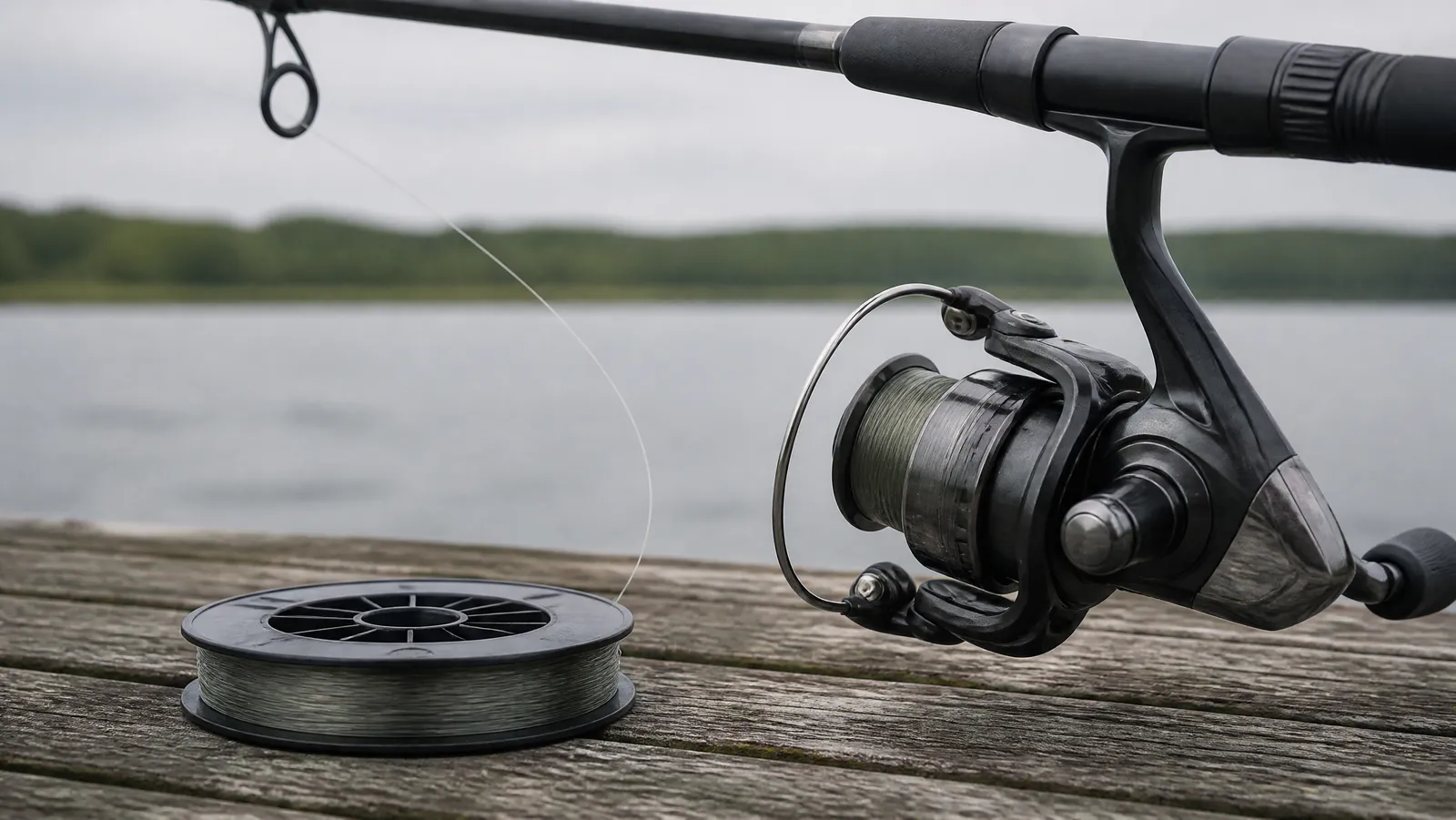
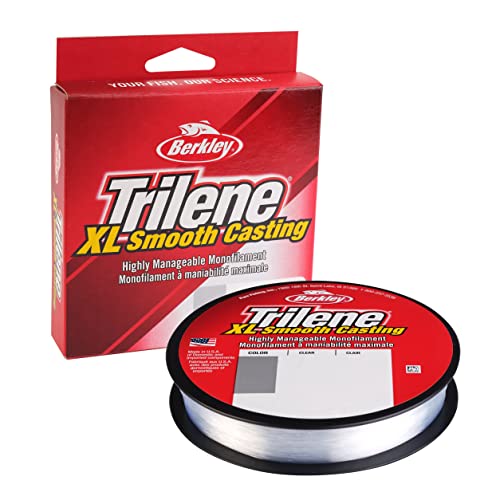
Berkley Trilene XL Monofilament, 8 lb
Berkley's Trilene XL is the default limp monofilament: 8-pound test at 0.
- Berkley builds it around resisting twist and kinks, the exact spinning-reel failure mode
- 0.010 in at 8 lb fills a 2500 without swallowing the spool
- Cheap enough to respool every season without thinking about it
- Still stretches, so hooksets at distance go soft
- Absorbs water and loses strength over a season
Best Fishing Line for Spinning Reels: Braid, Mono, and the Twist Problem
The best fishing line for spinning reels is a low-memory braid in the 10 to 20 pound range, backed with mono and finished with a fluorocarbon leader. A spinning reel is the only reel that loads a fixed spool by swinging a bail around it, and that geometry adds twist to your line on every turn of the handle. Memory, not breaking strain, decides whether that twist becomes a wind knot.
Angler Reviews is reader-supported. We may earn a commission on purchases made through links on this page, at no extra cost to you.
Most roundups on this topic skip the mechanism and go straight to the product list. We are doing it the other way around, because once you understand what the rotor is doing to your line, the picks fall out on their own — and so do the two setup mistakes that cause most of the complaints. For the broader material-by-material breakdown, start with our complete guide to choosing fishing line, then come back here for the spinning-specific part.
What a Spinning Reel Actually Does to Your Line
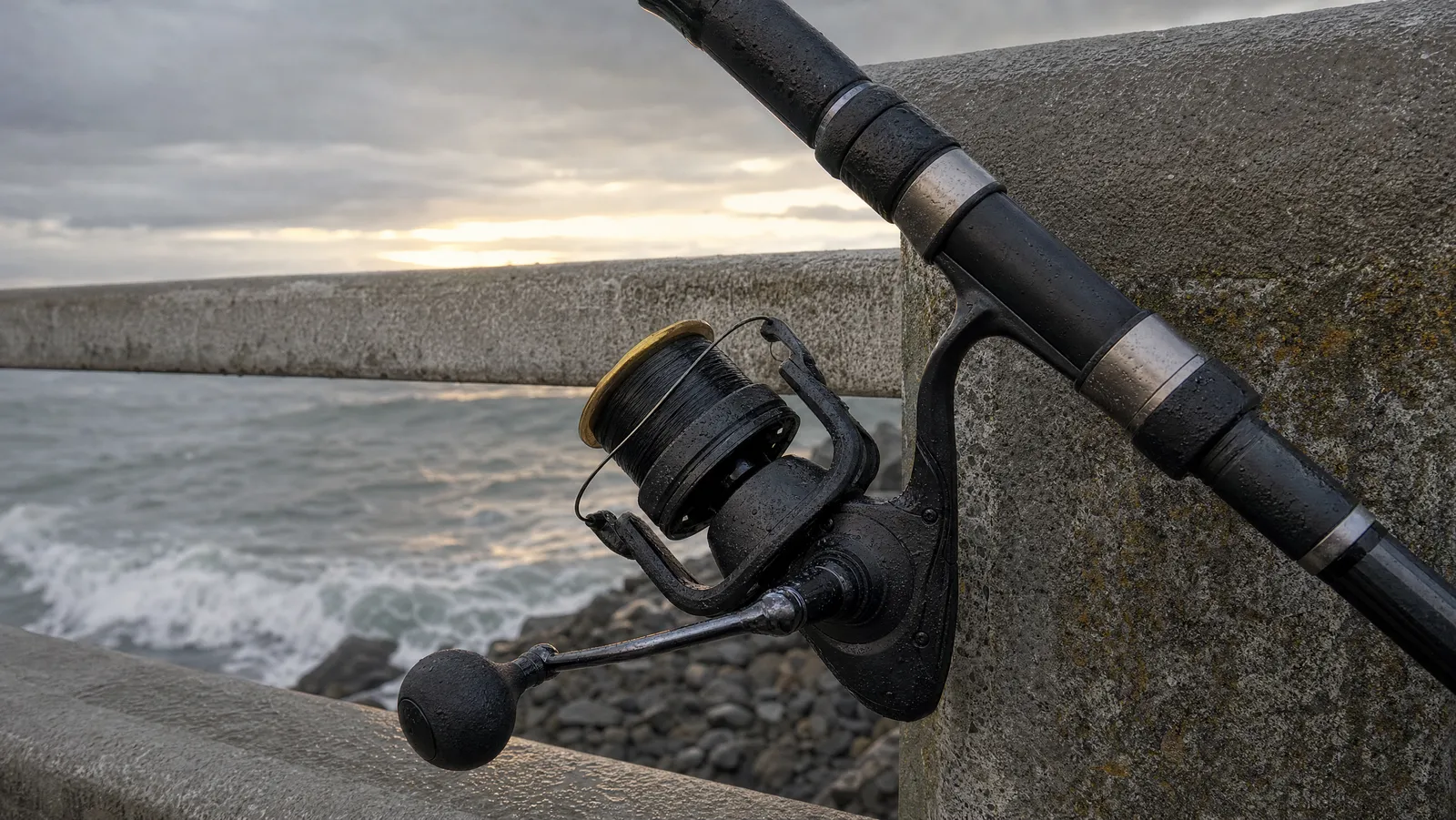
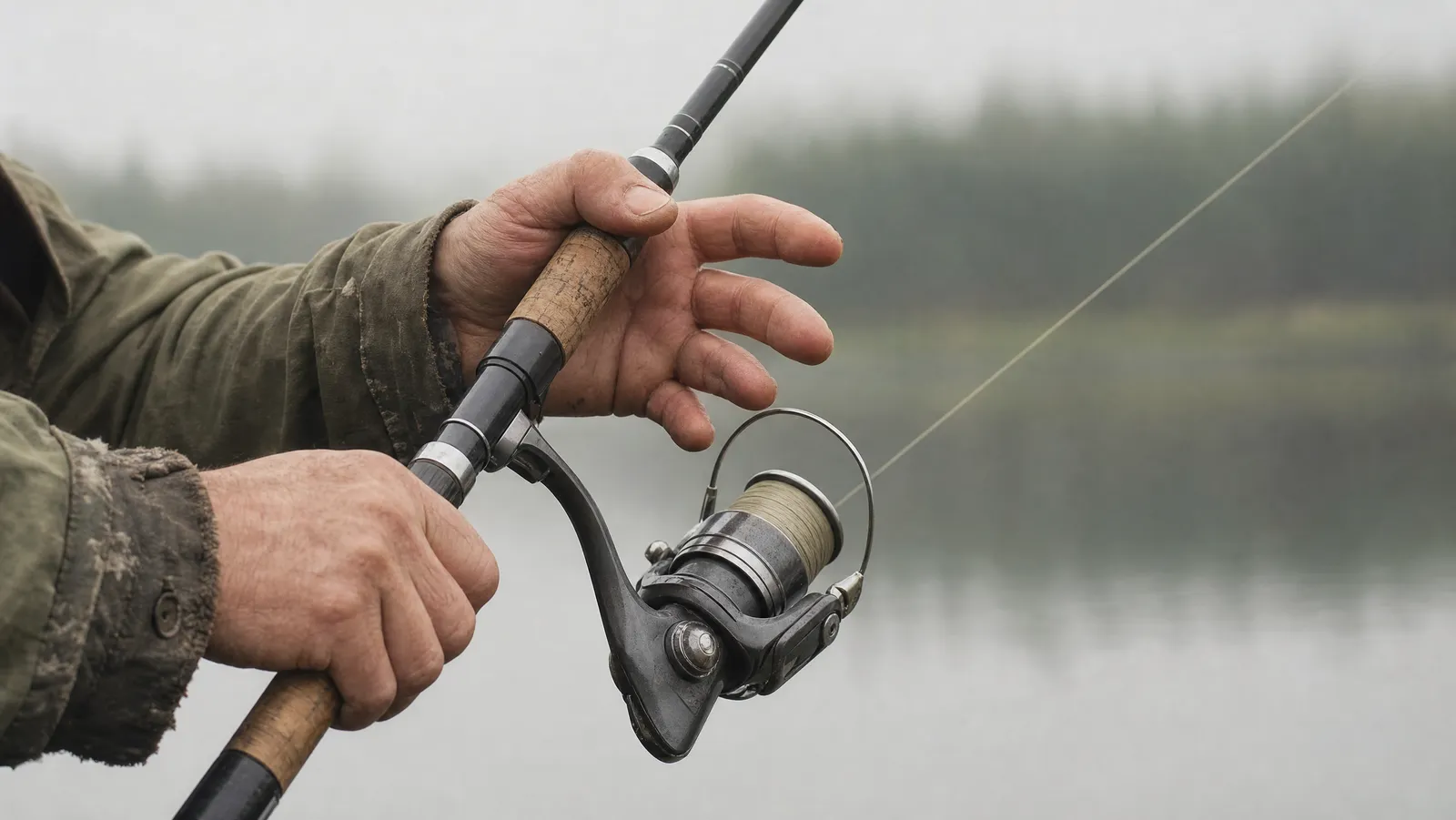
Crank a baitcaster and the spool rotates; line goes on straight. Crank a spinning reel and the spool stays still while the rotor and line roller orbit it. Spinning reel patent filings describe the consequence in flat engineering language: line twist is induced "due to the winding motion of the rotor and line guide about the rotationally stationary spool." The bail circles the spool. Each circle puts one rotation of twist into the line. You cannot design it out and still have a spinning reel.
How much twist? KastKing puts a number on it in its line-twist guide: "Every turn of the reel handle puts 4 to 6 twists in your line depending on your reel's gear ratio." The same patent literature notes twist accumulates fastest when the rotor spins while the line itself is stationary or moving slowly — which is precisely what happens when you crank against a fish that is taking drag, or grind a spinner back against current.
So the spec sheet for spinning line writes itself. The line has to absorb a large, unavoidable amount of accumulated twist without turning it into a coil, a loop, or a knot. That is a memory question, not a strength question.
Which Fishing Line Has the Least Memory?
Memory is a line's tendency to keep the shape it was stored in. Strip a season-old spool of mono off a reel and watch it lie on the surface in corkscrews. That is memory, and on a spinning reel it is the enemy.
The ranking that matters on a spinning reel is fairly consistent across the tackle press:
- Braid has the least memory. Wired2Fish notes that "since braid has less memory, it comes off the reel smoother and has less kinks catching the guides." It takes the twist and shrugs.
- Monofilament sits in the middle. The Tackle Room lists memory among mono's drawbacks: it "coils off the spool, especially in cold water," and "gets worse with age."
- Fluorocarbon is the hardest of the three to manage on a spinning reel. The same source rates fluorocarbon's memory "even worse than mono when cold" and warns that "wind knots are a real problem with fluoro mainline on spinners."
That single ranking explains our whole recommendation: braid on the spool, fluorocarbon on the leader, mono where stretch is a feature. Choose for memory first and breaking strain second, because the reel will supply the twist whether you planned for it or not.
Braid on a Spinning Reel: Our Default Main Line
Braid is not extruded like mono — it is woven from ultra-high-molecular-weight polyethylene fibers sold under names like Dyneema and Spectra. Dyneema's manufacturer markets the fiber as "the world's strongest fiber," 15 times stronger than steel by weight. Weave eight of those together and you get almost no stretch, a small diameter for the rated strength, and the low memory a spinning reel needs. The weave-count and carrier detail lives in our braided fishing line breakdown.
For most freshwater spinning setups, 10 to 20 pound braid covers the range. The KastKing SuperPower Braid, 20 lb is the one most anglers meet first, at about $17 as of September 2026 for 327 yards. KastKing markets it as low-memory specifically to reduce wind knots, and claims it holds an improved clinch knot — a useful, specific claim, because plain braid slips out of knots that mono holds all day. The 327-yard spool length matters more than it sounds: it leaves you enough line to put mono backing down first and still fill the spool.
Step up and the money buys abrasion resistance. The Sufix 832 Advanced Superline Braid, 20 lb runs about $31 as of September 2026 for 300 yards. Rapala, which owns Sufix, states the line is built from eight fibers — seven Dyneema plus one GORE performance fiber — at 32 weaves per inch, which is where the 832 name comes from. Sufix credits the GORE fiber with improved abrasion resistance, longer casting and reduced line vibration, and claims up to 30 percent greater Palomar knot strength than other braids.
Our split: buy the KastKing SuperPower if you fish open water and respool often, and the Sufix 832 if your day involves rock, riprap or dock pilings. The GORE strand is the only reason to pay twice the price, and around hard cover it is reason enough.
The Braid Problem Nobody Warns You About
Spool braid straight onto a bare aluminum arbor and the entire block of line will spin around the spool the first time you pull hard. It is not a defect. Braid has a slick, almost waxy surface and no memory, so nothing bites into the metal.
Two fixes, and they are not equal:
- Mono backing. SaltStrong's guidance is direct: monofilament "grips into the arbor (the center of the spool) and will not freely spin." Its worked example is a 3000-size reel and a 150-yard spool of braid, where "100-150 yards of mono backing will help fill it" — mono first, then a line-to-line knot, then the braid.
- Tape on the arbor. Works, but SaltStrong warns that "when saltwater gets to the band, the adhesive will usually break down and allow the reel to free-spin anyway." Treat it as the field expedient, not the plan.
Backing also saves money: you will never fish the bottom 80 yards on a bass lake, so there is no reason to pay braid prices for it. A Berkley Trilene XL Monofilament, 8 lb spool at about $7 as of September 2026 gives you 330 yards, enough for three or four reels. Back the spool, then fill it — those two steps are one job, not two.
Monofilament Still Has a Job
Mono is not a downgrade. It stretches and it is forgiving in a way braid is not, which is why it remains the right answer for treble-hooked crankbaits and for anyone learning a spinning rod.
The 8-pound Berkley Trilene XL measures 0.010 inch, or 0.25 mm, per Berkley's own listing, and Berkley states it resists twists and kinks for smoother casting. That claim is a marketing line, but it is aimed at the correct target — twist is the spinning reel's signature failure.
The honest limits are chemical. The Tackle Room reports that mono "absorbs 3-8% of its weight in water, which weakens it and increases diameter," and that while "it recovers when dried," "repeated wet/dry cycles weaken the polymer." The same source states that mono stored in direct sunlight on a rod rack in your garage "loses up to 20% of its rated strength within 6 months." Peer-reviewed work on a different polymer shows the same shape of curve: a 2026 study in Polymers on fishery HDPE and HDPE/UHMWPE-blended monofilaments recorded a 54.5 percent loss of breaking strength in pure HDPE after 600 hours of accelerated UV aging, and describes the first 300 hours as the rapid-degradation stage and 300 to 600 hours as a slow one. Different chemistry, same lesson: sunlight kills a spool on the rack.
Translation for the garage: mono is a consumable. At about $7 a spool as of September 2026, respooling Trilene XL every season costs less than losing one good fish, and the line you leave on the rack all summer is not the line you bought.
Fluorocarbon Belongs on the Leader, Not the Spool
Fluorocarbon's argument is optical and it is real. Line maker Varivas puts the refractive index of water at 1.33, fluorocarbon at 1.42 and nylon at 1.58, so fluorocarbon bends light closer to the way water does — not invisible, but harder for a fish to pick out than nylon. AFTCO makes the same point without the numbers. Density is the second half of the story: AFTCO gives fluorocarbon a specific gravity of 1.78 against 1.14 for nylon, so "in water (SG of 1.0), it will sink rather than float or suspend" instead of hanging in the surface film.
Both properties are what you want in the last three feet of a rig, and the memory problem above is why you do not want 150 yards of it on a spinning spool.
That is the case for the Seaguar Blue Label Fluorocarbon Leader, 20 lb, about $14 as of September 2026 for a 25-meter coil, down from a $17.25 list price. Seaguar names braid-to-leader connections as a primary use and describes a double structure construction built for knot and tensile strength — leader material is a stiffer, denser extrusion designed to survive a knot, not a short spool of main line.
If you would rather fish straight fluorocarbon on light gear, keep it genuinely light. Berkley lists the 6-pound Vanish at 0.009 inch, or 0.22 mm, on a 110-yard spool at about $6 as of September 2026, and Berkley states the resin refracts light like water and does not absorb it. That is a clear-water finesse tool and a top-shot, not a full spool — the setup you run when you are working soft plastic bass lures slowly on light spinning gear.
The connection knot is where this setup lives or dies. Knot testing summarized by knots.fish puts the FG knot at 95 to 100 percent of line strength and the double uni at 85 to 90 percent: FG if you will practice it, double uni if you will not. In force-gauge testing by Tom Rowland joining 20-pound J-Braid to 50-pound fluorocarbon, a double uni with a Bimini twist broke at 31.03 pounds against 28.69 pounds for the FG — technique matters as much as knot choice. For sizing leader material, our tippet and leader selector does the arithmetic.
Buy one 20-pound coil, learn one knot, and stop there. A single Seaguar Blue Label coil will tie a season of leaders.
Matching Line Weight to the Reel (and Why Heavy Line Coils Off)
Line that is too heavy for the spool is the second-most-common spinning reel complaint after twist, and it looks the same every time: loops peeling off in coils on the cast, then a wind knot at the tip guide.
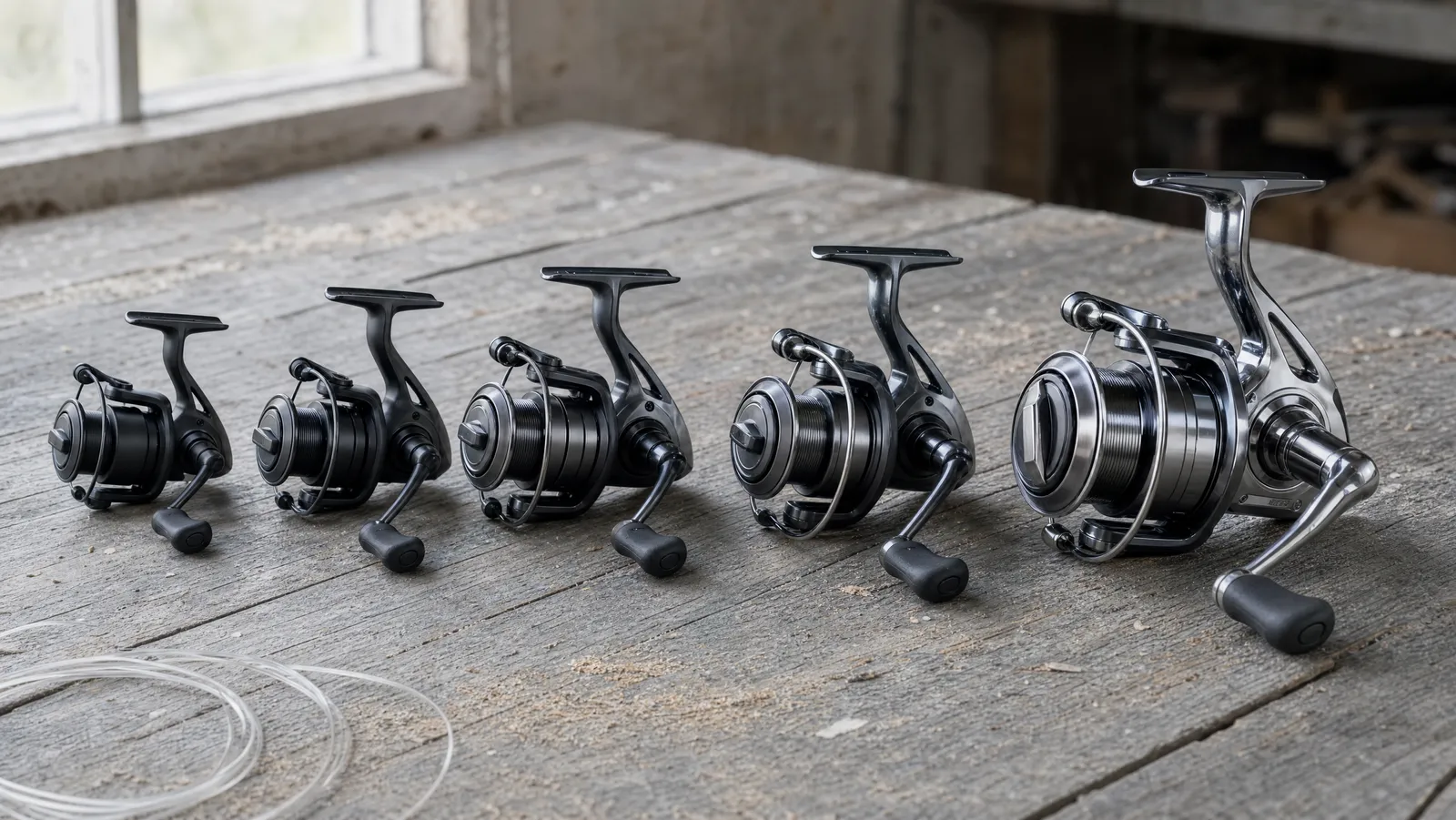
The mechanism is stiffness plus spool diameter — a stiff line forced into the tight radius of a 1000 or 2500-size spool wants to spring back out. ReelCalc's guidance for spinning reels is 6 to 10 pound monofilament or fluorocarbon, or 10 to 15 pound braid with a leader, and it calls 6 to 10 pound "the safest range" for fluorocarbon because "heavier fluorocarbon can become stiff and harder to manage on spinning gear."
Capacity is the other half. As ReelCalc puts it, "thicker line fills the spool faster," and the number on the box will not tell you how thick a given line is — two lines both marked 10 pound may not measure the same. Before you buy, run your reel and line through our line capacity calculator so you know whether one spool fills it or you need backing.
While you are at it, set the drag to match. Salt Water Sportsman's rule of thumb is 20 percent of breaking strength for nylon mono up to 20-pound test, and 15 percent for braid up to 20-pound test — meaning about 3 pounds of drag on 20-pound braid. Our drag setting calculator will do it from your line rating. Drag set too tight is the fastest way to convert a good fish into fresh line twist, because the rotor keeps circling while the line goes nowhere.
If you are still choosing the rod that will carry all this, our guide to fishing rods explained covers how power and action change the line weight you should be on.
Why Does My Fishing Line Keep Twisting?
Assume some twist is normal — see the mechanism above — and attack the things that multiply it.
- Stop reeling while the drag slips. This is the big one. KastKing's fix is to "lift up slowly to gain pressure on the fish, then drop your rod and reel, avoiding drag singing while you are reeling." Pump and wind; never grind against a screaming drag.
- Get the filler spool orientation right. More on this below, but a spool feeding off backwards builds twist into the line before you ever cast it.
- Switch the main line to braid. Braid does not eliminate twist, but with the least memory of the three materials it is far less likely to translate twist into a standing coil.
- Check the line roller. It is a bearing surface that has to spin freely. A roller gummed with grit and old line dressing drags line across a fixed point, and many anglers find that cleaning it removes a chronic twist problem.
- Watch your lures. Inline spinners and blade baits rotate on the retrieve, and many anglers run a small barrel swivel ahead of them for that reason.
If your line still corkscrews after all five, it is old. Mono that has absorbed water and sun all season has taken a set, and no technique undoes that.
Fishing Line Installation on a Spinning Reel: Get It Right Once
Bad spooling is the one problem you can eliminate outright in ten minutes at the kitchen table. Spooling a reel correctly deserves its own guide, but here is the short version.
- Feed the filler spool in the right direction. KastKing's rule is that line comes off a spinning reel counter-clockwise on the cast, so when spooling you want it coming off the filler spool clockwise. The common shorthand is to lay the spool label-up on the floor and watch what happens.
- Test after twenty turns. If the line is forming tight loops or twisting around itself, stop and flip the filler spool over. Twenty wasted turns beats a full spool of twisted line.
- Keep light, steady tension. Pinch the line through a damp cloth and reel slowly. Mercury Marine's version is to use your fingers to keep just enough tension that the line is guided onto the reel without disruption.
- Do it by hand. Mercury Marine's guidance is that "old-fashioned hand power is often the way to go," because high-rpm spooling machines "can actually create enough friction to damage the outer coating of the line."
- Fill to within an eighth of an inch of the lip. Tackle Warehouse specifies a gap of 1/8 to 1/16 inch between the line and the spool lip. Overfill and the line balloons off the spool in loops on the cast.
- Back braid with mono. Mono on the arbor first, then the braid, per the slippage fix above. How much depends on your spool: enough that the braid you have will finish flush with the lip.
The last step is running a leader, best done on the water so you can match leader strength to the cover you are fishing. Match hook size to it too — our guide to finding a fishing hook for success covers that end of the rig.
The Setup We Would Actually Buy
One rig covers the great majority of freshwater spinning, and it is not expensive.
Put 50 to 100 yards of 8-pound Trilene XL down as backing, about $7 as of September 2026. Fill the rest with 20-pound KastKing SuperPower, about $17 as of September 2026, or Sufix 832 at about $31 as of September 2026 if you fish rock and dock. Tie two to three feet of 20-pound Seaguar Blue Label to the front with a double uni, about $14 as of September 2026. Total outlay is roughly $38 to $52 as of September 2026, and it will outlast three spools of straight mono.
Drop to 6-pound Vanish as a straight main line only when the water is clear and you are on a 1000 or 2500-size reel where 110 yards still fills the spool. At about $6 as of September 2026, it is a specialist tool, not a default.
Set the drag to about 15 percent of your braid's rating, spool it clockwise off the filler spool, fill to an eighth of an inch below the lip, and pump rather than grind when a fish is taking line. Do those four things and the twist problem shrinks to an annoyance instead of a day-ender.
When you are ready to compare materials outside the spinning-reel context — trolling, baitcasting, fly, or heavy cover — our guide to the best fishing line picks up where this one leaves off.
The Picks, Tested
Berkley Trilene XL Monofilament, 8 lb
Berkley's Trilene XL is the default limp monofilament: 8-pound test at 0.010 inch diameter on a 330-yard spool.
- Berkley builds it around resisting twist and kinks, the exact spinning-reel failure mode
- 0.010 in at 8 lb fills a 2500 without swallowing the spool
- Cheap enough to respool every season without thinking about it
- Still stretches, so hooksets at distance go soft
- Absorbs water and loses strength over a season

KastKing SuperPower Braid, 20 lb
KastKing's SuperPower is the braid most anglers try first, and the reason is the price per yard. KastKing specifically claims it holds an improved clinch knot, which matters because plain braid knots slip in a way mono knots do not.
- Low memory is the single most useful braid property on a spinning reel
- 327 yards means you can back it and still fill the spool
- Knot strength claim is specific: an improved clinch will hold
- Needs mono backing or a taped arbor or it spins on the spool
- Colour fades over a season of sun

Sufix 832 Advanced Superline Braid, 20 lb
Sufix 832 mixes seven Dyneema strands with one GORE fiber, and that odd eighth strand is what the extra money buys: the line holds its shape and its color far longer than a plain eight-carrier braid. It is the braid to buy if you fish rock.
- The GORE fiber genuinely improves abrasion resistance around rock and dock
- Holds its colour, so you can still see your line at year two
- Round profile lays flat on a spinning spool
- Twice the price of budget braid
- Zero stretch punishes a stiff rod on light hooks

Berkley Vanish Fluorocarbon, 6 lb
Six-pound Vanish at 0.009 inch is a light-line answer for clear water and spooky fish.
- 0.009 in at 6 lb is genuinely thin for clear-water spinning
- Non-absorbing, so it holds strength across a long day
- Refractive index is the real argument for fluoro on the terminal end
- 110 yards is a top-shot, not a full spool
- Fluoro has more memory than mono and coils off a spinning reel

Seaguar Blue Label Fluorocarbon Leader, 20 lb
Leader material is not main line in a shorter package — it is a stiffer, denser extrusion built to survive a knot. Seaguar names braid-to-leader connections as the job this coil is for, which is precisely why a braid angler needs one.
- Purpose-built to be knotted to braid rather than fished as main line
- Cinches down instead of slipping, which is the whole problem with braid knots
- One coil ties a season of leaders
- You have to learn a line-to-line knot to use it
- Coil packaging tangles if you do not band it
Compare The Field
| Compare | Best Mono for Spinning Berkley Trilene XL Monofilament, 8 lb | Best Value Braid for Spinning KastKing SuperPower Braid, 20 lb | Best Braid for Hard Cover Sufix 832 Advanced Superline Braid, 20 lb |
|---|---|---|---|
| Overall | — | — | — |
| Price | $6.99 Check price → | $16.99 Check price → | $30.6 Check price → |
About The Author
Rob Thomas
Rob Thomas is a fisherman who loves catching tales from his fellow fishermen. He always enjoys a good story, especially when it comes from the sea.