How to Cast a Spinning Reel: Distance, Accuracy, and No Tangles

This post may contain affiliate links. Read our policy.
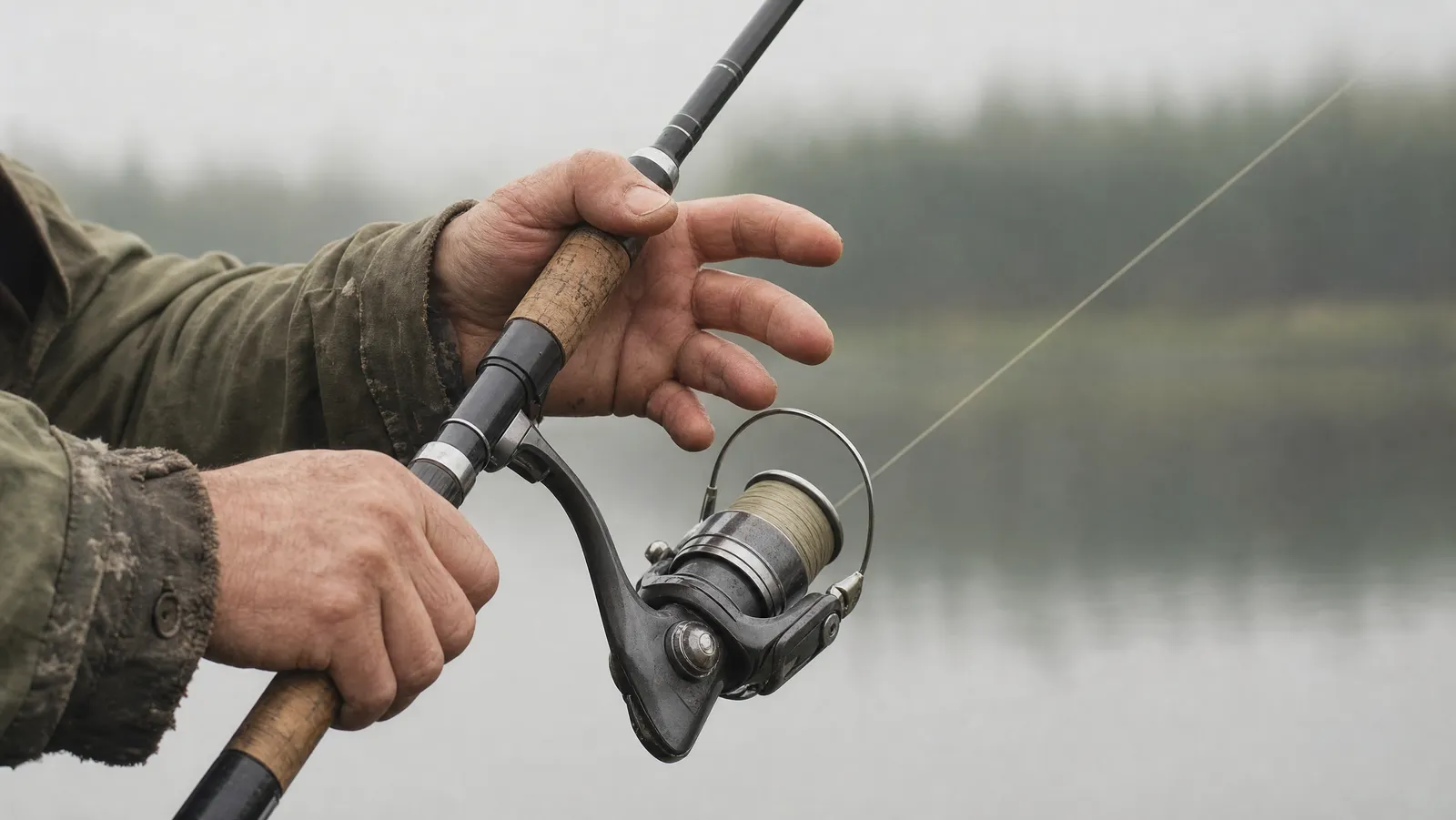
How to Cast a Spinning Reel: Distance, Accuracy, and No Tangles
Hang the lure 6 to 12 inches below the rod tip, trap the line on your index finger, flip the bail open, sweep the rod back and then forward in one smooth stroke, release the line as the tip comes level, then slow the line with that same fingertip before the lure lands and close the bail by hand. Six steps. The last two are the ones almost nobody teaches.
That is how to cast a spinning reel in one breath, and those last two steps are where every tangle you have blamed on a cheap reel actually comes from. A beginner can be fishing in ten minutes and still be picking loops off the spool a year later. If you are still shopping, picking the right spinning reel matters far less to your casting than the half second after the lure lands, and that is good news, because the half second is free.
A spinning reel cannot backlash, so stop treating your tangle like one
Most of what you read about "spinning reel backlash" is baitcaster advice in disguise. The mechanics are not the same.
Outdoor Life's Pete Robbins puts the baitcaster problem plainly: unlike a spinning reel, where the line comes off a stationary spool, the spool on a baitcaster spins, so if line comes off it faster or slower than the spool is rotating, you get a problem. Wikipedia's fishing reel entry adds the other half, stating that fixed-spool designs have no rotating motion of the spool itself, and that the invention of the spinning reel solved the problem of backlash because it had no rotating spool capable of overrunning and tangling the line.
So your spool is not overrunning. It cannot. Every loop, wind knot and bird's nest on a spinning reel is a slack-line or line-twist problem, and nearly all are created on the retrieve or at the bail rather than during the cast. Our explainer on how a spinning reel works covers the rotor and line roller.
That changes what you practise. You are not learning to brake a spool. You are learning to manage slack.
The grip, and the finger that does all the work
Set the reel stem between your middle and ring finger, reel hanging below the rod. Palm wraps the seat, thumb on top of the blank, index finger free beside the line. That is the whole reason for the grip.
With the bail still closed, reach that index finger forward and pull the line off the roller onto the pad of the finger, hooked at the first joint rather than out on the tip. Field and Stream's casting walkthrough describes the same move as grabbing the line just forward of the reel and pulling it back toward your hand so it cannot slip.
Only then open the bail, with your other hand, until it clicks and stays open. Field and Stream says the bail should click into place and should not snap back shut when you let it go, so treat that as a fault rather than a quirk; a tired bail spring is the usual suspect.
Trap the line too far out on the fingertip and it slips early, dropping the lure at your feet. Open the bail before the line is on your finger and the lure hits your boots.
How far the lure should hang below the rod tip
Roughly 6 to 12 inches. Published guidance lands in a band rather than on a number. The Missouri Department of Conservation's basic casting page calls for 5 to 10 inches of line between the rod tip and a practice plug, hanging straight down when the rod is still. Field and Stream tells you to reel the lure up until it hangs about a foot from the rod tip.
The figure matters because of rod load. The lure is the weight that bends the rod, and a rod that does not bend throws nothing. Hang it two inches under the tip and you cast with your arm instead of the blank. Let it swing three feet and you lose track of where it is at the moment you release.
For ordinary freshwater casting with a quarter-ounce lure, go to about a hand span below the tip. Longer drops are a deliberate choice for a pendulum swing with heavy baits or surf gear. Fishing rods explained covers how much a blank wants to flex.
The cast itself: load the rod, release near 11 o'clock
MDC's instruction is the clearest published version of the stroke and worth following literally. Start with the rod at 10 o'clock. Bring your forearm back to 2 o'clock. Sweep forward to 10 o'clock, releasing the line somewhere near 11 o'clock.
- It is a forearm stroke, not a shoulder swing. Elbow in near the ribs, wrist firm.
- The turnaround at 2 o'clock is a real pause. Let the lure's weight finish bending the rod before you drive forward. Rushing it is why casts fall short.
- Follow through. Finish with the tip pointed at the target rather than stopping the rod dead in the air.
If the lure skips or bounces in short, MDC's page says you released the line too late. If it climbs and lands behind you, too early.
Feathering: the step most guides skip
This is what separates a tidy cast from a bird's nest, and beginner articles leave it out.
As the lure nears the water, extend your index finger back toward the lip of the spool so the line pouring off it brushes your fingertip. Florida Sportsman's piece on the educated finger describes it exactly that way: extend the forefinger during the cast so the line whirling off the spool touches the fingertip and slows the bait, and feathering at the end of the cast causes the line to straighten. Touch the finger directly to the spool and, in that article's words, the line instantly snubs.
Two things follow. The lure lands softer and nearer where you aimed, and the line still in the air arrives straight rather than billowing. Slack-free line cannot loop around itself while you close the bail.
That article is honest about the limit, which is why we trust it: the finger fixes distance, not direction. Cast with more velocity than you need and the finger, judiciously applied, prevents overshooting. A cast that lands left is a stroke problem.
Close the bail by hand, every time
Never crank the handle to close the bail. It works, which is why most people do it, and anglers widely blame it for the loose wraps that turn into loops on a later cast; whether it also adds line twist is disputed even among its critics.
The mechanism anglers describe on the BassResource forums is that the bail travels close to half a rotation while line is still coming off the spool loosely, after the lure has slowed, so the first wrap can land outside the line roller or lie on the spool with no tension in it. Either surfaces as a loop on your next cast. Regulars there call manual closing the correct way and say closing it with the handle will cause reel and line problems eventually. The same threads hold sceptics who have never noticed a difference, and we found no controlled testing either way, so treat it as practitioner consensus rather than proof. We close ours by hand anyway: the habit costs nothing.
The sequence: catch the line with your finger as the lure settles, close the bail with your off hand while guiding the line onto the roller, pull once to confirm it is seated, then take up slack under light tension.
A bail that trips late and a line roller that does not spin freely both make this worse, and that is one of the few places a $90 reel genuinely out-casts a $25 one. Our roundup of the best spinning reels under $100 is organised partly around those parts.
What actually buys casting distance
In rough order of how much they matter:
- Spool fill. Mercury Marine's spooling guide puts the target at about 1/8 inch short of the spool lip and calls overfilling one of the easiest ways to cause problems on the cast; FishUSA's tutorial gives the same gap and ties overfilling directly to line slipping off and tangling. Some spooling guides add that underfilling costs distance the other way, because the line travels farther from the spool lip to the first rod guide. Our line capacity calculator does the arithmetic, and how to spool a spinning reel covers the tension and direction that keep twist out.
- Thinner, limper line. Field and Stream's casting guide states the trade-off directly: a heavier lure and thinner line increase distance, while a lure that is too light for heavy line casts poorly. Our fishing line weight chart has the diameters.
- Lure weight matched to the rod's rating. Robbins notes that lures at the lower end of a rod and reel's suggested range invite trouble; on spinning gear they simply fail to load the blank.
- Rod length. A longer rod moves the tip through a bigger arc, and costs you accuracy under trees.
Past those four the returns collapse. Bearing count buys no distance, and nor does a higher gear ratio, which only changes how fast line comes back. Distance is usually not the problem anyway: MDC's page says accuracy is often more important than distance, and that fish holding near cover may only strike a lure that lands close to them.
Accuracy: sidearm, pendulum, and pitching light lures
Accuracy comes from a shorter stroke, not a gentler one.
The sidearm cast is the overhead stroke rotated flat, sweeping across your body. It keeps the lure under branches and docks, and costs some distance. Florida Sportsman describes the low version as more a flick of the rod tip than a swing, and notes that releasing once the tip points at the target produces a straighter flight.
The pendulum cast uses a longer drop, 2 to 3 feet, and a swing rather than a stroke. Let the lure swing back on its own, time the forward move to the swing, and lob it. Slow, quiet and accurate up close.
Pitching light lures is the hardest thing with spinning gear, because a 1/16 oz jig barely loads anything. Use a longer drop, a slower stroke and lighter line. If you throw lures that small often, change the rod, not the reel.
Feather all three.
Casting into wind: lower beats harder
The instinct is to swing harder into a headwind. It does not work, because a high arc gives the wind more time and a bigger target.
Drop the trajectory instead. MDC's page says wind calls for a lower trajectory, and that you get one by releasing the line later in the forward cast. That is the whole adjustment: same stroke, same effort, later release, sidearm if you need it lower still.
Across the wind, aim upwind and let the bow in the line drift the lure back. Feather hard as it lands: a crosswind plus slack line is the recipe for a wind knot. Downwind is free distance and the place anglers get sloppy; feather there too.
The four tangles, and what each one actually means
- A loop pulls off the spool on the next cast. The previous retrieve laid line on loosely. Pinch the line against the blank and take up slack under tension, especially on the first crank.
- Line jumps off in coils when you open the bail. The spool is overfilled, or the line is too stiff for a fixed spool. Pull some off and check the gap at the lip.
- A wind knot mid-cast. Slack line plus a bail closed by the handle. Feather the landing, close the bail by hand.
- Line twist building over hundreds of casts. Usually reeling against a slipping drag, or a line roller that has stopped turning. A faster retrieve makes slack easier to manage, and spinning reel gear ratio explains what you are buying there.
Our piece on common spinning reel problems works through each symptom, including how to pull twist out of line already on the reel.
A 20-minute practice drill
Find a lawn, tie on a hookless practice casting plug, and set a bucket out at about 40 feet. Make ten casts at 10 to 2 to 11 with no feathering, watching where the plug lands relative to your release point. Make ten more and feather every one, aiming past the bucket and snubbing the line down onto it. The second set will be tighter. Then shorten up: ten sidearm casts at 20 feet and ten pendulum lobs at 15 feet.
Wear eye protection and keep bystanders back. According to Ophthalmology Times, reporting on a study in the American Journal of Ophthalmology, fishhooks, rods and weights were among the most common causes of fishing-related eye injury, with paediatric patients making up 38.2% of cases. MDC's page says to avoid practising on land with a hooked lure around small children or pets, which is why the practice plug is the right call.
What to do next
Change three things: feather every cast, close the bail by hand, and stop filling the spool to the brim. One session to learn, and it removes most of the tangles people blame on their tackle. Then work the stroke: a real pause at 2 o'clock and a release near 11 add more distance than any reel upgrade.
If the reel genuinely is the limit, and after a fortnight of practice you will know, the two parts that matter for casting are the bail trip and the line roller, and our guide to the best spinning reels covers which reels get those right at each price, and which ones are selling you bearings instead.
About The Author
Rob Thomas
Rob Thomas is a fisherman who loves catching tales from his fellow fishermen. He always enjoys a good story, especially when it comes from the sea.