Braided Fishing Line: What It Wins, What It Costs, and When to Skip It

This post may contain affiliate links. Read our policy.
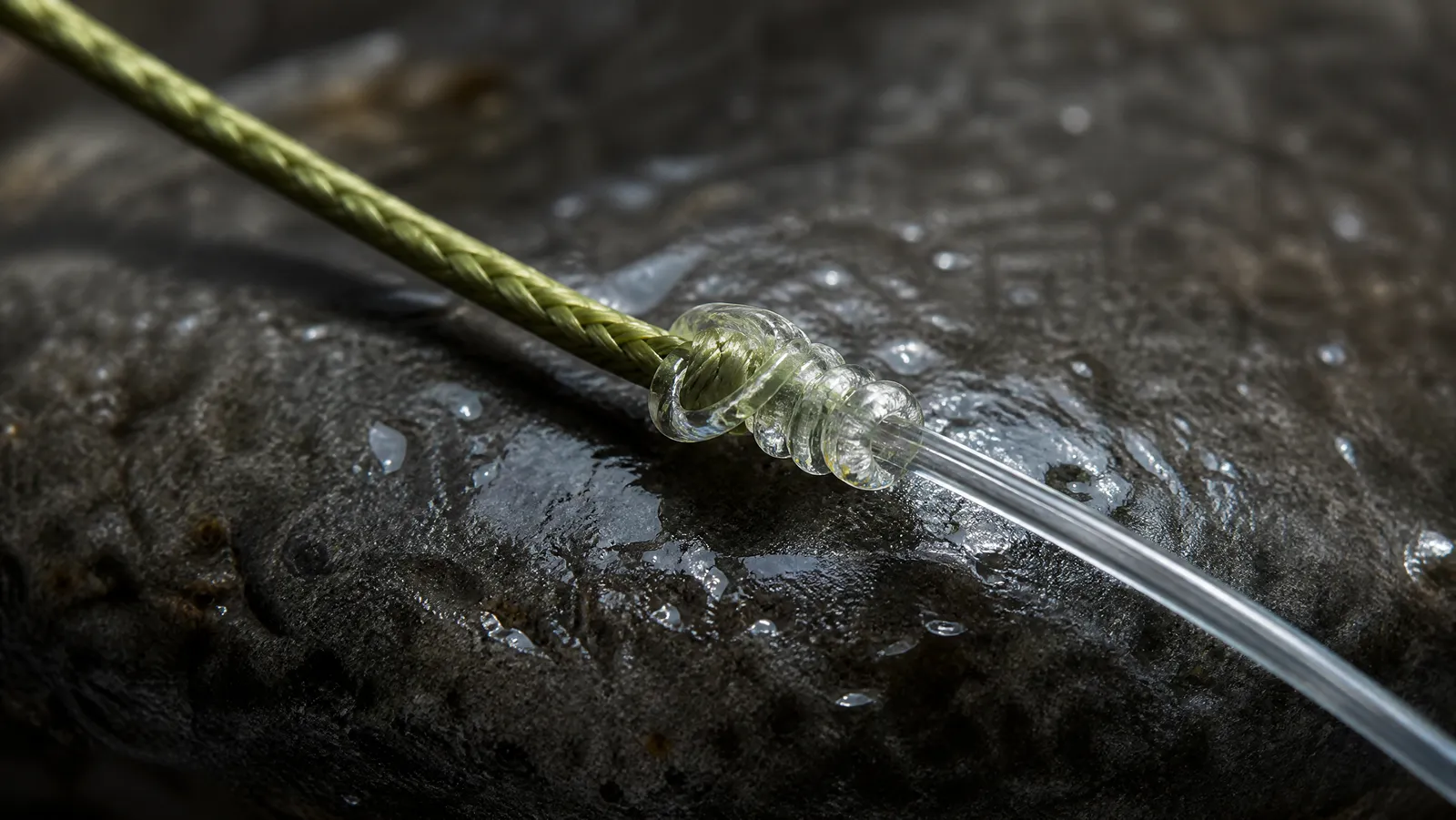

Sufix 832 Advanced Superline Braid, 20 lb
Sufix 832 mixes seven Dyneema strands with one GORE fiber, and that odd eighth strand is what the extra money buys: the line holds its shape and its color far longer than a plain eight-carrier braid.
- Seven Dyneema strands plus one GORE fiber is a real construction difference
- Best-in-class abrasion resistance for rock, dock and grass
- Colour retention treatment actually works
- Most expensive per yard of anything here
- Zero stretch is unforgiving with treble hooks
Braided Fishing Line: What It Wins, What It Costs, and When to Skip It
Braided fishing line buys you three things — almost no stretch, a much thinner line for the same breaking strain, and almost no memory — and charges you for them in visibility, knot security, and shock absorption. It is not a straight upgrade over monofilament. It is a trade, and it is the right trade in roughly half of freshwater fishing.
Angler Reviews is reader-supported. We may earn a commission on purchases made through links on this page, at no extra cost to you.
What follows is the honest version: what braid is woven from, what carrier count changes, why the missing stretch rewrites your hookset and your drag setting, why braid floats, and where mono or fluorocarbon genuinely wins. If you have not narrowed the field to braid yet, start with the fishing line buyer's guide and come back once you have.
What Braided Fishing Line Actually Is
Mono and fluoro are extruded — one continuous strand pushed out of a die. Braid is woven. The raw material is gel-spun polyethylene fiber, sold under trade names like Dyneema and Spectra, plaited into a line from several separate carriers. The "PE" stamped on Japanese spools is that same polyethylene family.
That construction is why spec sheets read the way they do. Sufix states that its 832 Advanced Superline is built from 8 fibers — 7 Dyneema plus 1 GORE Performance Fiber — at 32 weaves per inch, which is exactly where the 832 name comes from. Sufix credits the Dyneema fibers with strength, sensitivity, hydrophobic water-repellent protection and small diameter, and credits the GORE fiber with improved abrasion resistance, better casting distance and reduced line vibration.
Beyond Braid attacks a different fiber problem: it describes its Blackout 8X as built from black OEM fibers rather than dyed ones, which is its answer to the fade that turns green braid grey by August.
Two numbers matter on the label: the fiber and the carrier count. If a spool lists neither, you are buying on price. That is a legitimate choice — just make it knowingly.
Why Braid Is So Much Thinner for the Same Pound Test
Diameter is braid's real headline, not strength. According to Tackle Village's fishing line diameter chart, 20-pound braid measures about 0.010 inches while 20-pound mono and 20-pound fluorocarbon both measure about 0.016 inches. At 6-pound test the gap is 0.005 inches of braid against 0.009 inches of mono. Tackle Village summarizes it as braid running "between 35 and 45% lower in diameter than either mono or fluoro line."
PowerPro's published equivalent-diameter sizing guide says the same thing from the other direction: 20-pound PowerPro carries the diameter of 6-pound monofilament, and 30-pound carries the diameter of 8-pound mono.
Three practical consequences follow, and none of them is "braid is stronger."
- You fit far more line on the same spool. A reel rated for 140 yards of 12-pound mono swallows a great deal more 30-pound braid. Run your own reel through our line capacity calculator before you buy a 300-yard spool you cannot use.
- You cast farther with lighter lures. Thinner line drags less through the air and less through the water.
- You get less bow in current and wind, which is most of what "sensitivity" actually means in deep water.
Berkley states that its Trilene Big Game Braid is three times stronger than mono of the same diameter. Read that as a diameter claim rather than a strength claim and you have the right mental model. If your reason for spooling braid is "it is stronger," you have the wrong reason. Buy it for the diameter.
Near-Zero Stretch: What It Fixes and What It Breaks
Every marketing page calls braid zero-stretch. The measured figure is close but not zero. One Outdoors' head-to-head line comparison puts monofilament at 25 to 35 percent stretch, fluorocarbon at 10 to 15 percent, and braid at 1 to 3 percent.
That difference is the single biggest reason to fish braid, and the single biggest reason not to.
What it fixes. A hookset at 40 yards reaches the hook instead of dying in the line. You feel the difference between gravel and hard clay. Pulling a fish up through matted grass becomes a winching job rather than a hoping job.
What it breaks. Nothing absorbs a headshake at the boat. A fish that surges once against a locked drag and a stretchless line either pulls the hook or breaks something. Even a premium braid like the abrasion-first Sufix 832 is unforgiving with treble hooks, because there is no give anywhere in the chain.
With braid, the drag is the only shock absorber you have left. Set it deliberately against the line's breaking strain rather than by feel, and check the number with our drag setting calculator. If you are fishing trebles on braid anyway, we would lean on a softer rod tip and a longer leader to put some elasticity back in the system.
4X vs 8X: What Carrier Count Actually Changes
Carrier count is the number of yarn bundles in the weave, and it is the spec most anglers ignore and then blame the line for. Sport Fishing magazine's breakdown is the clearest we found: four-carrier lines are "basket braid" with a "one-over, one-under weave, recognized by nubs on the line's surface." Eight-carrier lines are "diamond braids because of their two-over, two-under construction." The magazine's tire analogy is worth stealing: four-carrier is "like an off-road tire, able to cut through weeds with rigid strength," while eight-carrier is "like a highway tire, with less noise and less friction."
The performance split follows directly:
- Eight-carrier casts farther and runs quieter. Sport Fishing describes the eight-carrier weave as creating "a smoother, quieter and rounder surface that casts farther." Four-carrier makes the singing noise through the guides that everyone recognizes.
- Four-carrier resists abrasion better. Per the same source, basket braid "typically has more fiber integration, so yarns are held firmly in the line structure for better abrasion resistance," while the smoother eight-carrier line "is more likely to bury" into itself on the spool.
- Eight-carrier costs more, which Sport Fishing attributes to "the higher cost of the smaller denier yarns."
Beyond Braid's Blackout 8X, about $28 as of September 2026, is the straightforward eight-carrier argument: eight tightly woven PE fibers, a fluoropolymer coating for casting distance, and no dye to transfer onto your hands while you spool. It is a 30-pound line, heavier than most freshwater spinning reels want. Sufix 832 is the exception to the rule — eight carriers, but with the GORE fiber doing the abrasion work a four-carrier line usually does with bulk.
Carrier count is a casting-versus-cover decision, not a quality ladder. Open water and light lures, go eight. Grass, wood and rock, four is defensible and cheaper.
Braid Floats, and That Decides Half Your Presentations
Braid sits on top of the water, and that is physics rather than preference. Sunline notes that PE fibers "have a specific gravity less than water (around 0.97)," and that braid does not absorb water. One Outdoors lists roughly 0.97 for braid against about 1.14 for mono and about 1.78 for fluorocarbon. Sunline adds a second reason: "Because braid is woven and doesn't have the density of a solid line, it tends to stay high in the water column."
That is a gift on top and a nuisance underneath.
Where floating helps. Sunline calls floating braid "perfect for topwater lures like frogs, poppers, and walking baits" and says it "keeps your line from dragging through weeds and cover." A walking bait on braid does not get pulled off its cadence by a sinking belly of line. Our roundup of topwater bass lures pairs directly with this section.
Where floating hurts. Sunline points to line bowing that reduces "sensitivity and hookset power" on deeper presentations, and to unwanted slack in wind. The company sells a sinking braid, Almight, at a stated specific gravity of 1.48 for exactly this reason.
The practical fix for most anglers is cheaper than a second spool: keep the floating braid and put a length of sinking fluorocarbon at the business end.
The Visibility Problem, and the Leader That Solves It
Braid is opaque. There is no version of it that disappears, which is why every braid brand sells a low-vis or camo colour and none of them sells a clear one.
Fluorocarbon is different for a measurable reason. As BD Outdoors explains it, water has a refractive index of 1.33 and fluorocarbon about 1.42 — close enough that fluoro bends light far more like water than nylon does. Master Fishing Mag pushes back on the word "invisible" using the same numbers, stating flatly that "fluorocarbon is not invisible, but it is less visible than any other fishing line" — 1.42 against 1.33 narrows the gap without closing it.
So the standard rig is braid main line, fluorocarbon leader. Published guidance on length runs wide. Bassmaster's rundown on fluorocarbon leader length calls 2 to 4 feet "a great, middle-of-the-road leader length," drops to an "8- to 12-inch leader" in heavily stained to muddy water, and stretches to a 10-foot leader in ultra-clear water "so the fish have no idea that braided line is anywhere near my lure." Our default is the shorter end for bass work, the longer end for clear, pressured water.
Leader material is not simply main line in a smaller package. Seaguar names braid-to-leader connections as a primary use for its Blue Label leader and describes a double-structure construction built for knot and tensile strength. A 20-pound Blue Label coil runs about $14 as of September 2026, down from a $17.25 list price, and 25 meters is a season of leaders for most people. Our tippet and leader selector will get you to a sensible test for the fish you are chasing.
If you want a braid that fights visibility on its own, Beyond Braid's Moss Camo, about $23 as of September 2026, uses a varying green-brown-gold pattern instead of a flat colour to break up against stained water. The trade is that camo is harder for you to track on the surface too. A full piece on running a leader is in the works; until then the rule is simple — clear water gets a leader, muddy water and matted grass often do not.
Knots: Your Mono Knot Will Slip in Braid
This is where new braid users lose fish and blame the line. FishingKnots.com puts the cause plainly: braid's "smooth surface defeats most traditional knots," and the improved clinch, Trilene and original uni knots "rely on friction wraps that work on textured monofilament but slide out of slick braid."
The consensus fix is the Palomar, whose doubled line grips at more contact points. FishingKnots.com puts the Palomar at roughly 100 percent strength retention on braid and names the San Diego Jam and the Berkley Braid knot as the other two that "grip braid securely" — with seven wraps minimum on a San Diego Jam, and nine or more if you insist on an improved clinch. KastKing claims its SuperPower holds a standard improved clinch — a real point of difference if it holds up for you, but it is a manufacturer claim, and we would still tie a Palomar.
For the braid-to-leader join, the numbers reported by knots.fish put the FG knot at roughly 98 percent of line strength and the double uni at about 90 percent. Head-to-head testing muddies that: in Tom Rowland's bracket test the FG broke at 28.69 pounds while a double uni backed by a Bimini twist held to 31.03 pounds, and Rowland noted an FG had reached 34 pounds in his earlier testing. Read that as technique mattering more than knot choice. A well-tied double uni beats a badly tied FG every time.
We will publish a dedicated piece on the knots that hold. Until then, learn the Palomar and one leader knot and you have covered nearly all of freshwater braid fishing.
Spooling Braid: The Bare-Arbor Slip Nobody Warns You About
Braid does not bite into a slick aluminum or graphite arbor the way nylon does. Salt Strong's spooling guidance is direct about the failure mode: mono grips the arbor, braid can free-spin around it, and the whole spool of line rotates against a good fish while your handle turns and nothing happens.
Two accepted fixes:
- Electrical tape. A strip over the first few wraps on the bare spool gives the braid something to grab. Fast, free, and fine for a reel you fill often.
- Mono backing. Salt Strong's recommendation is 50 to 100 yards of mono first, joined to the braid with a line-to-line knot, then 100 to 150 yards of braid to fill the spool. It is also cheaper, since you are not paying braid prices for line that never leaves the reel.
Spool under firm, constant tension — we run the line through a folded damp rag on the way to the reel. Loose braid buries into itself on the next hard cast, and many anglers report that a buried wrap is how a 30-pound line ends up parting well under its rated strength. Spinning reels are the fussiest case, and our guide to the best fishing line for spinning reels goes further into wind knots, backing and fill level.
When Braid Is Clearly the Right Answer
Four situations where we would not fish anything else:
- Heavy vegetation and frogging. You need to move a fish before it wraps. Berkley markets its Trilene Big Game Braid specifically for cutting through vegetation, and it is about $17 as of September 2026, down from a $19.99 list price. The presentations that make that pulling power pay are in our guide to weedless bass lures.
- Deep vertical work. At 1 to 3 percent stretch, a hookset in 40 feet of water is a hookset. At 25 to 35 percent, it is a suggestion.
- Long casts with light lures on spinning gear. Thin diameter plus low memory is the whole argument.
- Anywhere abrasion decides the fight. Rock, dock pilings, zebra mussels — Sufix 832's stated design target.
When Mono or Fluorocarbon Genuinely Beats Braid
Three situations where braid is the wrong tool, and we will say so plainly.
- Treble-hooked baits. Crankbaits, jerkbaits and topwater plugs with trebles want stretch, because a treble tears a hole and a stretchless line keeps pulling on it. Mono's 25 to 35 percent is a feature here, not a defect. Our crankbait guide covers the presentation side.
- Gin-clear water with no leader. If you will not tie a leader, do not fish braid in clear water. Fluorocarbon's 1.42 refractive index against water's 1.33 is a real advantage that opaque braid cannot match at any price.
- Cost on rods you rarely fish. Braid at roughly $17 to $31 a spool as of September 2026 is hard to justify on a backup rod that sees four trips a year.
Mono has real problems of its own, and they are worth knowing before you default to it. One Outdoors reports that nylon absorbs 3 to 10 percent of its weight in water, that wet mono tests roughly 10 to 15 percent weaker than dry, and that line stored on a reel in direct sunlight can lose up to 20 percent of its strength in a single season. Braid does not absorb water at all. Mono is cheaper to buy and more expensive to maintain.
Which Braid We Would Start With
If you have never fished braid, buy the cheap spool first and find out whether you like it. The KastKing SuperPower in 20-pound, about $17 as of September 2026 for 327 yards of low-vis gray, answers the question for the price of a tank of gas. It fades after a season in the sun, which is fair at that number. Its thin profile is also exactly the kind that slips on a bare arbor, so back it.
If you already know braid is your line, the Sufix 832 in 20-pound is what we would put on the rod that matters, about $31 as of September 2026 for 300 yards. Seven Dyneema strands plus one GORE fiber is a genuine construction difference rather than a marketing tier, and it is the most expensive line per yard here.
Beyond Braid's Blackout 8X, about $28 as of September 2026, is the eight-carrier pick for casting distance and permanent colour, caveat 30-pound test. The Moss Camo at about $23 as of September 2026 is the stained-water specialist. Whichever main line you land on, a Seaguar Blue Label coil at about $14 as of September 2026 is the other half of the system.
The Short Version
Braid is thinner per pound, does not stretch, does not absorb water, and does not disappear. Those four properties explain every advantage and every complaint.
Fish it when the win is diameter, sensitivity or pulling power — deep water, heavy cover, long casts, abrasive structure. Skip it, or leader it, when the win would be stretch or invisibility. Tie a Palomar, not a clinch. Put mono or tape under it on a bare spool. And set your drag on purpose, because on braid it is the only thing between a headshake and a lost fish.
When you are ready to compare braid against fluorocarbon and mono head to head, Angler Reviews' fishing line hub lays out the full field.
The Picks, Tested
Sufix 832 Advanced Superline Braid, 20 lb
Sufix 832 mixes seven Dyneema strands with one GORE fiber, and that odd eighth strand is what the extra money buys: the line holds its shape and its color far longer than a plain eight-carrier braid. It is the braid to buy if you fish rock.
- Seven Dyneema strands plus one GORE fiber is a real construction difference
- Best-in-class abrasion resistance for rock, dock and grass
- Colour retention treatment actually works
- Most expensive per yard of anything here
- Zero stretch is unforgiving with treble hooks

KastKing SuperPower Braid, 20 lb
KastKing's SuperPower is the braid most anglers try first, and the reason is the price per yard. KastKing specifically claims it holds an improved clinch knot, which matters because plain braid knots slip in a way mono knots do not.
- 327 yards at this price undercuts everything else honest
- Low memory means fewer wind knots on spinning gear
- KastKing claims a standard improved clinch will hold
- Fades noticeably after a season in the sun
- Thin profile slips on a bare spool without backing

Beyond Braid Blackout 8X, 30 lb
Colour-fade is braid's most irritating failure, and Beyond Braid sidesteps it by using fibers that are black to begin with instead of dyeing them. The eight-strand weave is rounder than a four-carrier braid, which is what you feel in the guides.
- Black OEM fibers rather than dye, so it cannot fade
- Eight carriers give a rounder, smoother line through the guides
- No dye transfer onto hands or gear while spooling
- 30 lb is heavier than most freshwater spinning reels want
- Premium price for a colour you cannot change

Beyond Braid Moss Camo, 20 lb
The varying green-brown-gold pattern is the pitch here: rather than one flat colour, the line breaks up against stained water. Beyond Braid also coats it in fluoropolymer, which is what keeps a coloured braid shooting through the guides.
- Varying green-brown-gold breaks up against stained water better than a flat colour
- Fluoropolymer coating keeps it shooting through the guides
- Low memory for a coated braid
- Camo patterning is harder for you to track on the surface
- Costs more than plain low-vis braid of the same test

Berkley Trilene Big Game Braid
Berkley's braid carries the Big Game name for a reason: the pitch is abrasion resistance and raw strength per diameter rather than finesse. It is the braid for anglers who fish grass and expect to pull.
- Berkley states 3x the strength of mono at the same diameter
- Marketed and built specifically to cut through vegetation
- Berkley distribution means it is easy to find locally
- Berkley publishes fewer construction details than Sufix or Beyond Braid
- Abrasion-first build is stiffer than a finesse braid

Seaguar Blue Label Fluorocarbon Leader, 20 lb
Leader material is not main line in a shorter package — it is a stiffer, denser extrusion built to survive a knot. Seaguar names braid-to-leader connections as the job this coil is for, which is precisely why a braid angler needs one.
- Seaguar names braid-to-leader connections as its primary use
- Double-structure build survives an FG or double uni knot
- Lets you drop to lighter leader than nylon of the same strength
- Adds a knot to your system that you have to tie well
- Coil form is less convenient than a spool
Compare The Field
| Compare | Best Overall Braid Sufix 832 Advanced Superline Braid, 20 lb | Best Value Braid KastKing SuperPower Braid, 20 lb | Best Eight-Strand Braid Beyond Braid Blackout 8X, 30 lb |
|---|---|---|---|
| Overall | — | — | — |
| Price | $30.6 Check price → | $16.99 Check price → | $27.95 Check price → |
About The Author
Rob Thomas
Rob Thomas is a fisherman who loves catching tales from his fellow fishermen. He always enjoys a good story, especially when it comes from the sea.