Weedless Bass Lures: How to Fish Heavy Cover Without Snagging

This post may contain affiliate links. Read our policy.
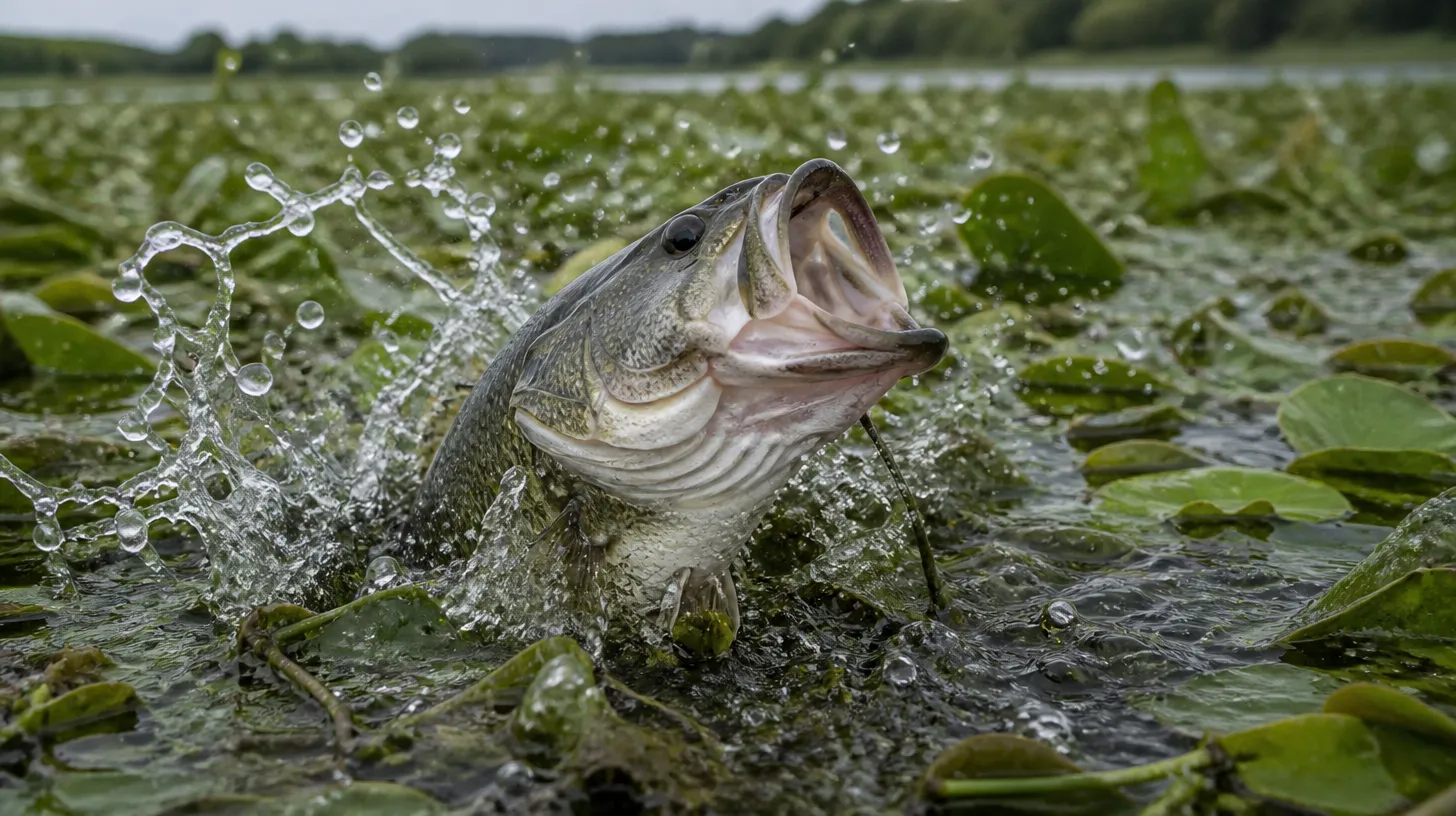
The thickest cover on the lake is where the biggest bass live — and where most anglers refuse to cast. Weedless bass lures remove that excuse. A weedless lure hides or shields its hook point — buried in soft plastic, tucked behind a brush guard, or riding on top of a hollow body — so the bait slides through grass, wood, and pads without snagging. The families that matter are the Texas rig, hollow-body frogs, weedless jigs, swim jigs, weedless wacky and Neko rigs, and punch rigs.
This is a technique guide, not a shopping list. We cover what actually makes each rig snag-resistant, how the hookset changes when a hook point is protected, and how to match the rig to the cover in front of you. If you want the full map of how these fit alongside crankbaits, spinnerbaits, and everything else in the box, start with our bass lure buyer's guide and come back here when you are ready to throw at the ugly stuff.
Why Heavy Cover Holds the Biggest Bass
Largemouth bass are ambush predators, and dense cover stacks every advantage in their favor. According to the Rapala Fishing Blog, heavy cover gives a bass everything it needs in one place: shade, security, and food. From inside a shadow, a bass can watch everything that moves in the brighter water around it while staying nearly invisible itself — the fish gets the visual edge and the element of surprise.
There is a biological reason for the shade preference, too. As the same Rapala piece points out, bass have no eyelids, so a canopy of matted grass, flooded brush, or dock planking shields their eyes from direct sun. Add in the simple fact that thick cover sees far fewer lures than an open point does, and you get the pattern every veteran flipper knows: the biggest, least-pressured fish in the lake are usually sitting where an open-hook bait cannot go.
That is the whole case for learning these rigs. The fish are in there. The only question is whether your lure can get in and — more importantly — get back out with a bass attached.
What Makes Weedless Lures for Bass Actually Work
Every weedless design solves the same problem — an exposed hook point grabs cover — with one of three mechanisms:
- Plastic over the point. On a Texas rig, the hook point is skin-hooked back into the body of the soft bait. Vegetation slides over smooth plastic; on the strike, the point pops free through it.
- A brush guard in front of the point. Weedless jigs and many weedless hooks stand a fan of nylon fibers or a wire loop just ahead of the point. Limbs and stalks deflect off the guard; a bass's bite collapses it.
- A hollow, collapsible body. Frogs and toads ride with double hooks laid flat against a soft, air-filled body. The body sheds slop on the retrieve and squashes flat when a fish eats, exposing the hooks.
Here is the trade-off that governs all snagless bass fishing: anything that protects the point from cover also protects it, a little, from the fish. A weedless rig will always hook a slightly lower percentage of biters than an open hook. You accept that tax because it buys you casts at fish nobody else is reaching — and you minimize it with sharp hooks, the right line, and the hookset adjustments we cover rig by rig below.
The Texas Rig: The Original Weedless Bass Rig
The Texas rig is where weedless fishing started, and it is still the first rig we hand a new bass angler. The soft-plastic worm itself dates to 1949 — according to Texas Parks & Wildlife magazine, Nick Creme cooked up a batch of vinyl at his home in Akron, Ohio, and molded the first plastic worm; Bassmaster's history of the worm records the original Wiggle Worms selling five to a pack for a dollar. The weedless rigging came later: as Bassmaster tells it, an ingenious angler fishing East Texas's timber-filled Tyler West Lake in the 1950s figured out he could bury the hook point back into the worm's body and slide a cone-shaped weight up the line ahead of it — and the Texas rig was born.
How to rig it: thread the point of an offset worm hook through the nose of the bait about a quarter inch, bring it out, slide the bait up around the hook eye, then rotate the hook and bury the point back into the body so the bait hangs straight. Skin-hook the point just under the surface of the plastic — or "Tex-pose" it — for easier penetration. Add a bullet weight ahead of the bait, pegged in heavy cover so weight and bait do not separate. We covered the offset-hook choice in detail in our guide to picking the right fishing hook.
The hookset: because the point has to tear through plastic before it finds jaw, a Texas rig gets a real hookset — reel down until you feel the fish, then snap hard. Slack-line slap sets lose fish here.
The rig runs on the whole soft-bait aisle — worms, craws, creatures, lizards — and choosing among them is its own topic; our roundup of soft plastic bass lures breaks down which body styles earn a spot.
Hollow-Body Frogs: Weedless on Top of the Slop
Nothing else fishes where a hollow-body frog fishes: straight across the top of matted grass, pad fields, and scum too thick for anything with a hanging hook. The upturned double hook lies flush against the collapsible body, so the frog crawls over vegetation that would swallow a treble-hooked bait in one cast.
The retrieve: short twitches with pauses in the holes and along edges. Bassmaster's frog-tips roundup notes that the strike usually comes on the pause — so fish the open pockets slowly instead of burning the frog back to the boat.
The hookset is the hard part, because you will see the blowup before the fish has the bait. Wired2Fish's advice on frog hooksets draws a clean line: in open water, the key to consistent hookup ratios is waiting until the frog disappears before you reel down and swing; around heavy cover, where you often cannot see the bait at all, use the feel method and set only when you feel the weight of the fish. Either way, resist the reflex swing at the splash — in our experience that instinct costs more frog fish than any tackle choice does.
Frogs sit at the intersection of two lure families: they are weedless tools and surface baits at once. For how they compare against walking baits, poppers, and ploppers in open water, see our guide to topwater bass lures.
Weedless Jigs: Brush Guards for Wood and Rock
A jig with a fiber brush guard is our first pick around hard cover — laydowns, stumps, brush piles, dock posts. The fan of nylon bristles stands just ahead of the hook point, deflecting limbs on the fall and the crawl, then collapsing under the pressure of a bite.
Most jigs ship with more guard than they need. According to a jig-tuning guide from Bass Pro Shops, flipping jigs are typically manufactured with roughly 30 strands of nylon in the weed guard, while many anglers prefer somewhere between 12 and 15 strands — trim the extras off at the base with sharp scissors, taking equal amounts from all sides. The same guide recommends cutting the guard so it ends just past the hook point, then flexing it at the base and fanning the strands: too much guard and the point never reaches the fish's mouth, which shows up as missed strikes and lost fish halfway back to the boat.
Fishing it: flip or pitch to a specific target, let the jig fall on semi-slack line, and watch the line — most bites come on the initial drop. Hooksets mirror the Texas rig: reel tight, then swing hard enough to flatten the guard and drive a heavy-wire hook home.
Swim Jigs: Covering Water Through the Grass
A swim jig is the moving-water cousin of the flipping jig — same brush guard, lighter head with a pointed, line-tie-forward nose that slips through emergent grass and sparse pads on a steady retrieve. Where a flipping jig picks apart one bush, a swim jig lets you cover a hundred yards of grass line at spinnerbait speed while staying essentially snag-free.
We fish it like a spinnerbait with manners: steady retrieve, rod tip up, occasional pulses of the rod to make the trailer kick. When the jig ticks a stalk, snap it free — that deflection is a strike trigger, not a problem. Bites on a swim jig are usually arm-jarring, so a sweep set with the reel handle turning beats a big overhead swing.
Weedless Wacky and Neko Rigs: Finesse That Survives Cover
The wacky rig — a worm hooked once through the middle — is one of the highest-percentage baits in bass fishing and, with an exposed hook, one of the most snag-prone. Weedless versions fix that with a small guard on the hook itself: a wire loop or fiber bridge that spans the hook gap. Wired2Fish's review of weedless Neko hooks describes a double fluorocarbon weed guard that lets the bait come through hard cover like docks and standing timber without hanging up.
The Neko rig is the same idea with a nail weight in one end of the worm, which stands the bait on its head and lets you fish it faster and deeper. Both rigs shine where finesse meets cover: dock posts, sparse pads, bluegill beds inside grass, laydown tips. Keep the hookset modest — these are light-wire hooks on spinning gear, so reel fast and sweep rather than swinging like you would with a flipping stick.
Punch Rigs: Fishing Heavy Cover for Bass at Its Heaviest
When grass mats get so thick a frog just dents the surface, punching is how you get a bait to the fish living underneath. A punch rig is a compact Texas rig on steroids: a heavy pegged tungsten weight, a stout straight-shank hook, and a small-profile creature bait that follows the weight through the canopy.
The gear is specific for a reason. In a Louisiana Sportsman feature on punching grass mats, the recommended setup is 50- to 60-pound braided line, a 1 1/2-ounce tungsten weight pegged with a bobber stopper, and a 3/0 straight-shank hook snelled to the line. The same piece explains why tungsten is non-negotiable: a 1 1/2-ounce tungsten weight runs about three-quarters of an inch long, while a lead weight of the same weight is longer and fatter — the compact tungsten slips through the mat cleaner and does not block the hook from finding the fish's mouth.
Fishing it: flip the rig onto the mat, let the weight punch through, and follow it down with your rod tip. Most bites come on that first fall — a tick, a jump in the line, or the bait simply not reaching bottom. Set hard and immediately start winching; give a big fish two seconds of slack under a mat and it will wrap you in stems.
Reading the Cover: Mats, Wood, Docks, and Pads
Matching the rig to the cover is most of the game:
- Matted grass and hydrilla: frog on top, punch rig through the canopy. Work frog edges and holes first, then punch the thickest, shadiest sections. Mats hit their peak in the heat — our guide to bass lures for summer covers how this pattern fits the season.
- Laydowns, stumps, and brush: weedless jig or pegged Texas rig. Pitch past the target and bring the bait through it — the deflections trigger strikes.
- Docks: weedless wacky or Neko around the outside posts and walkways; a swim jig run down the shady side; a jig pitched to the darkest inside corners.
- Lily pads: frog over the tops, Texas-rigged worm through the stems, swim jig along the edges.
In every case, the shade line is the target. Casting to the sunny side of cover and dragging a bait through open water next to it is the most common way to fish a great spot and never get bit.
Gear for Heavy Cover: Line and Rod Power
Weedless rigs let you hook fish in bad neighborhoods; the rest of your tackle has to get them out.
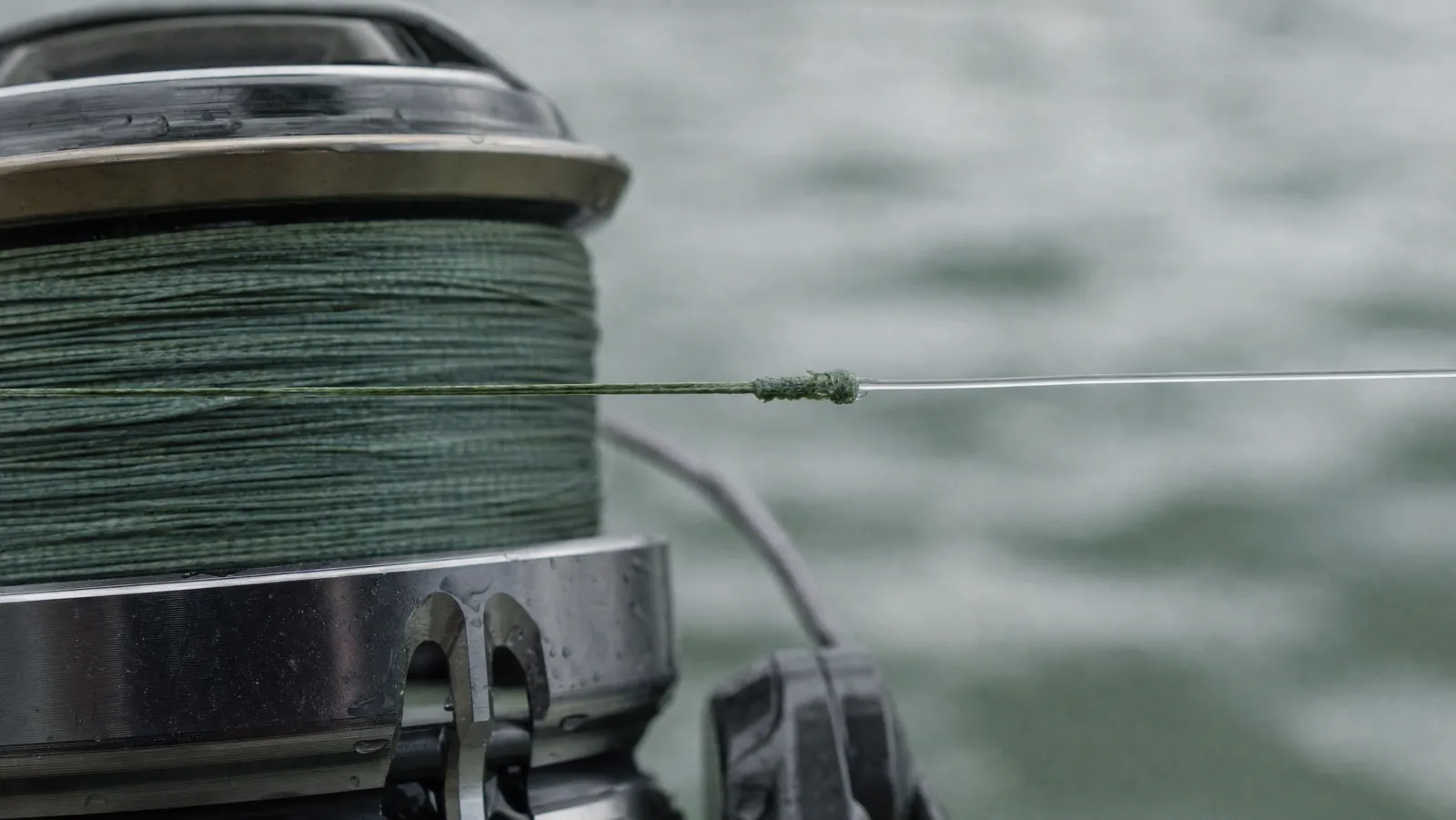
- Line: braid is the default in vegetation — it cuts through stalks instead of bending them, and it does not stretch when you set through a guard or a plastic-covered point. The Louisiana Sportsman punching feature cited above runs 50- to 60-pound braid, and frog fishing lives in the same range. Around sparse wood and docks, heavy fluorocarbon works when you want less visibility.
- Rod: heavy power, fast action for frogs, jigs, and punching — you need the backbone to drive a protected hook and to move a fish before it buries. A medium-heavy baitcasting setup covers Texas rigs and swim jigs; weedless wacky and Neko stay on spinning gear.
- Reel: a high-speed ratio helps everywhere in cover, because picking up slack fast is half of every hookset described above.
Common Mistakes That Cost Heavy-Cover Fish
- Setting on the blowup. Frogs and topwater strikes especially — wait for the bait to disappear or for the weight of the fish, per the Wired2Fish guidance above.
- Fishing a stock weed guard. An untrimmed 30-strand guard deflects cover and fish alike. Trim and fan it.
- Burying the hook point too deep. Skin-hook the point on Texas rigs; a point sealed a quarter inch inside the plastic never comes through on light-line hooksets.
- Going too light. An unpegged 1/4-ounce weight will not reach fish under a mat, and 15-pound line will not steer them out. Heavy cover is not the place for benefit-of-the-doubt tackle.
- Casting to the edge only. The edge fish see every boat's lures. The fish that has never seen a bait is ten feet deeper into the slop.
The Bottom Line
Weedless lures are less a lure category than a permission slip: they let you fish the water everyone else rides past. Learn the Texas rig first — it is the cheapest, most forgiving entry into cover fishing — then add a frog and a jig, and save punching for the day the mats get truly disgusting. Protect the point going in, set hard coming out, and do not give a hooked fish an inch of slack.
When you are ready to round out the rest of the tackle box — moving baits, finesse rigs, and the open-water tools these weedless rigs replace in the thick stuff — our full guide to the best bass lures is the place to start.
About The Author
Rob Thomas
Rob Thomas is a fisherman who loves catching tales from his fellow fishermen. He always enjoys a good story, especially when it comes from the sea.