Casting Rod vs Spinning Rod: What Actually Differs

This post may contain affiliate links. Read our policy.
Casting Rod vs Spinning Rod: What Actually Differs
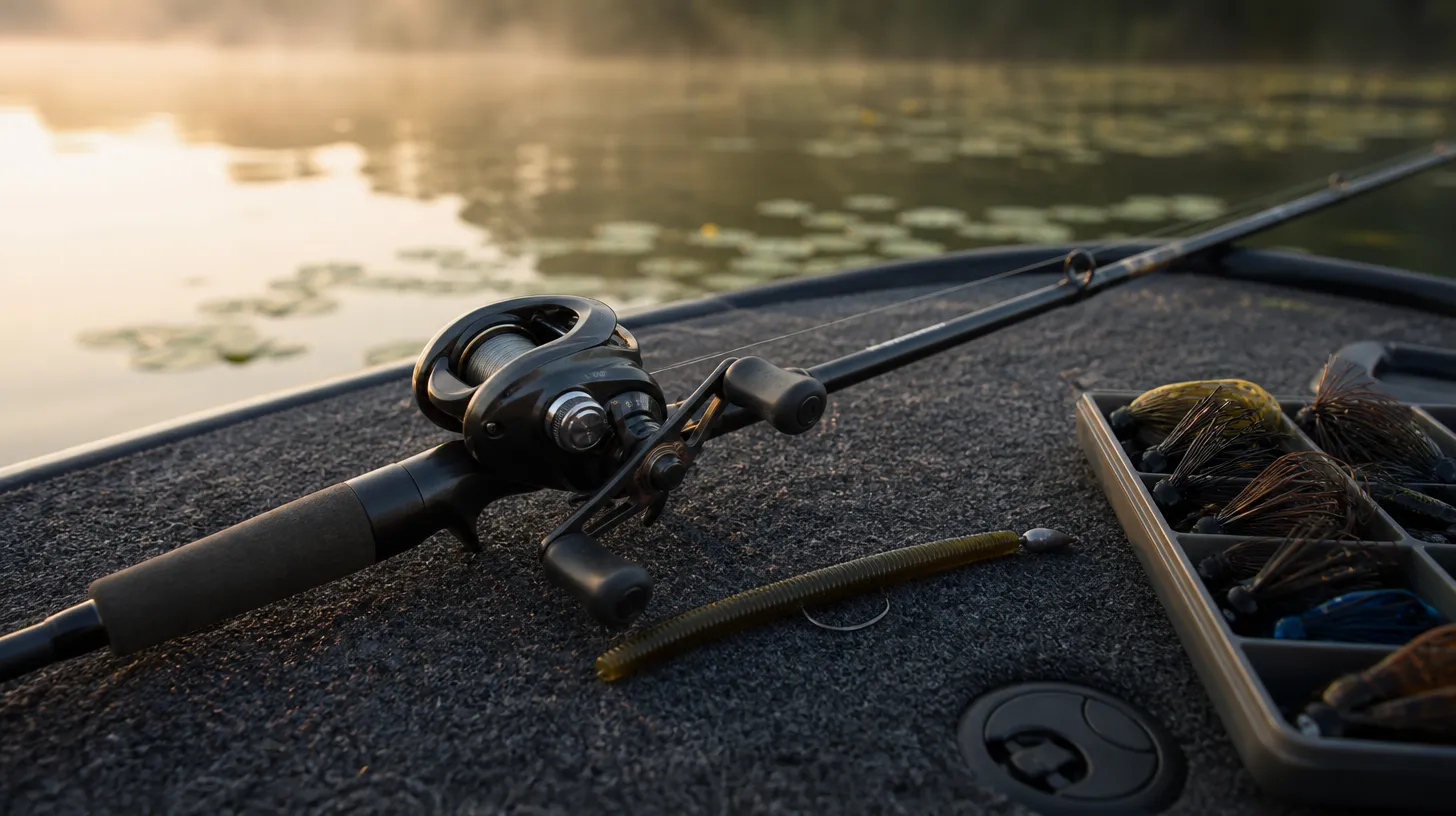
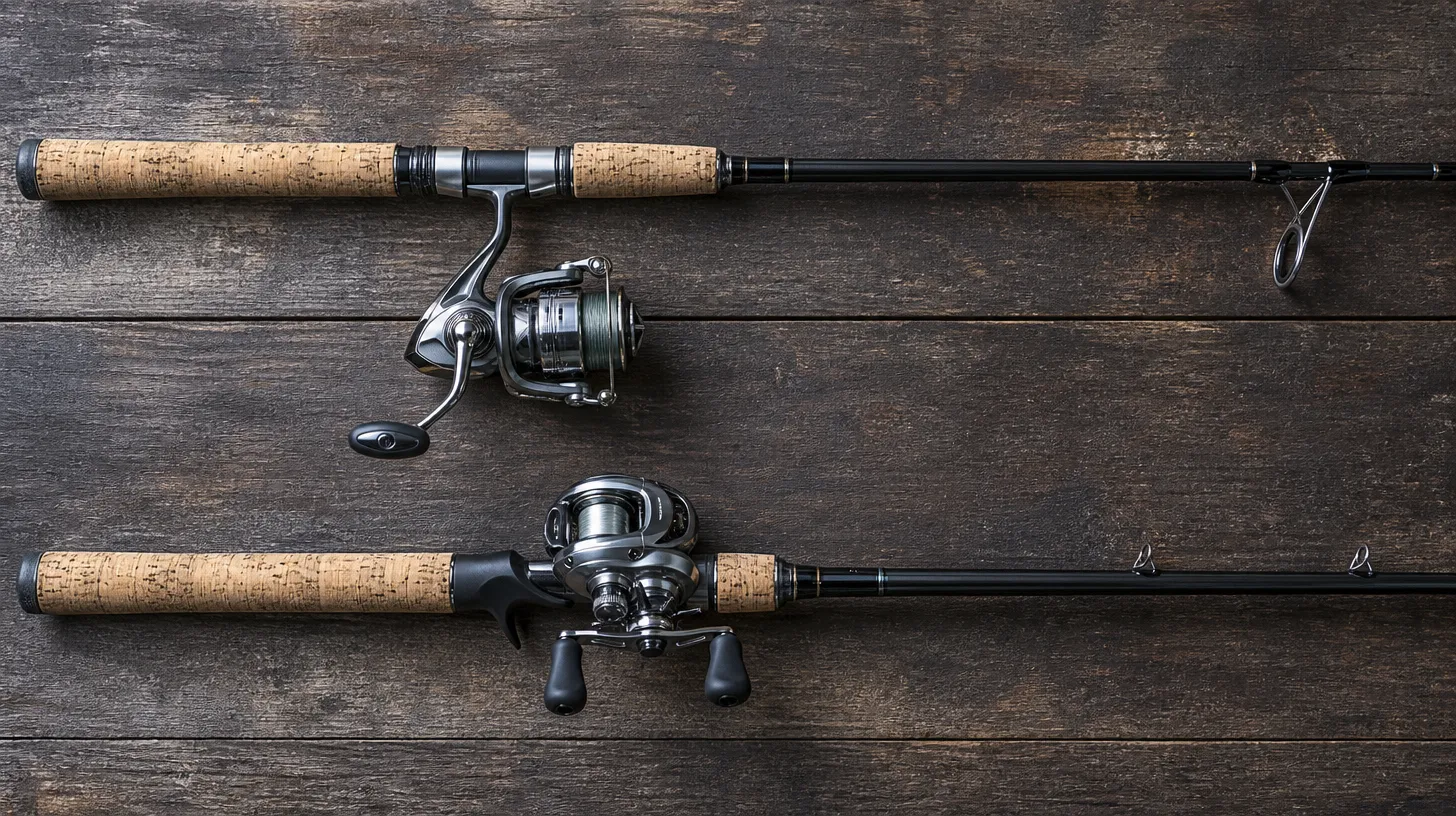
A casting rod carries its guides on top of the blank and mounts the reel above it. A spinning rod hangs both underneath. That one flip drives everything else: guide size, guide count, the trigger seat, and which face of the blank is built to take the pull. Light line and light lures favor spinning; heavy baits and tight accuracy favor casting.
Casting rod vs spinning rod normally gets taught as a rule — this reel goes on that rod, do not mix them — and the rule is right without being useful. It does not explain why a spinning reel bolted to a casting rod still casts fine on the lawn and then feels wrong on the water. The answer is not the reel seat. The two rods are built to be loaded from opposite sides.
Both types use the same rating vocabulary, so a medium power, fast action blank exists in both, and our page on rod action and power covers what those words buy you either way. If you have not picked a rod at all yet, our guide to choosing a fishing rod works that decision from the top. The reel-side half of this comparison is our spinning reel vs baitcaster breakdown — buying a complete setup, you want both pages.
Guide position is the real difference
On a casting rod the reel sits above the blank and the guides sit above it too. Put a fish or a heavy lure on the end and the line tightens into a straight chord between the tip and the reel. Every guide between them is pulled downward, into the blank. The frames are pressed against the rod, and the rod bends in the same plane the line is pulling.
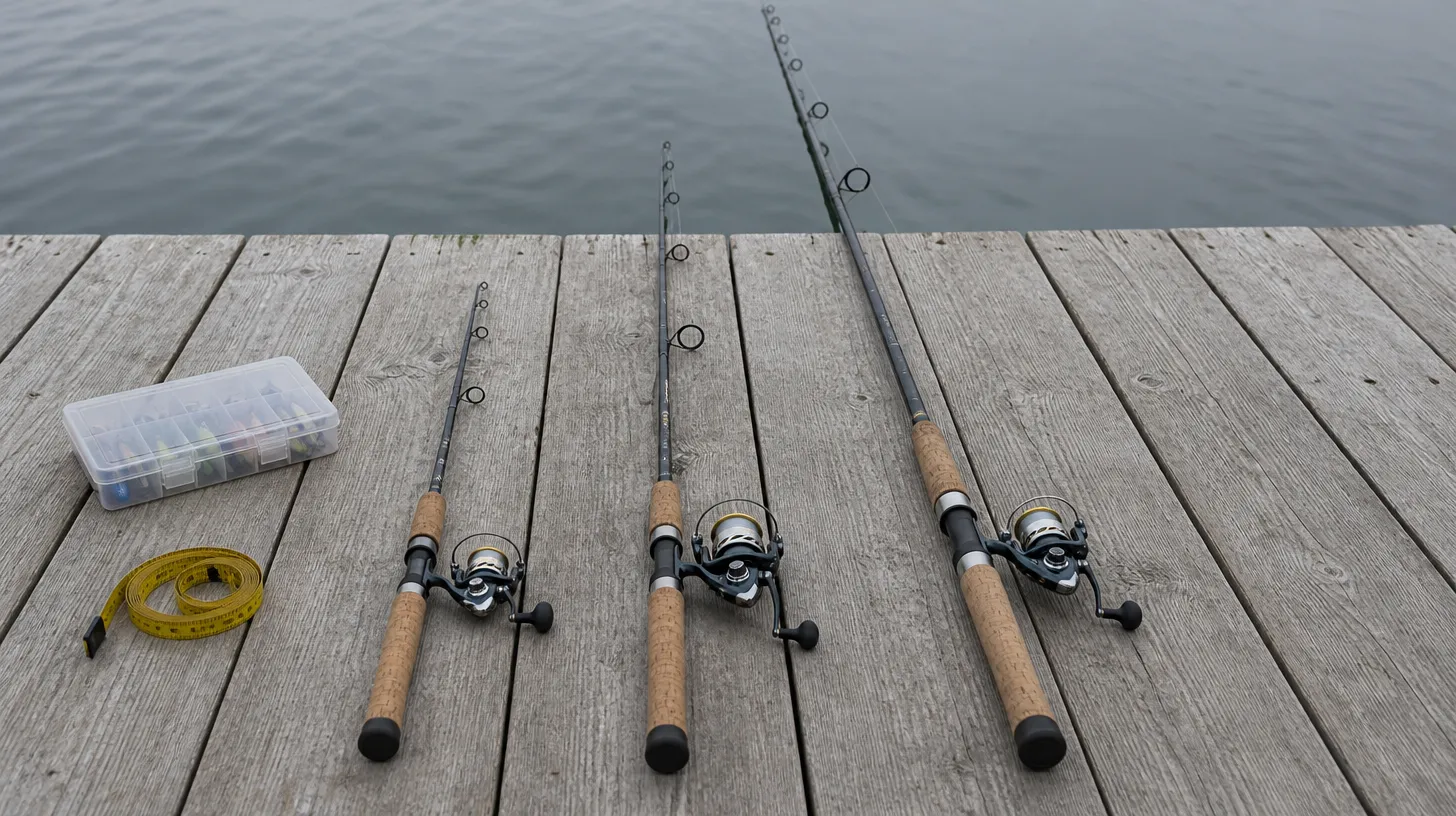
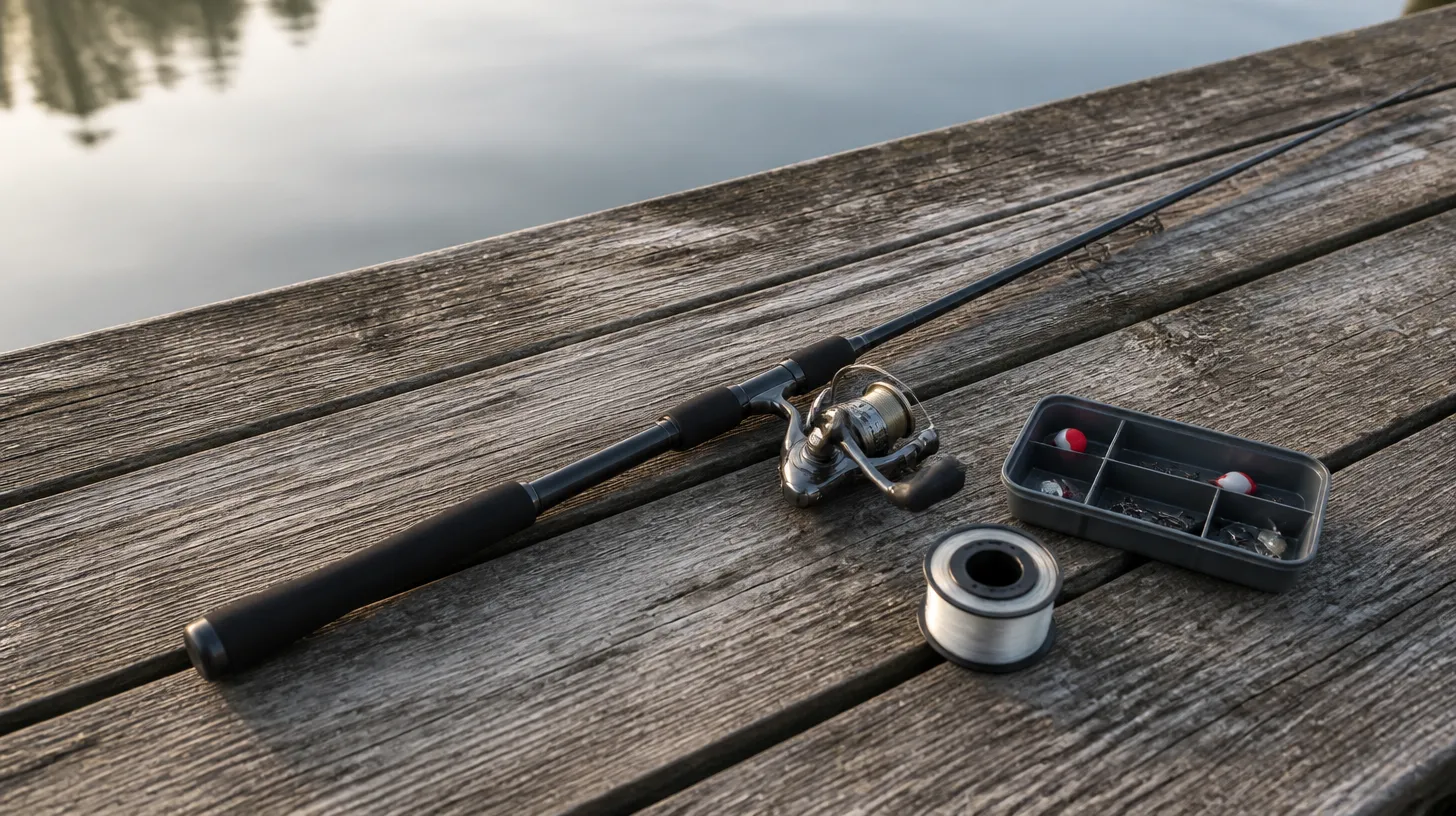
On a spinning rod the arrangement is inverted. New York's Department of Environmental Conservation, in its beginners' guide to freshwater fishing, describes spinning reels plainly: they mount under the rod rather than on top, and have larger line guides mounted on the underside instead of the top of the rod. Under load those guides are pulled away from the blank — levered off it rather than pressed into it — and the blank bends with its guide face on the inside of the curve.
That is the difference worth remembering. A casting blank takes its load with the guides on the outside of the bend, pressed into it; a spinning blank takes its load with the guides on the inside of the bend, levered away from it. Same bend, opposite side, and a blank gets finished for one of those jobs when the guides are glued on. Everything else anglers argue about is downstream of that — guide sizes, the trigger, whether swapping reels hurts anything. Our older primer on how fishing rods work covers the shared vocabulary if any of the parts names are new.
Casting rod guides: more of them, smaller, closer
Because the line on a casting rod has to be held against the top of a bending blank, it needs more support points. Lamiglas says casting rods traditionally use smaller guide sizes than spinning rods, though guides near the tip are often similar sizes on rods of similar rating. It gives the reason from the other direction too: spinning rods require larger guides because of how the line comes off the spool, and do not require as many of them as a casting rod does.
FishUSA puts the split in one line each: spinning guides are larger to accommodate the way the line unspools, casting guides smaller and positioned closer to the blank for better control.
Counts are a convention, not a standard. Mud Hole Custom Tackle, which sells blanks and components to rod builders, gives a rule of thumb of one guide per foot of rod length plus a tip-top, and advises using the fewest and smallest guides that will still do the job. A rod-identification primer from the gear retailer Battlbox puts typical counts at roughly eight to ten guides on a seven-foot casting rod against five to seven on a seven-foot spinning rod — a retailer's description of the convention, not a spec, since counts move with blank length, power and taper.
Spacing separates the two builds most clearly at the butt. Mud Hole's instructions start a casting rod's first stripper guide 19 to 21 inches from the front of the reel, and a spinning rod's first guide 19 to 20 inches from the top of the spool. Similar distance, very different guide: the spinning rod gets a tall ring high off the blank, the casting rod a small one sitting low.
The blank: why it is built for one direction of pull
Roll a bare blank across a bench under downward pressure and it springs into a curve in one plane. Builders call those stiff and soft axes the spine, and they align the guides to it on purpose.
Here is where the sources genuinely conflict, worth knowing before you read a forum thread about it. In-Fisherman's rod-building article marks the outside of that curve as the spine, then places a spinning rod's guides on the inside of the curve, 180 degrees to the spine, and a casting rod's guides on the outside, on the spine. Mud Hole uses the opposite label — it calls the spine the softest axis, roughly 90 degrees from the stiffest — so its instructions read backwards: guides on the same side as the spine mark for spinning, the opposite side for casting.
Read past the vocabulary and both sources prescribe the same physical rod: guides on opposite faces of the same blank, with the reel seat aligned to match — Mud Hole specifies that the casting seat's trigger lines up with its spine mark. The disagreement is about what to call the mark, not where the guides go.
How much of this you could feel is contested. Rod builders on BassResource split hard on it, some insisting spine orientation does not affect a rod's fishability, at least one reporting that test casts on and off the spine, 90 degrees apart, were indistinguishable. That is builder opinion rather than published testing, so the honest version is: blanks are oriented deliberately, and whether you could blind-test the result is unsettled.
The trigger reel seat and the grip: comfort, not structure
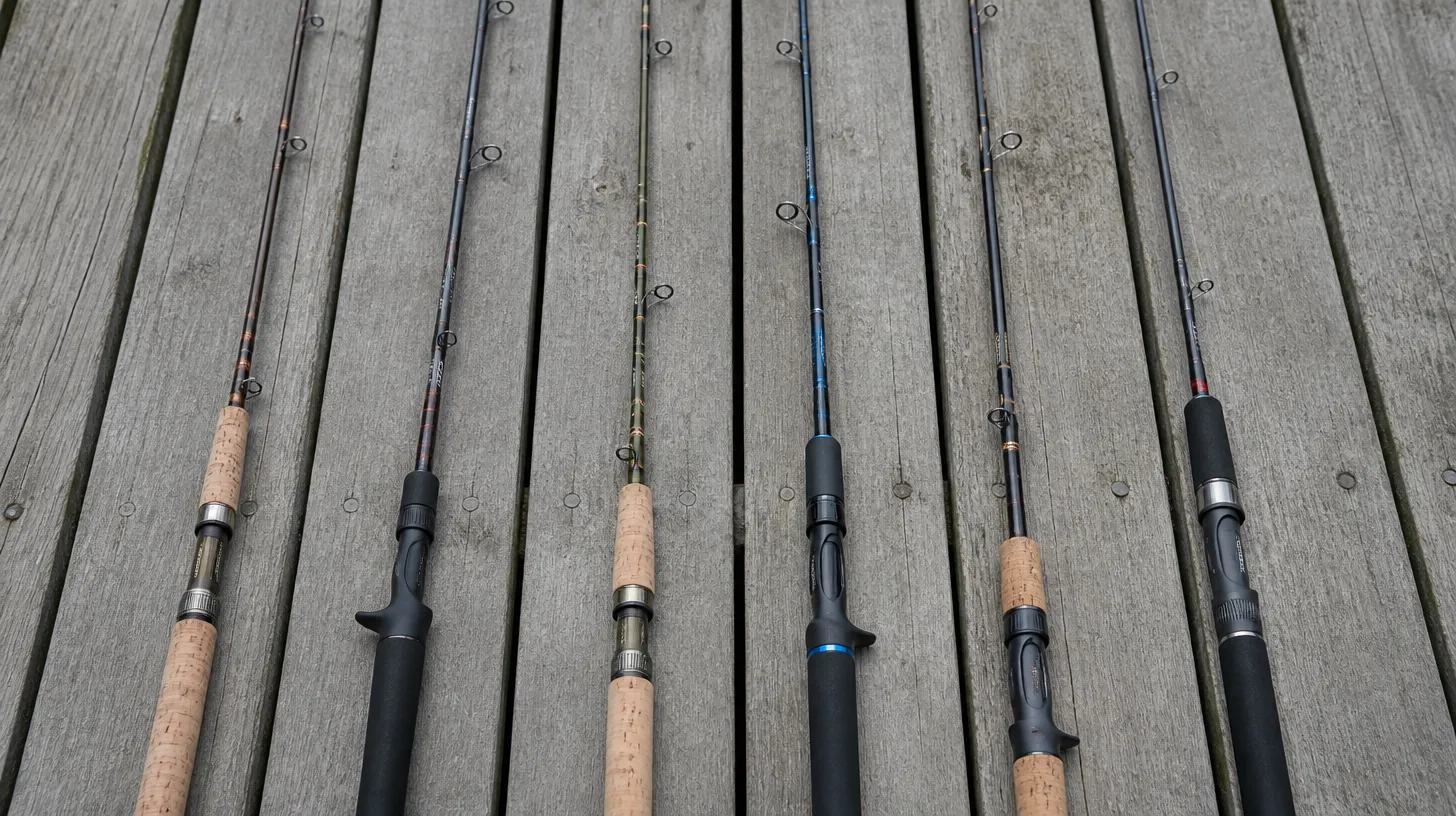
A casting rod's trigger reel seat is the most visible difference and the least important one. It is a finger rest. Patents on top-mount reel seats describe the trigger as the feature that stabilizes the rod in the palm during the cast, and one spells out why that is needed: with a baitcaster the thumb is busy running the spool, leaving mainly the index and middle fingers to grip the rod.
Shimano makes the ergonomic case for its own trigger-style X-Seat in the same terms, saying the grip reduces strain on the wrist by letting you hold the rod with four fingers and keep the wrist and palm nearly straight. Shimano also notes the best trigger position changes with hand size, palming style and the reel used — a fair admission that this is a fit question, not a performance one.
Grips follow the hand position. A casting rod's foregrip, when it has one at all, is short, because the casting hand wraps around the reel rather than the blank ahead of it. Spinning rods put the hand behind the reel foot with two fingers either side of the stem. St. Croix, launching its Mojo Bass TRIGON casting rods, framed its new seat and handle as being about angler control and reduced fatigue — a comfort claim, which is the right category for all of this.
None of it changes what the rod can lift. Length and butt length do change leverage, and that is a separate decision covered in our fishing rod length guide.
How line leaves the spool, and the twist that follows
A spinning reel's spool never turns. The rotor swings a line roller around a fixed spool, so line is laid on in loops and comes off in loops — which is why a spinning rod's first guide has to be tall and wide enough to gather them. Our explainer on how a spinning reel works walks through the mechanism.
A level-wind casting reel does the opposite. The spool itself rotates and the line pays straight off it, in line with the rod. That has a real consequence for line condition, and the DEC states it directly: unlike spinning and spincast reels, the spool on a baitcast reel revolves during the cast and retrieve, reducing line twist.
The same guide is candid about the spinning side, listing line twist as a disadvantage and saying spinning reels sometimes have annoying line twist that requires stripping the line off and respooling. Its stated causes are mundane — line installed incorrectly, or loose line reeled back on, twisting into loops that become tangles — and so is its fix: close the bail by hand, and tighten the line before you reel.
Line choice interacts here. Braid has no memory to fight, which line guides generally treat as making twist less of a nuisance than it is with mono, though some anglers find twist worked into braid is slower to shake out — our braided line guide covers that behavior. The casting side trades twist for a different tangle: the DEC notes baitcasters cost more and are prone to backlash, which it defines as a tangle caused when the spool revolves faster than the line coming off the reel. Backlash is real, and the DEC's own line on bait-casting is that it takes time and practice to get good at it, though many anglers find the brakes set conservatively keep it manageable from the start.
Can you use a spinning reel on a casting rod?
Yes. It will clamp down, it will cast, and it will catch fish, and we are not going to pretend otherwise. In forum threads devoted to this exact swap, on Crappie.com and BassResource, the reports mostly run the same way: it seemed to be working fine and still cast well, with experienced repliers agreeing it works while adding that you would be much better off with a rod built for spinning. FishUSA's FAQ takes the same position: a spinning reel can technically go on a casting rod, but it is not recommended, because guide sizes, reel seat position and rod design are each optimized for a specific reel type.
We looked for a manufacturer saying flatly that this breaks rods and did not find one — Daiwa's tackle-care guidance warns about jerking a rod to free a snag, not about reel pairing. So the costs below are mechanical reasoning and angler consensus, not a warranty rule. There are two ways to rig it, and each gives up something different:
- Reel on top, guides on top. The spinning reel clamps into the casting seat, which puts it on the same face as the guides. The spool sits above the blank with a short, steep run to a small, low-mounted stripper guide. Loops coming off the spool hit guide frames instead of passing through them, and friction eats distance.
- Rod rolled over, guides underneath. Flip the rod so the reel hangs where a spinning reel belongs and the guides point down. Now the line loads the blank from the face the builder did not align for it, the small guides let line slap the blank, and the trigger points up into your palm.
The penalties, in order of annoyance: lost distance and accuracy from undersized guides, line slap against the blank, a reel foot that may not seat securely in a trigger seat, and a blank bent against its intended guide face. On a light rod that last item is mostly a feel complaint. On a stiff casting blank under real load, a rod that wants to roll in your hands is a control problem, and that is the version of the "it will twist" warning we would repeat.
When is it fine? When the stakes are low — a backup rod in the truck, a borrowed rod on a kid's first trip, a reel swap mid-day because the other one went in the lake. We would do all three without a second thought. What we would not do is build a weekly setup around it.
What each rod is actually better at
Spinning rod vs casting rod is not a ranking — the two are aimed at different ends of one range.
A spinning rod is the better tool for:
- Light line. FishUSA pegs spinning setups at roughly 2 to 10 lb test.
- Light lures. The DEC's own summary is that spinning reels make casting lightweight lures and baits easier.
- Finesse presentations, where a slow fall matters more than hookset power.
- Learning. FishUSA calls spinning gear easier to use and the better choice for beginners, mainly because it is less prone to bird's-nest tangles.
A casting rod is the better tool for:
- Heavier line. FishUSA puts casting setups at roughly 10 to 30 lb test.
- Heavier baits. Per the DEC, baitcasters can generally cast heavier lures or weights than other fishing gear.
- Accuracy. The DEC says many anglers consider baitcasters the best gear for casting accuracy, close to structure.
- Taking up line fast, since the same guide notes baitcasters' higher gear ratios wind in more line per handle turn.
Which one to buy first
If you are buying one rod, buy the spinning rod — not because casting gear is hard, but because the spinning rod covers more of the water a new angler actually fishes, with less line to untangle while learning.
The DEC's starter recommendation is specific enough to shop from: a medium action rod of 6 to 6.5 feet, matched with a reel holding 80 to 150 yards of 8 lb test monofilament. That is a panfish-through-bass outfit, and still what we would hand somebody on their first trip. Our picks for the best fishing rods for beginners work within that bracket, and the mechanics of throwing it are in our walkthrough on how to cast a spinning reel.
Add the casting rod second, when a technique asks for it — a jig in heavy cover, a big crankbait, a swimbait on 17 lb line. Buying it first is not a mistake, just a narrower first rod.
The bottom line
The guides tell you everything. On top means the blank was finished to be loaded with the line pressing in; underneath means it was finished to be loaded with the line pulling away. The trigger and grip are comfort features, guide count and size are consequences, and the reel-swap question has an honest answer: it works, it costs distance and control, and it is fine as a stopgap and poor as a plan.
Pick by what you throw. Light line and small lures want a spinning rod; heavy baits and tight casts want a casting rod. Once that is settled, the rest — power, action, length and budget — is laid out in our fishing rod guide, and the matching reel decision is in our roundup of the best spinning reels.
About The Author
Rob Thomas
Rob Thomas is a fisherman who loves catching tales from his fellow fishermen. He always enjoys a good story, especially when it comes from the sea.