Best Fishing Rods: How to Choose One That Fits the Way You Fish

This post may contain affiliate links. Read our policy.

Ugly Stik GX2 Spinning Rod, 6'
The rod we would hand someone who has never owned one.
- The 6-15 lb line and 1/8-5/8 oz lure window covers panfish through bass without a second rod
- One-piece stainless guides remove the most common failure point on cheap rods
- A composite blank absorbs abuse that a pure graphite rod at this price would not
- The two GX2 listings publish different warranty lengths - 7 years here, 10 on the combo - so do not count on a specific number
- At 6 ft it is shorter than the 6'6" to 7'0" lengths most anglers settle on
- A composite blank transmits less of a light bite than a full-carbon rod
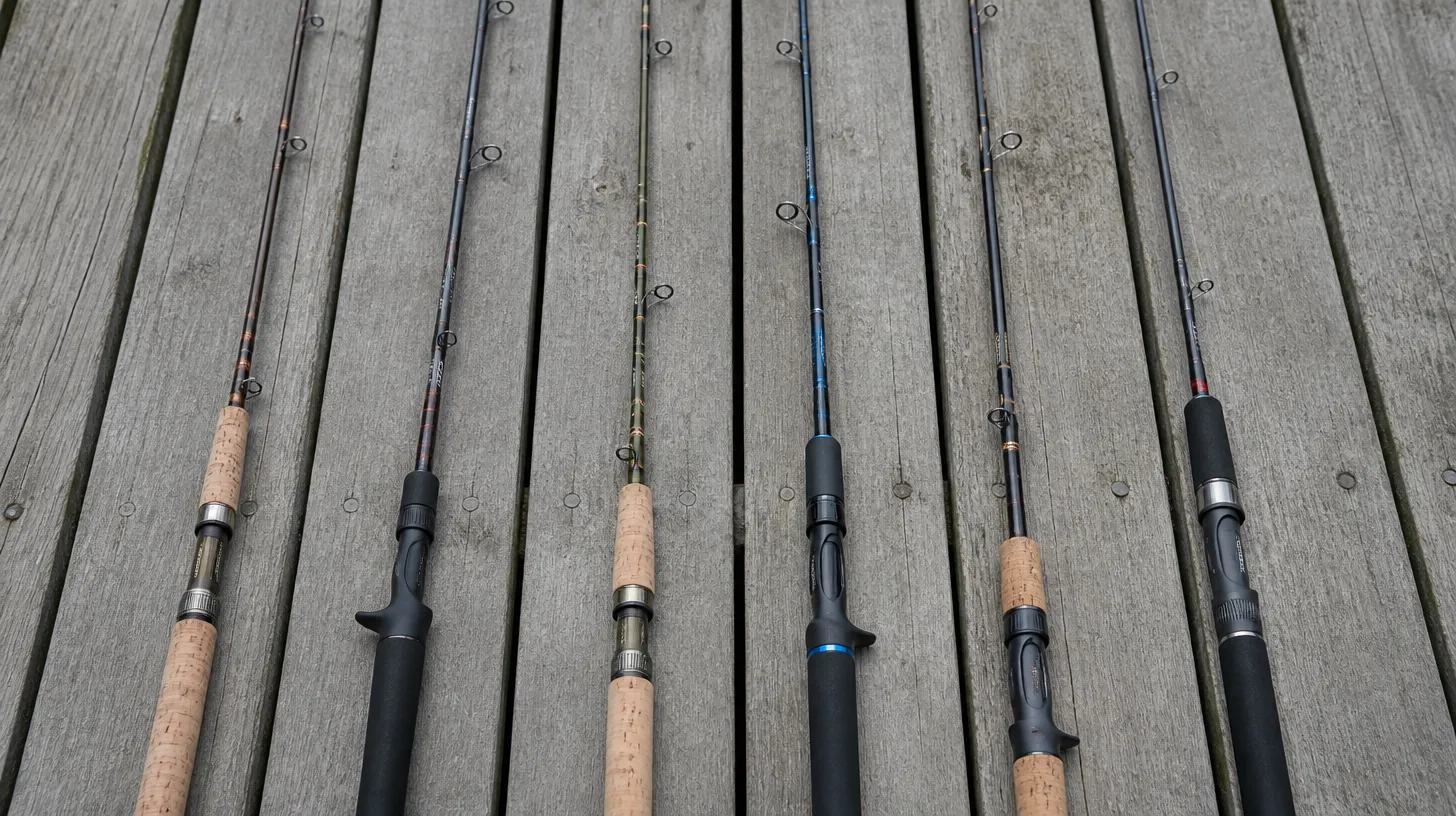
Most anglers need one rod: a 6'6" to 7'0" spinning rod at medium power with a fast action, rated for roughly 6-15 lb line. That one combination covers bass, walleye, trout, panfish and almost everything else in freshwater. The best fishing rods are not the most expensive ones - they are the ones whose power and lure rating match the baits you actually throw.
Angler Reviews is reader-supported: as an Amazon Associate we may earn a commission from qualifying purchases, at no extra cost to you.
This page is the hub of our rod series. Below we walk the whole decision - power, action, length, material, spinning versus casting, how it pairs with a reel - then name six rods that deliberately cover different jobs rather than competing for one crown. If you want the shorter primer first, our older explainer on rod types and actions covers the vocabulary in a few minutes.
How to Pick a Fishing Rod: Four Decisions
Every rod in the aisle is described by four dials. Set them in this order and the shortlist writes itself.
- Power is how much force it takes to bend the rod. Ultralight through heavy. This is set by the fish and the cover, not by your skill.
- Action is where along the blank that bend happens. Fast bends near the tip, moderate bends through the middle, slow bends almost to the butt.
- Length trades casting distance for accuracy and control. Six feet for creeks and kids, seven feet for open water, longer still for big baits.
- Material sets the feel. Carbon for sensitivity, fiberglass for toughness, a blend for compromise.
Those first two have actual definitions. In the rod primer carried by BassResource and International Sportsman, power is essentially the load needed to bend a rod, while action describes where along the blank that deflection occurs. Keep them separate in your head and half the confusion disappears.
The practical starting point is not the power label at all - it is the two numbers printed above the handle. Every rod worth buying publishes a line rating in pounds and a lure rating in ounces. The Berkley Cherrywood HD here, for example, publishes 2-6 lb line and 1/16-1/4 oz lures, which tells you everything about what it is for without using the word "light" once.
Work backwards from your tackle box. If most of your lures weigh 1/4 to 1/2 oz, you want a medium rod. If you throw 3/4 oz jigs into hydrilla, you want a heavy. If you fish 1/16 oz marabou jigs for crappie, nothing but an ultralight will load up enough to cast them.
Then, and only then, think about price. A $40 rod with the right ratings will out-fish a $250 rod with the wrong ones every single day.
Action and Power: The Two Numbers That Matter Most
Power and action are the two specs that decide whether a rod works for you, and they are also the two that brands are loosest about. We have rod action and power explained in much more depth elsewhere in this series, but here is the short version plus the warning that goes with it.
Power is the load needed to bend the blank. Light power rods bend under a few ounces of pressure; heavy power rods barely flex until a real fish leans on them. Power governs two things: how big a lure you can load the rod with on the cast, and how much pressure you can apply to a fish without the rod folding.
Action is where the bend happens. A fast action bends primarily in the upper third of the blank - that is how Mud Hole's rod-building primer defines it - and springs back quickly, which gives you a sharp hookset and good bite detection - the right choice for jigs, worms and single hooks. A moderate action bends deeper and more slowly, which keeps pressure steady on a fish that is thrashing against treble hooks.
Now the warning, and it is the most useful thing on this page. These labels are not standardised between manufacturers. Game and Fish reports that there is no standardized testing to rate rods, and that the wording used for power and application varies from brand to brand. Fish'n Canada makes the same point, noting there is no uniformity from manufacturer to manufacturer with regard to power ratings. One company's medium-heavy really can be another company's heavy.
The workaround: ignore the word, read the numbers. Compare rods on their published line and lure ratings, which are specific, instead of on a power label that is not. Our line weight chart is the companion piece here, because a rod's line rating is only meaningful next to the actual breaking strain and diameter of what you spool.
How Long a Rod Do You Actually Need?
Length is the dial most people never think about, which is a shame, because it changes how a rod feels more than the brand name does. There is a full fishing rod length guide elsewhere in this series; the summary is that you are trading two things against each other.
Longer rods cast farther because of the extra leverage, and shorter rods place casts more precisely. That trade-off is how the BassResource and International Sportsman rod primer frames it, and it also notes that length affects how comfortable you will be while fishing. Anglers on the BassResource forums generally agree on the direction of the effect but not the size of it, and some argue that a rod's action moves casting distance more than a few inches of length does.
Our working rules:
- 5'0" to 5'6" - creeks, brush-choked banks, kids, and anything you need to cast underhand. The Zebco Z-Cast and Berkley Cherrywood HD here are both 5'6".
- 6'0" to 6'6" - the generalist zone, and the easiest length to learn on. The Ugly Stik GX2 we picked is 6 ft.
- 6'10" to 7'2" - the default for bass and open water. The Piscifun Torrent is 7'0".
- 7'6" and up - long casts, big baits, and keeping a lot of line out of the water. The St. Croix Bass X variant we priced is 7'11".
Graphite, Fiberglass, or a Blend?
The long version of graphite versus fiberglass rods gets its own article, but the trade-off is simple enough to state here: graphite tells you more, and fiberglass survives more.
FishUSA's comparison rates graphite as the most sensitive rod material and calls composite blanks the "middle path" between the two. It also ranks graphite lowest for treble-hook forgiveness and fiberglass highest, which is the practical reason crankbait anglers still buy glass. Field and Stream's piece on the same question notes that part of the appeal of fiberglass for some professionals was that graphite had become too sensitive - a stiff, fast graphite rod rips treble hooks out of a thrashing fish's mouth.
Durability runs the other way. One of the comparisons FishUSA cites describes graphite's lightness as reflecting an overall brittleness, with fiberglass remarkably resilient by comparison. TackleDirect adds the money angle: it calls fiberglass the most affordable modern rod material and the one needing the least maintenance, while graphite is typically more expensive but lighter.
This is why three of our six picks are not pure carbon. The Ugly Stik GX2 uses a graphite and fiberglass composite. The PLUSINNO travel rod is a 24-ton carbon blank that PLUSINNO says is reinforced with fiberglass composite. The Zebco Z-Cast is straight Z-Glass fiberglass. None of those will transmit a light bite like the Piscifun Torrent's carbon blank - and none of them is as fragile as a thin-walled high-modulus blank, either.
A note on modulus numbers while we are here. The Torrent is advertised as IM6 carbon. G.Loomis's own catalog explains that IM6, IM7 and IM8 are the trade numbers Hexcel used to identify its fibers rather than an industry quality or material standard, and the FlyAnglersOnline discussion of the designation lands in the same place: the IM figure tells you something about the graphite used and not much else. Modulus itself is a measure of stiffness by weight, and per In-Fisherman a higher-modulus material needs less material to reach the same stiffness - which is where the weight saving comes from. Compare IM numbers within one brand's lineup if you must. Across brands they mean almost nothing.
Spinning Rod or Casting Rod?
Five of our six picks are spinning rods, and that is not an accident - but we treat casting rod versus spinning rod as a question worth its own article later in this series, because the reasoning is more interesting than "baitcasters are for experts."
The physical difference follows from where the line goes. A spinning reel hangs beneath the rod and peels line off the spool in loops, so spinning rods use larger guides and fewer of them to let those loops settle. A baitcasting reel sits on top and feeds line straight off a revolving spool, so casting rods use smaller guides that step down toward the tip. BattlBox describes the guide layout as following directly from that line path - a large stripper guide standing high off a spinning blank to catch the loops, a small low one on a casting rod - and Mystery Tackle Box's spinning-tackle primer describes those same loops coming off a spinning spool.
The other giveaway is the trigger. Lamiglas describes it as a finger hook on the underside of the reel seat that gives a casting rod better control, common on casting rods and usually absent on spinning rods - though Lamiglas also notes that casting rods do not always have one, especially saltwater models. Take Me Fishing makes the plainer version of the point: casting rods often carry a trigger on the reel seat for added casting control, with the reel mounted on top and smaller guides than a spinning rod.
Practically: choose spinning for lures under about 1/4 oz, light line, and anyone still learning to cast. Choose casting for heavier lures, thicker line, and situations where you want to thumb the spool to drop a bait into a specific gap in cover. The reel side of this decision is covered in our comparison of spinning reels and baitcasters.
That is also why the St. Croix is the only casting rod in our six. A 7'11" heavy rod rated 14-30 lb and 1/2-2 oz is doing exactly the job baitcasting gear exists for. Nobody should make that their first rod.
Matching a Rod to Your Reel
A rod is half an outfit. The finer points of matching a rod and reel deserve their own walkthrough, but there is one rule that solves most of it: line rating is the common language. Match the rod's line rating, the reel's size, and the line you spool, and the outfit will feel right.
In practice that means:
- A 1000 reel on a 2-6 lb light rod - the Cherrywood HD pairing.
- A 2500 reel on a 6-12 lb medium rod.
- A 3000 reel on a 8-15 lb medium or medium-heavy rod - the Ugly Stik GX2 and Piscifun Torrent pairing.
- A 4000 reel when you are into 15-30 lb braid and inshore work.
If those numbers mean nothing to you, we break them down in spinning reel sizes explained, and our spinning reel pillar names specific reels at each size. Our line capacity calculator will tell you how much of a given diameter actually fits on a given spool.
Balance is the part you can only feel. Mount the reel, hold the outfit at the reel seat with one finger, and see where it tips. A rod that noses down hard at the tip will wear your wrist out; one that sits roughly level is balanced.
Two more pieces that complete the outfit: pick the right line with our fishing line guide, then put it on correctly - a badly spooled reel causes problems people blame on the rod. Our walkthrough on spooling a spinning reel covers that, and the drag setting calculator handles the last step before you fish.
The Best Fishing Rods for Beginners
Anyone hunting for the best fishing rods for beginners hits the same wall: every brand claims to make one, and most "beginner" rods are just cheap rods. The difference is in the ratings and the build, not the marketing.
Our answer is the Ugly Stik GX2 spinning rod at about $55.32 as of October 2026, down from a $59.95 list price. The listing rates the 6 ft two-piece version for 6-15 lb line, 1/8-5/8 oz lures and medium power. That is a wide, forgiving window - wide enough to throw a bobber and a worm in the morning and a 1/2 oz spinnerbait in the afternoon. The blank is a graphite and fiberglass composite with the Clear Tip design, and it carries 6 Ugly Tuff one-piece stainless guides which the listing says eliminate insert pop-outs.
Here is the honest wrinkle we are obliged to flag: the two GX2 listings publish different warranty lengths. The rod-only listing we priced states a 7 year warranty, while the GX2 combo listing states 10 years. We are not going to pick one and call it fact - treat the warranty as "long, and confirm it on whichever listing you actually buy from."
If you would rather read a full page on this one question, including what to do with the rod once you own it, we go deeper in our beginner rod picks. And if you have never cast a spinning outfit, spend ten minutes with our guide to casting a spinning reel before you buy anything - it will change which length you want.
Rods for Bass
Ask ten tournament anglers for the best fishing rods for bass and you will get ten answers, because bass fishing is really a dozen different techniques sharing one species. But there is a consensus starting point: 7'0", medium-heavy, fast action. That one rod throws a Texas rig, a jig, a spinnerbait, a chatterbait and a hollow-body frog competently.
The Piscifun Torrent at 7'0" medium-heavy, fast action is that rod for about $39.99 as of October 2026, which is a remarkable price for a full carbon blank. Piscifun states an IM6 carbon blank, two-piece construction, stainless guides with titanium inserts it says prevent insert pop-outs, and an EVA grip, with the series also sold in moderate-fast. Piscifun lists it for bass, walleye, northern pike, catfish and inshore snook, trout and redfish.
Two things to be clear about. First, the listing does not publish line or lure ratings, which is exactly the spec you want on a medium-heavy - you are trusting the power label, and we have already established that power labels are not standardised. Second, stock showed only 6 left when we sourced it, so do not plan around availability.
At the other end of the bass spectrum sits the St. Croix Bass X casting rod in the 7'11" heavy, moderate-fast variant, about $155.00 as of October 2026. Listing specs are 14-30 lb line, 1/2-2 oz lures, one-piece. That is a frog-and-punch-rig rod, a big-swimbait rod, a drag-them-out-of-the-mats rod. It is a bad general-purpose bass rod and a very good specialist one.
For the finesse half of bass fishing - drop shot, Ned rig, shaky head - you want a medium-light or medium spinning rod instead, and a 2500 reel to go with it. Our spinning reel guide covers that side of the pairing.
Rod and Reel Combos: When They Make Sense
The honest case for the best rod and reel combos is not performance, it is logistics. A combo is pre-matched, pre-spooled in many cases, and arrives as one decision instead of four. For a first outfit, a travel kit, a spare in the garage or a rod you hand to a guest, that is worth real money.
The case against is just as simple: in a combo, one half is usually subsidising the other. You rarely get a good rod and a good reel at the combo price.
Where a combo genuinely wins is travel, and the PLUSINNO telescopic combo kit is our pick there at about $44.98 as of October 2026, from a $59.97 list price. It includes a telescopic rod, a reel, line, lures, hooks, accessories and a carrier bag. PLUSINNO states a 24-ton carbon fiber blank reinforced with fiberglass composite, welded stainless guides with ceramic inserts and a CNC-machined aluminium reel seat. The included HA 3000 reel is listed with 12+1 ball bearings, a 5.2:1 gear ratio and a left or right interchangeable handle, with capacity given as 0.20 mm/240 m, 0.25 mm/200 m and 0.30 mm/140 m.
Say the obvious part plainly: telescopic rods trade durability and action for packability. Every collapsing joint is a place for grit to seize and for the blank to flex unevenly, and a rod that telescopes cannot hold a crisp action the way a one-piece blank can. You buy one because it fits in a bag, not because it fishes better.
If you would rather build your own pairing than buy a kit, the smarter route is a $40-60 rod plus a sub-$100 reel. Our roundup of the best spinning reels under $100 is the other half of that build.
Ultralight and Finesse Rods
What separates the best ultralight fishing rods from merely short, cheap ones is the lure rating. An ultralight has to load up and flex under something like a 1/16 oz jig, and most inexpensive short rods simply will not.
The Berkley Cherrywood HD in 5'6" light is the clean example at about $30.86 as of October 2026. The listing publishes 2-6 lb line, light power, fast action and a 1/16-1/4 oz lure rating. Construction is blank-through-handle with a Type-A cork grip and 5 stainless guides with inserts. Berkley makes a nice small point about the cork: it retains heat and is warmer to the touch on cold mornings, which anyone who has fished February crappie in a graphite-handled rod will appreciate.
Blank-through-handle is the spec to notice. It means the blank itself runs the full length of the grip rather than being glued into a separate handle, so vibration reaches your palm instead of dying in an adhesive joint.
The catch is the ceiling. A 1/4 oz lure rating rules out most bass baits, every half-ounce spinnerbait and all but the lightest walleye rigs. This is a trout, crappie and bluegill rod, and it is the wrong rod for everything else. On the reel side, pair it with a 1000-size - our ultralight reel picks cover that.
The Brands, Tier by Tier
You will find fishing rod brands compared on feel, logo and loyalty more often than on anything verifiable, so here we are going to tier them by the one thing each brand actually publishes: the warranty it will stand behind.
- Disposable tier. Zebco lists a 1-year warranty on the Z-Cast against defects in workmanship and materials. On a rod costing about $15.99 as of October 2026, that is proportionate rather than stingy - you are buying a tool, not an heirloom.
- Value tier. Piscifun and PLUSINNO compete on published component specs rather than warranty length: titanium guide inserts, welded guide frames, CNC-machined reel seats, modulus labels. The specs are real; the labels attached to them, as noted above, are not standardised.
- Mainstream tier. Ugly Stik and Berkley sit here. Ugly Stik's published warranty on the GX2 is long - 7 years on the rod-only listing, 10 on the combo - and the GX2's reputation rests on surviving abuse rather than on sensitivity.
- Premium tier. St. Croix publishes a 5-year warranty on the Bass X and states the rod is made in the USA, with an SCII carbon blank it describes as its strongest, lightest and most sensitive SCII to date.
Notice that the premium brand's published warranty is shorter than the mainstream one's. That is worth sitting with. A long warranty on a $55 composite rod is a cheap promise to make, because composites rarely break and the replacement cost is low. A 5-year warranty on a $155 US-built carbon rod is a more expensive promise. Warranty length tells you about a company's risk calculation, not about rod quality.
What a premium brand buys you is tolerance control - blanks that come out of the mandrel the same way every time, guides aligned properly, and a model code that means what it says. St. Croix encodes length, power and action directly into its model numbers.
Is an Expensive Rod Worth It?
The question of whether an expensive rod is worth it has a boring, honest answer: it depends entirely on whether you can use what you are paying for.
Price buys sensitivity and weight savings above all. Higher-modulus carbon means less material for the same stiffness, which makes a lighter rod and a more expensive one. Whether it also makes a more fragile one is contested: In-Fisherman says early high-modulus blanks were brittle enough to fail time after time, but that advances in strain rate have since addressed much of that. That is close to the whole premium rod bargain in a sentence. TackleDirect's point that lighter graphite can reduce fatigue during long casting sessions is the strongest practical argument for spending more: if you cast two thousand times a day, ounces compound.
Here is where it stops being worth it. Sensitivity only pays off in techniques where you detect bites by feel - jigs, worms, drop shots, light jigging. If you fish bobbers, crankbaits, spinnerbaits or trolling rigs, the fish tells you it is there and a sensitive blank adds nothing.
Our actual position across these six rods: the jump from $16 to $40 is the biggest single upgrade on this page. The Zebco at about $15.99 as of October 2026 and the Piscifun at about $39.99 are not in the same category of tool. The jump from $40 to $155 buys you a specialist capability - the St. Croix's 1/2-2 oz and 14-30 lb ratings do things the Torrent cannot - plus a published 5-year warranty and US manufacture. It does not buy you a better all-round rod.
Fixing a Broken Rod
Learning how to fix a broken fishing rod is worth one evening of your life, because the two most common breaks are both repairable at home and both happen to rods people otherwise throw away.
A snapped tip is the easy one. FishUSA's walkthrough describes the process: clip off the jagged end to make a clean break, sand the end so the new tip-top just fits, put glue inside the new tip's ferrule, slide it on and wipe the excess while leaving a small seal between tip and blank. It specifies fishing-specific epoxy, warning that generic epoxy may not provide the needed strength and flexibility, and says to let the repair rest at least 24 hours before fishing. If you are removing an old tip, warm it just enough to release the glue - every guide that describes the trick says to apply gentle heat, and too much of it can damage a blank.
A cracked ferrule, where the two halves of a two-piece rod join, is the other common failure. In-Fisherman's piece on ferrule repair notes that a short crack can often be trimmed down past the damage without harming the original action or power of the blank. Outdoor Life covers the same family of fixes in its rundown of do-it-yourself rod repairs.
Two honest limits. First, a break in the middle of a blank is a different problem - sleeve-and-epoxy kits exist, but the rod will never flex the same way through the repair. Second, if the break is fresh and the rod is young, check the warranty before you reach for epoxy. The St. Croix Bass X carries a published 5-year warranty and the Ugly Stik GX2 listings state 7 or 10 years depending on which page you read; a warranty claim beats a home repair every time.
Storing and Transporting Rods
Most advice on how to store fishing rods comes down to one rule: let gravity work along the blank, not across it.
Scheels calls vertical storage generally the safest option for rod blanks, because gravity keeps the blank straight and reduces the risk of a permanent bend. Storage guides add the horizontal caveat: a rod laid flat needs support along its whole length, or a long blank can sag. Scheels also makes two points people get wrong. Rods should rest on the butt of the handle, never on the tip. And leaning rods in a corner is worse than it looks, because a rod propped against a wall is under constant uneven pressure, which can put a permanent bend in the tip section.
The counterweight to vertical storage is moisture. One of the guides in that same discussion warns that standing rods in a humid space invites mold and warping, so vertical plus dry and climate-controlled is the combination you want - not a damp garage corner. MidCurrent's advice on end-of-day storage makes the related point that sealing moisture inside a rod tube is never a good idea. Wipe the rod down, let it dry, then put it away.
For transport, Scheels and the storage guides agree that a rod sock mainly prevents scratching between the car and the water, and a padded tube protects reel and blank from dings. Neither claims a sock meaningfully blocks UV, so keep rods out of direct sunlight.
Two practical notes from our picks. The Zebco Z-Cast collapses to 17 inches per Zebco, which eliminates the transport problem entirely. The 7'11" one-piece St. Croix creates the worst version of it - that rod wants a roof-mounted tube or a very long vehicle.
So Which Fishing Rod Should You Buy?
If you want one answer: the Ugly Stik GX2 spinning rod, about $55.32 as of October 2026. Its 6-15 lb line and 1/8-5/8 oz lure ratings at medium power cover more fishing than any other rod on this page, and the composite blank forgives the mistakes a new angler will make. Confirm the warranty on the listing you buy from, since the rod-only and combo listings publish 7 and 10 years respectively.
If you fish for bass and want the most rod per dollar: the Piscifun Torrent, 7'0" medium-heavy fast, about $39.99 as of October 2026. Accept that the listing publishes no line or lure rating and that stock is thin.
If you fish small water for trout and panfish: the Berkley Cherrywood HD, 5'6" light, about $30.86 as of October 2026, with its 2-6 lb and 1/16-1/4 oz ratings. Nothing else here can cast a 1/16 oz jig.
If you already own a general-purpose rod and need a heavy-cover specialist: the St. Croix Bass X casting rod, 7'11" heavy, about $155.00 as of October 2026 - 14-30 lb line, 1/2-2 oz lures, one-piece, 5-year warranty, made in the USA. Not a first rod.
If the rod has to fit in a backpack: the PLUSINNO telescopic combo kit, about $44.98 as of October 2026, complete with reel, line and tackle - with the understanding that telescopic sections cost you action and durability.
If the budget is genuinely $20: the Zebco Z-Cast, about $15.99 as of October 2026, collapsing to 17 inches. And read its own listing sceptically, because rating a rod medium power for 8-12 lb line while recommending it for panfish and trout are two claims that cannot both be right.
Whichever you pick, buy the reel and line as part of the same decision rather than afterwards. Match the rod's line rating to the reel size and the line on the spool, and an ordinary rod will out-fish an expensive mismatched outfit every time.
Explore the full series
- Fishing Rod Action and Power Explained — What fast, moderate and slow action really change, and how power ratings map to lure and line weight.
- Best Fishing Rods for Beginners — Forgiving, repairable rods that survive a first season, at the three prices most people actually spend.
The Picks, Tested
Ugly Stik GX2 Spinning Rod, 6'
The rod we would hand someone who has never owned one. The listing rates this 6 ft, two-piece version for 6-15 lb line and 1/8-5/8 oz lures at medium power, which is the single most useful spec combination in freshwater fishing.
- The 6-15 lb line and 1/8-5/8 oz lure window covers panfish through bass without a second rod
- One-piece stainless guides remove the most common failure point on cheap rods
- A composite blank absorbs abuse that a pure graphite rod at this price would not
- The two GX2 listings publish different warranty lengths - 7 years here, 10 on the combo - so do not count on a specific number
- At 6 ft it is shorter than the 6'6" to 7'0" lengths most anglers settle on
- A composite blank transmits less of a light bite than a full-carbon rod

Piscifun Torrent, 7'0" MH
At about $39.99 as of October 2026 this is the cheapest rod here with a full carbon blank, and the 7'0" medium-heavy fast-action layout is the workhorse spec for bass.
- A 7'0" medium-heavy fast rod at about $39.99 as of October 2026 is unusual value
- Titanium guide inserts at this price are a genuine upgrade over plain ceramic
- Two-piece construction makes a 7-footer fit in a car without a roof rack
- IM6 is a marketing designation, not a standardised modulus measurement, so it cannot be compared across brands
- Stock read 'Only 6 left' at sourcing time, so availability is not dependable
- The listing does not publish line or lure weight ratings, which is the spec you most want on a medium-heavy
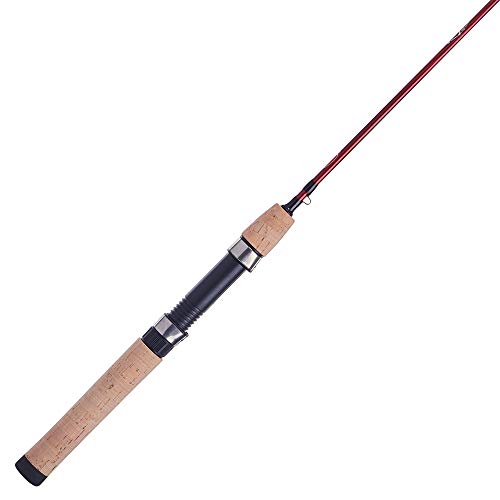
Berkley Cherrywood HD, 5'6" Light
A proper ultralight rather than a short cheap rod, and the distinction is in the ratings: the listing specifies 2-6 lb line, light power, fast action and a 1/16-1/4 oz lure window at 5'6". That is the correct tool for stream trout, crappie and bluegill on 4 lb line, and the wrong tool for anything else.
- Publishes the full set of ratings - 2-6 lb line, 1/16-1/4 oz lures - instead of a vague 'light' label
- Blank-through-handle construction puts the blank itself under your palm for bite detection
- Cork is the better handle material on freezing mornings, as Berkley points out
- The 1/4 oz lure ceiling excludes most bass and walleye baits
- 5'6" is short, so it gives up casting distance on open water
- A fast action on a 2-6 lb rod leaves little cushion when a good fish surges on light line

St. Croix Bass X Casting, 7'11" Heavy
Read the variant carefully, because this is not an all-rounder. The ASIN we priced is the 7'11" heavy, moderate-fast Bass X casting rod: listing specs are 14-30 lb line, 1/2-2 oz lures and one-piece construction.
- A published 5-year warranty and US manufacturing at about $155.00 as of October 2026
- The 1/2-2 oz lure rating genuinely handles frogs, punch rigs and big swimbaits
- Cork primary with EVA secondary gives you something to grip on a two-handed cast
- The 7'11" heavy variant is a specialist - wrong rod for finesse or general freshwater work
- One-piece at 7'11" means it will not fit in most cars without laying it across the seats
- Bass X is sold in many lengths and powers under one parent listing, so this price and spec apply to this variant only

PLUSINNO Telescopic Combo Kit
The pick for a backpack, a boat locker or a hotel room. One box gets you a telescopic rod, a reel, line, lures, hooks, accessories and a carrier bag, so there is nothing left to buy.
- Genuinely complete - rod, reel, line, terminal tackle and a bag for about $44.98 as of October 2026
- Welded guide frames with ceramic inserts are a sensible choice on a rod that collapses repeatedly
- The 5.2:1 HA 3000 reel is a reasonable general-purpose size and speed rather than a token spool
- Telescopic sections mean more joints to seize, flex or separate than a two-piece rod has
- Collapsing blanks cannot hold a crisp action, so bite detection is poorer than a one-piece rod of the same price
- The listing publishes no line or lure weight rating for the rod, so you are guessing at its limits

Zebco Z-Cast Telescopic, 5'6"
About $15.99 as of October 2026, from a $19.
- A 17-inch collapsed length makes it the easiest rod here to keep in a car or pack
- Fiberglass is the right material for a rod that will be treated badly
- A published 1-year warranty on a rod costing about $15.99 as of October 2026 is more than nothing
- The listing contradicts itself: medium power on 8-12 lb line is heavier than the panfish and trout use it claims
- Only 3 guides plus a tip means wider gaps and worse line control than a 5 or 6 guide rod
- Telescopic joints plus a fiberglass blank give you durability but very little sensitivity
Compare The Field
| Compare | Best All-Round First Rod Ugly Stik GX2 Spinning Rod, 6' | Best Value Do-Everything Rod Piscifun Torrent, 7'0" MH | Best Ultralight for Trout and Panfish Berkley Cherrywood HD, 5'6" Light |
|---|---|---|---|
| Overall | — | — | — |
| Price | $55.32 Check price → | $39.99 Check price → | $30.86 Check price → |
About The Author
Rob Thomas
Rob Thomas is a fisherman who loves catching tales from his fellow fishermen. He always enjoys a good story, especially when it comes from the sea.