Spinning Reel Sizes Explained: What 1000, 2500, and 4000 Really Mean

This post may contain affiliate links. Read our policy.
Spinning Reel Sizes Explained: What 1000, 2500, and 4000 Really Mean
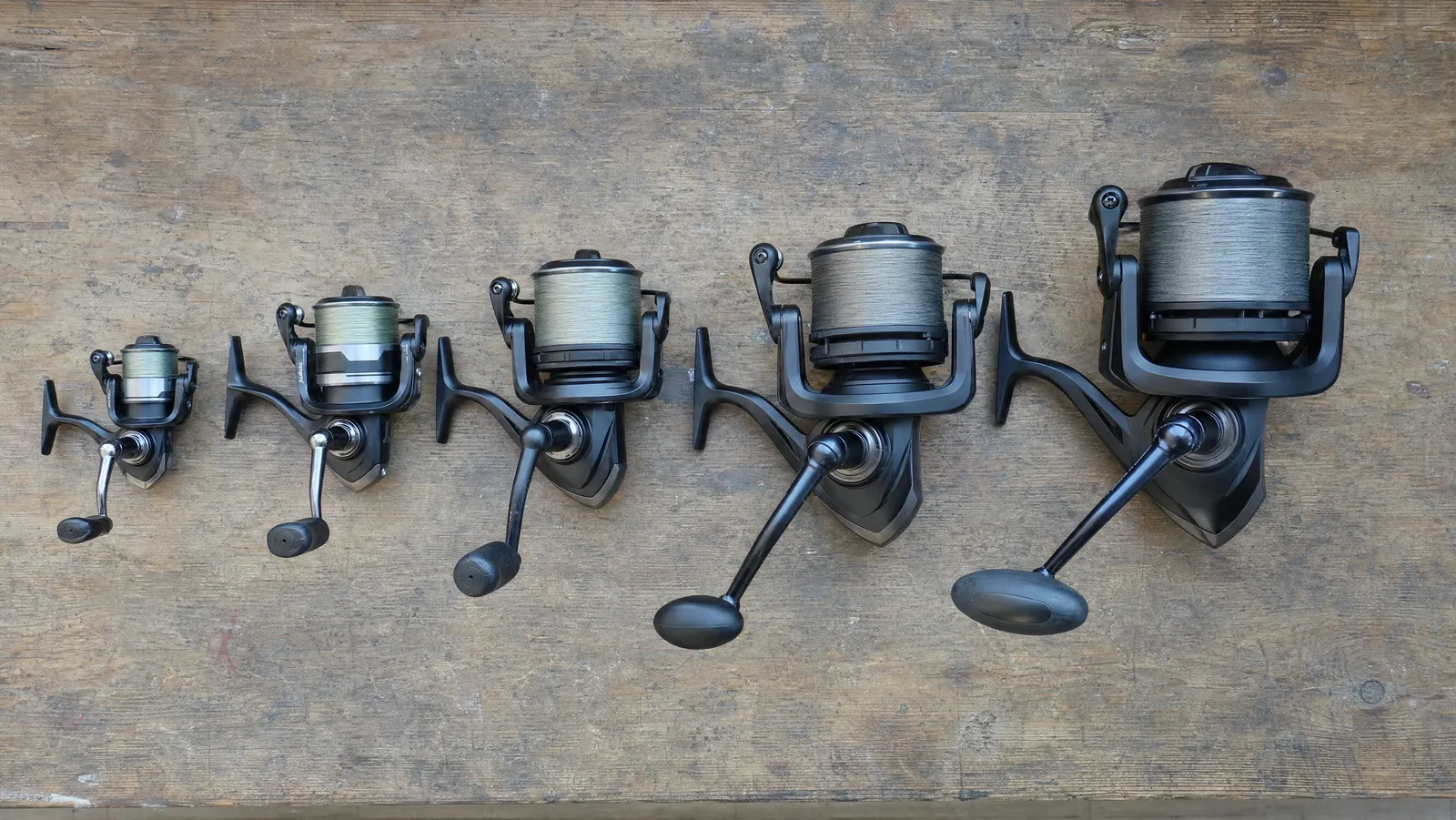
Spinning reel sizes explained in one sentence: the number stamped on the reel is a spool size. It tracks spool diameter and line capacity, and through those, the reel's weight and the line class it was built around. A 1000 is a light-line reel. A 4000 is an inshore reel. The number promises nothing about strength, smoothness or quality.
Now the part the size charts leave out, and the most useful thing on this page. The numbers are not an industry standard. Master Fishing Magazine states it flatly: no industry body, "not IGFA, not AFTMA, not any Japanese tackle standards organization," has ever standardised spinning reel size nomenclature. Every manufacturer numbers its own ladder, and the rungs do not line up.
So a 2500 tells you where a reel sits inside its own brand's range and very little about where it sits in anyone else's. That is liberating once you accept it, because you stop shopping for a number and start shopping for a spool that holds the line you actually fish. This is the sizing half of choosing a spinning reel — drag, gearing and build are the other half.
The Number Is a Spool Size, Not a Standard
The clearest proof is a weight sheet. Master Fishing Magazine's cross-brand comparison lists a Penn Spinfisher VII 2500 at 10.7 oz against a Shimano Stradic 2500 at 7.9 oz — same number on the box, 2.8 oz apart. That is not a rounding error. On a 7-foot rod held all day, 2.8 oz is the difference between a setup that disappears in your hand and one you notice by lunchtime.
It happens inside a single brand too. Salt Strong compared Daiwa reels wearing the same size stamp and found the BG 2500 at 9.3 oz next to the Fuego 2500 at 7.4 oz, and its conclusion is worth taping to the tackle shop door: "Even though the size numbers on the reel are the same, this does not mean the specifics of the reels will align and be the same."
The history is messier still. Long-running discussions among anglers who fished both brands before Daiwa's renumbering — the threads on BBC Boards are typical — put the old Daiwa 2500 in roughly the same class as a Shimano 3000, which is why so much decade-old internet advice about sizes reads wrong today.
Practical version: the size number narrows the shelf, then the spec table decides. Two numbers on the box actually settle it — published line capacity and reel weight.
What the Size Number Actually Correlates With
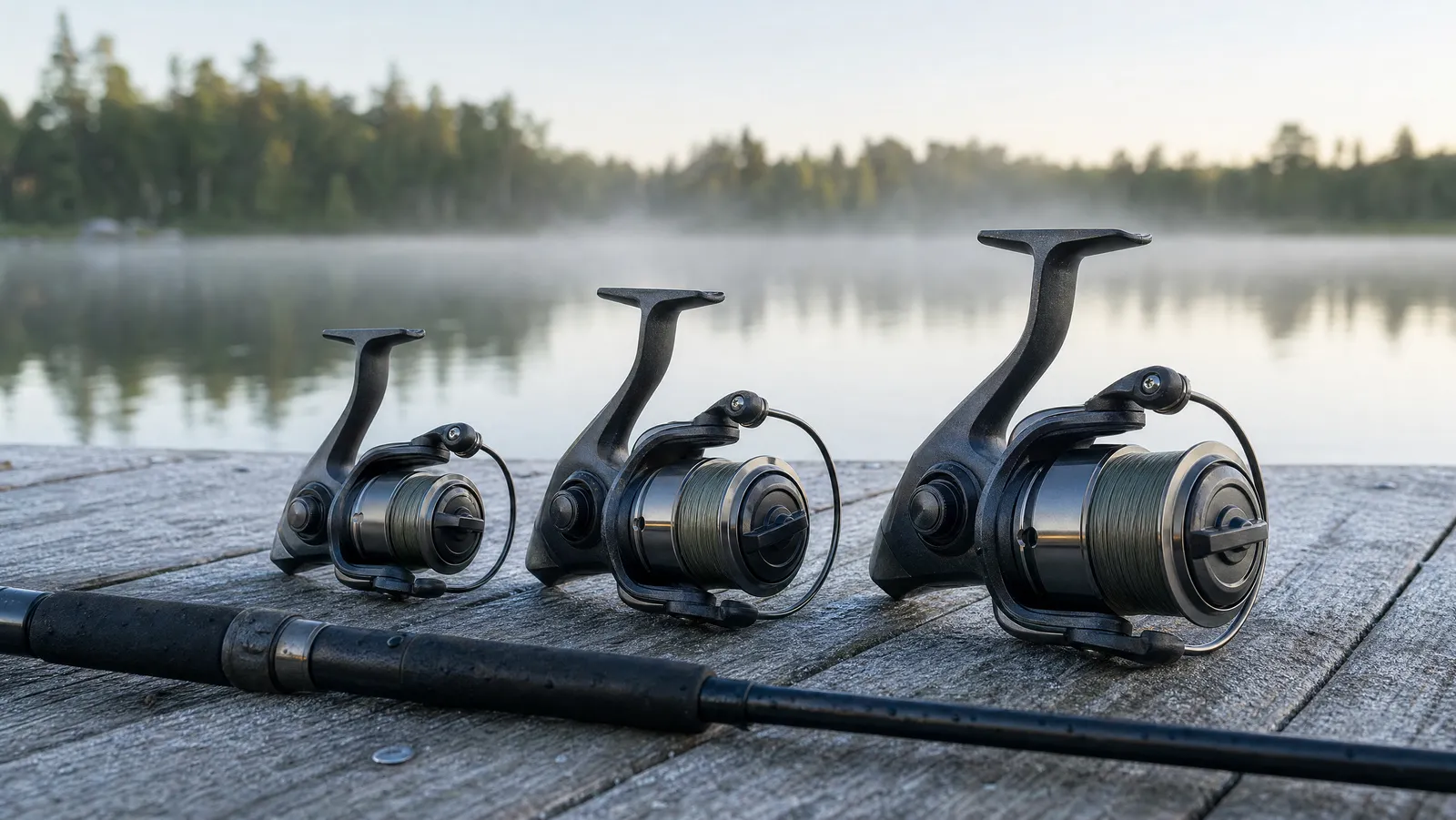
Strip the marketing away and the size is a statement about the spool: how fat it is, and how much line fits on it. Everything else follows from that. A bigger spool needs a bigger rotor to carry the bail around it, a bigger frame to hold the rotor, and a bigger gear train to turn the lot, so weight climbs with the number almost as a matter of geometry.
What reliably goes up as the number goes up:
- Spool diameter, which sets how much line comes off per revolution of the bail.
- Line capacity, in yards at a given pound test.
- Reel weight, and with it the rod power the reel balances.
- Retrieve per crank, because a larger-diameter spool gathers more line per turn at the same gear ratio.
- The line class the drag and gears were designed around, which is not the same as the drag number on the sticker.
What does not track the size number at all: build quality, drag smoothness, bearing count, sealing, or gear ratio. Gear ratio is sold separately as a letter suffix, and a small reel from a good series will out-fish a big reel from a cheap one at anything except holding line.
Watch how small the physical steps really are. On Daiwa's own LT explainer, the published spool diameters run 40 mm at LT1000, 41 mm at LT2000, 42 mm at LT2500, 43 mm at LT3000, 44 mm at LT4000, 45 mm at LT5000 and 46 mm at LT6000. Six size steps buy six millimetres of spool. That is why a 2500 and a 3000 from the same series feel nearly identical in the hand and differ mostly in how much line they swallow — which is why the fishing line weight chart matters more here than any size chart: capacity is a diameter problem, and pound test is only a proxy for diameter.
The Two Numbering Systems You Will Meet in the Aisle
There are two scales on the wall of any tackle shop, and a third wrinkle from Daiwa.
- The four-digit scale. Master Fishing Magazine's breakdown assigns this one to Shimano, Daiwa and Penn: 1000, 2500, 3000, 4000 and up.
- The two-digit scale. The same breakdown lists Abu Garcia, Pflueger and Lew's using 20, 25, 30, 40. KastKing's sizing guide describes the alternative system as simply "two fewer zeros," so a 30 is read as a 3000 — approximately, and only approximately, since neither scale is standardised in the first place.
- Daiwa's LT sizing. Daiwa says the LT concept exists because "braided line has totally revolutionised fishing," that the gaps between its old sizes "were varied," and that "our new LT sizing standardises the spool diameters and by expanding 4000 to 6000 like we've done in LT, we have a more logical sizing progression."
That last point deserves a beat. A brand can renumber its own ladder, and Daiwa did. An LT number and a pre-LT Daiwa number are not interchangeable, so a second-hand reel from either side of that changeover needs its capacity read, not its badge.
The letters riding alongside the number are not sizes either. Suffixes cover gear speed, body style and sealing depending on the maker. When in doubt, ignore them for sizing purposes and read the capacity line.
How to Choose: Start With the Line, Not the Fish
Most sizing advice starts with a species. That is backwards, because the reel has no idea what is on the other end. It only knows what is wrapped around its spool and what rod is bolted underneath it. So work in this order.
1. Pick the line first. Decide the type and pound test you intend to fish — that decision belongs to the water, not the reel. Our guide to the best fishing line for spinning reels covers that choice, and the broader fishing line guide covers the rest.
2. Find the smallest size that genuinely holds it. You want a published capacity comfortably above the 150 to 200 yards many anglers actually fish, because a spinning reel has to be filled properly to work. Lew's spooling guide is specific: the reel "is full when the line comes to within about 1/8-inch of the spool's outer edge," stopping short costs casting distance and retrieve speed, and if you fill to the very edge "bird's nests are inevitable." A spool you cannot fill to that line is the wrong spool. Run the numbers through the line capacity calculator before you buy rather than after.
3. Check the weight against the rod. KastKing's sizing guide puts it simply: the right size "will allow you to have a great rod-reel balance." A balanced setup pivots near your hand, and a tip-heavy or butt-heavy one wears out your forearm and dulls your feel for bottom.
Only then do you sanity-check the answer against the species. Nine times out of ten the line and the rod have already picked the reel for you.
The Spinning Reel Size Chart, Written Out
Here is each rung in words rather than a grid. Treat every figure as typical rather than certain, and confirm it against the spec table of the specific reel in your hands.
500 and 1000: Ultralight
Small spools built around the lightest lines most people will ever fish. KastKing's guide files the 1000 under "ultralight lure fishing tactics" for perch and small trout. Expect a reel that weighs well under half a pound, pairs with an ultralight or light rod, and runs 2 to 6 lb mono or the thinnest braid. The trade is capacity and casting: a tiny spool makes tight coils of line, and tight coils are where wind knots start.
2000 and 2500: The Finesse Middle
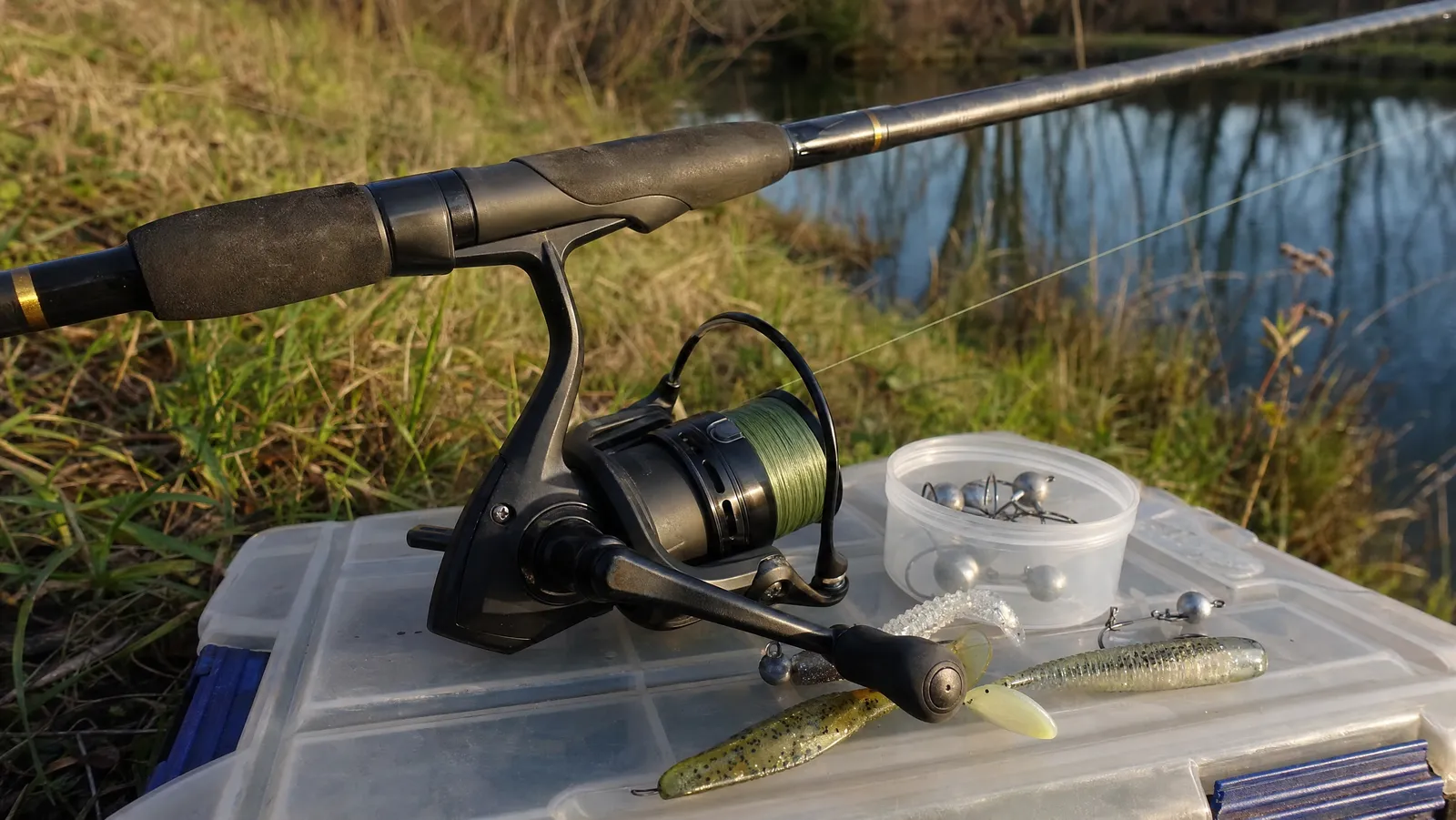
The most borrowed sizes in freshwater. KastKing puts the 2500 on "light lure fishing tactics like drop shotting, spinning, or jagging," which is a fair description of what a 2500 does in North America too. A 2500 on a medium-light 7-foot rod with 10 lb braid and a fluorocarbon leader is the default finesse spinning setup for a reason: light enough to fish all day, enough spool to cast a 1/8 oz jig head, enough capacity to run a real leader without thinking about it.
3000: What Is a 3000 Spinning Reel?
A 3000 is usually the same body as its maker's 2500 with a deeper or wider spool — sometimes literally the same frame. It is the most argued-about size on the wall, partly because the recommendations genuinely conflict by region: KastKing's guide calls a 3000 "the ideal size for a trout spinning reel," and its saltwater guide also puts a 3000 on a 7 to 7.5-foot inshore boat rod. Both are defensible. Read that as evidence of how wide the useful middle is, not as a contradiction. If you fish one spinning reel for everything from bass to light inshore, this is the size to look at first.
4000: Power Freshwater and Inshore
The size where a spinning reel starts feeling like a tool for fish that pull back. KastKing's guide assigns the 4000 to "pike, salmon, and trout," and it is the common inshore choice for anglers who want reach and capacity without going up a frame size. Weights vary a lot by series here, often somewhere in the 9 to 13 oz range, so read the spec sheet rather than trusting a range. Figure on a medium or medium-heavy rod and 15 to 30 lb braid.
5000 and Above: Surf, Pier and Big Water
Capacity becomes the point. KastKing's guide sends a 5000 after "salmon when targeting deep and hard-flowing rivers" and saltwater tropical species, and its saltwater guide pairs a 5000 with an 8-foot pier rod. Above that you are buying line for long casts and long runs, and paying for it in weight on every cast of the day.
What Size Spinning Reel for Bass, Walleye and Inshore?
With the ladder in place, the species question answers quickly. These are starting points, not rules.
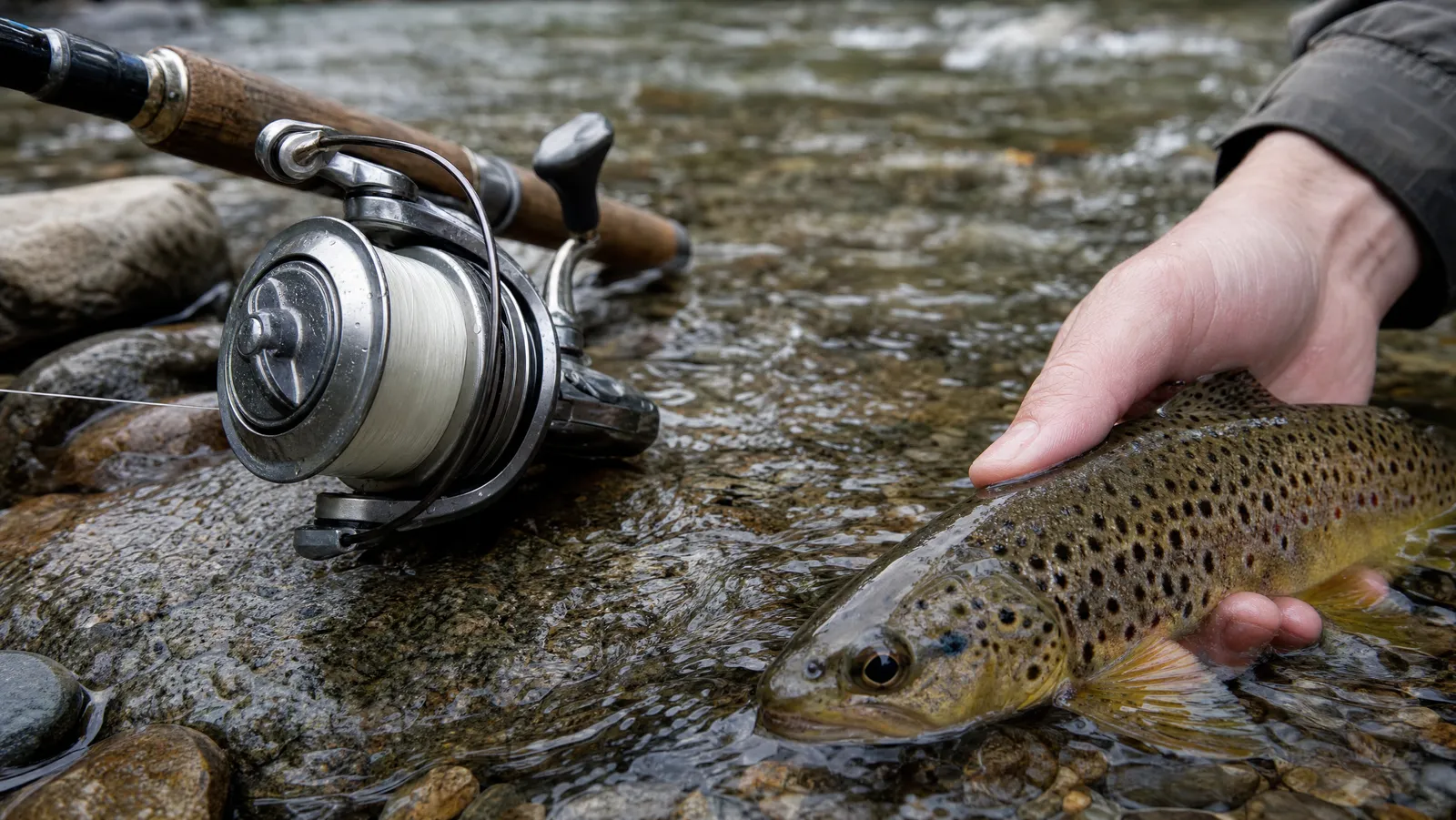
- Trout and panfish. 1000 to 2500, light line, light rod. KastKing's guide starts perch and small trout at the 1000.
- Bass, finesse. 2500 on a medium-light rod. KastKing's guide brackets bass at "between 2500 (ultralight bass fishing) and 4000," and the finesse end of that bracket is where most spinning-rod bass fishing lives.
- Bass, power. 3000 to 4000 on a medium-heavy rod for heavier braid, bigger baits and hooksets in cover, at the top of the same bracket.
- Walleye. 2500 to 3000 is the usual middle, chosen for light line and long casts rather than for drag.
- Catfish. 4000 and up, chosen for capacity and drag range. Framed as practice rather than promise, set drag well below the line's rated strength and let the rod and a long fight do the work.
- Inshore saltwater. 3000 to 5000. KastKing's saltwater guide pairs a 3000 with a 7 to 7.5-foot inshore boat rod and a 5000 with an 8-foot pier rod.
- Surf. 5000 and up, because a long cast needs a large spool and a long run needs a lot of line behind it.
Shallow Spools, Deep Spools, and Why Braid Likes a Shallow One
Two reels can share a size number and a body and still differ in spool depth. A shallow spool has the same diameter and less volume, so it fills with less line at the same pound test. That sounds like a downgrade and usually is not.
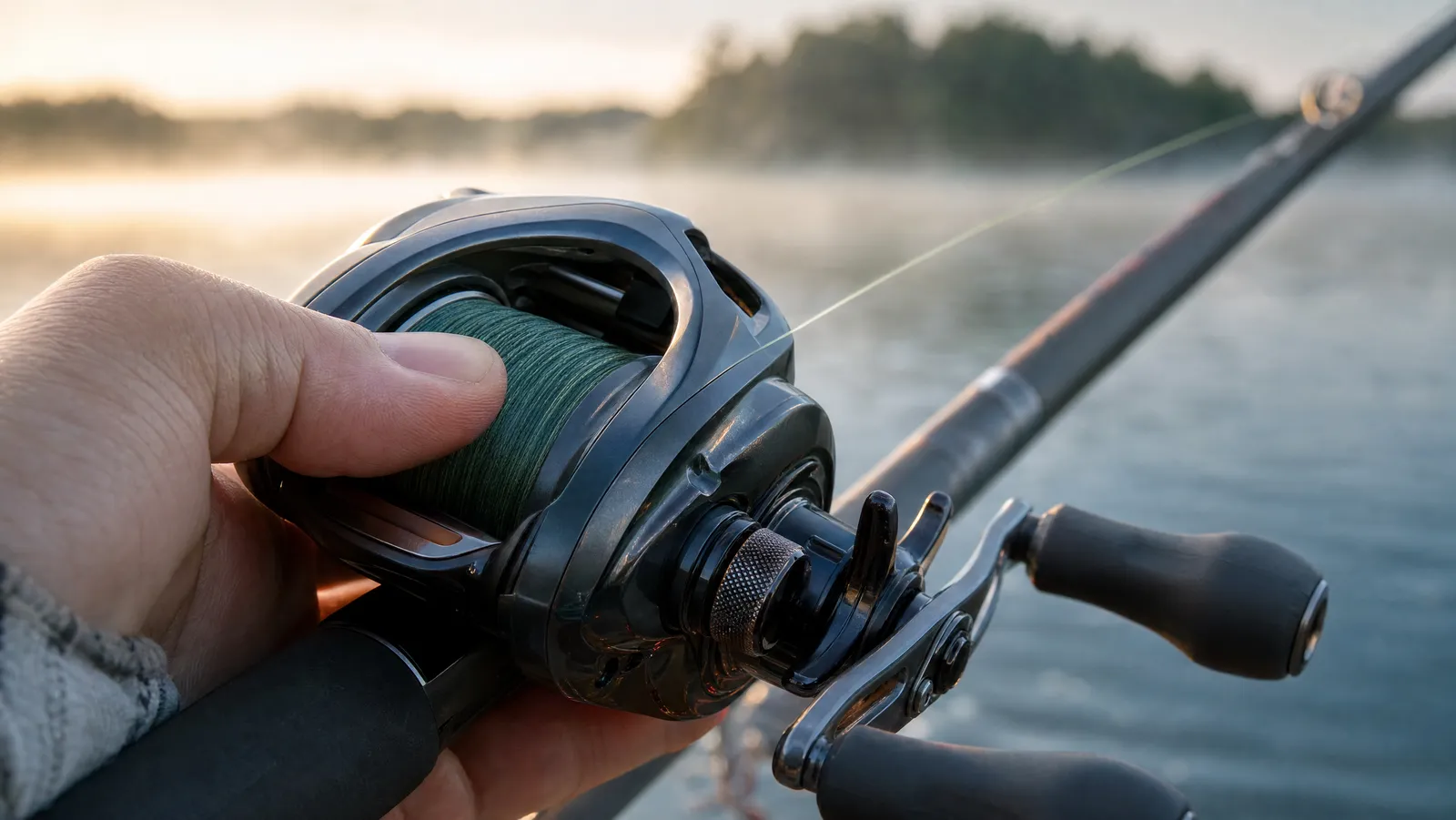
The mechanism is simple. Casting distance is set by spool diameter, not by how much line is buried underneath. Braid is thin, so a standard spool designed around mono capacity needs 250 or 300 yards of braid to reach the lip — line you will never see, but line you paid for. A shallow spool reaches that same full diameter on the 150 yards you actually fish.
If your reel only came with a deep spool, mono or fluorocarbon backing solves the same problem, and it solves a second one at the same time. Lew's spooling guide notes that braid is slick enough that you should "first attach a length of monofilament or fluorocarbon to the reel's spool and knot it to the braid," and suggests cheaper mono as backing precisely so you are not wasting braid. Getting the fill level right is the whole job — our guide to spooling a spinning reel walks through the knots and the filling.
Does a Bigger Spool Cast Farther? A Little
It does, and less than the internet claims. Salt Strong ran a controlled comparison of a Daiwa Fuego LT 1000 against a Fuego LT 3000 on the same TFO 7-foot 6-inch medium rod with 10 lb Power Pro, and after evening out the weights its conclusion was that "on average, the 3000 casts about 1 to 2 feet farther than the 1000."
One to two feet. Not the twenty feet you would expect from the way spool diameter gets discussed. The more interesting finding in the same test was about tangles: the author noted that "the 1000 has a much higher chance for wind knots because of the smaller diameter spool," which matches what most anglers experience with very small spools and slack braid.
So size up for capacity, balance and fewer wind knots. Do not size up expecting a distance transformation.
The Sizing Mistakes That Cost Anglers Money
- Buying too big "to be safe." An oversized reel is not insurance, it is dead weight on the rod butt and a spool you never fill. The fish that breaks you off breaks the knot or the line, not the reel size.
- Mismatching reel size to rod power. A 4000 on an ultralight rod loads the blank wrong and feels numb. A 1000 on a medium-heavy rod leaves you cranking a fish uphill with no line pickup.
- Ignoring how full the spool ends up. Lew's 1/8-inch rule is the whole reason capacity matters. An unfilled spool short-casts, and an overfilled one nests.
- Trusting the number instead of the spec sheet. Two 2500s can be 2.8 oz apart, as Master Fishing Magazine's comparison shows. Read weight and capacity every time.
- Comparing sizes across brands or across generations. Daiwa's own LT explainer describes standardising its spool diameters and expanding the range to 6000, which is a polite way of saying the old numbers moved.
Which Size Spinning Reel Should You Buy?
If you fish freshwater and want one reel: a 2500 or 3000 on a 7-foot medium or medium-light rod, spooled with 10 to 15 lb braid and a leader. If you fish light salt as well, take the 3000 or step to a 4000. If you fish trout streams and ponds with 4 lb line, a 1000. If you fish the surf, a 5000 or larger and accept the weight.
Then stop reading numbers and read the spec table. Line capacity and reel weight tell you what the size stamp only hints at, and the line capacity calculator turns those numbers into the amount of line you will actually put on. If you now know your size and want a reel to put it on, our picks for the best spinning reel under 100 cover the value end, and the full guide to how to pick the right spinning reel covers drag, gearing, sealing and build.
One last habit worth forming. When someone tells you a 3000 is the right size, the useful follow-up question is not "for what fish," it is "whose 3000, and holding what line."
About The Author
Rob Thomas
Rob Thomas is a fisherman who loves catching tales from his fellow fishermen. He always enjoys a good story, especially when it comes from the sea.