Fishing Rod Length Guide: What Size Rod Do You Need?

This post may contain affiliate links. Read our policy.
Fishing Rod Length Guide: What Size Rod Do You Need?
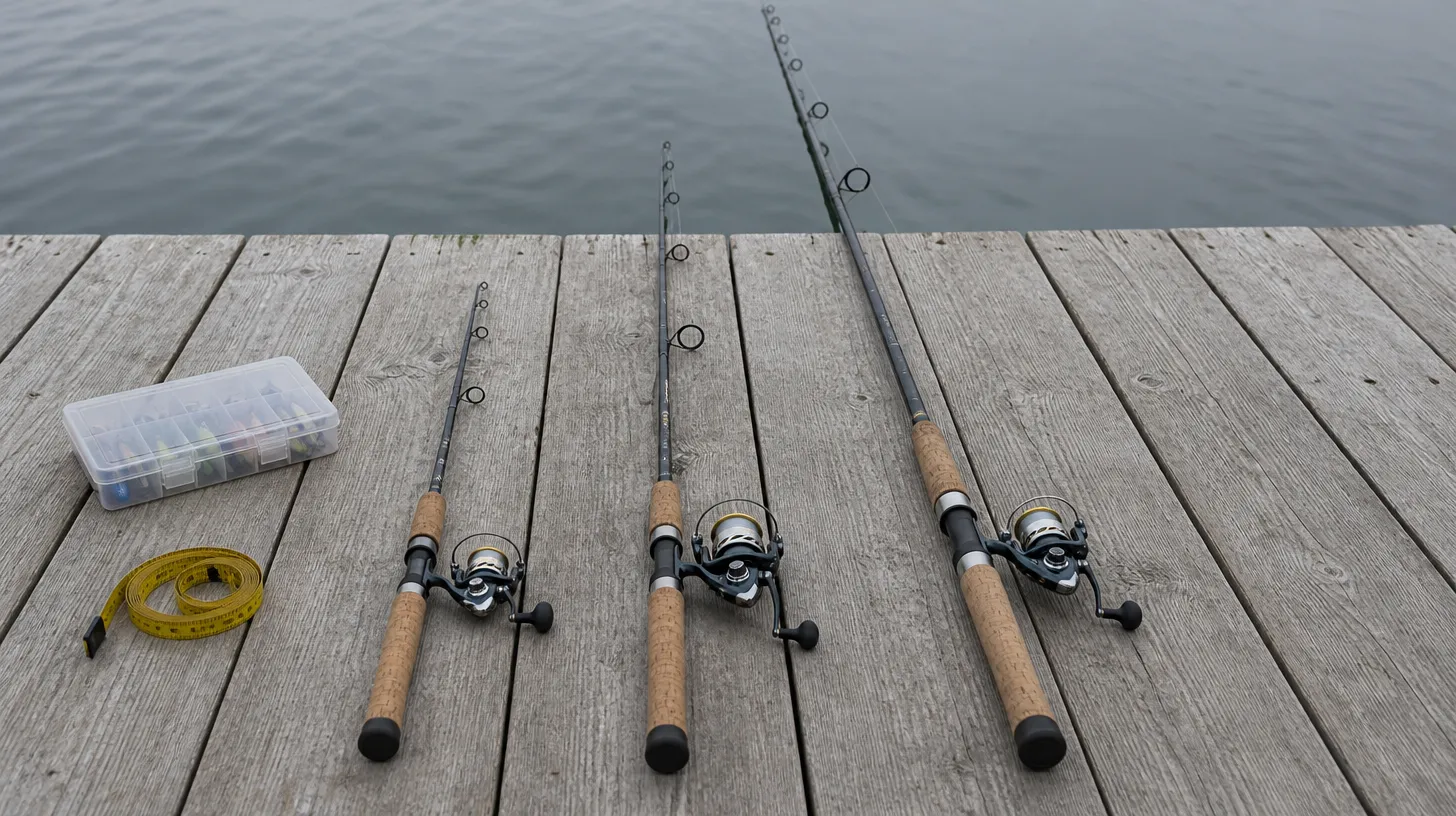
For most freshwater fishing, 6'6" to 7'0" is the right range, and a 7-foot rod is the safest single buy. Two things move you off it: a cramped place to stand, or a target too far away to reach. What species you are chasing barely enters the decision.
That is this fishing rod length guide in three sentences. The rest of the page is the reasoning, the ladder from under 6 feet to over 10, and the part most guides skip — where you stand changes the answer more than anything printed on the blank. If you are comparing specific rods rather than numbers, our page on how to choose a fishing rod covers the rest of the spec sheet, and fishing rods explained is the vocabulary primer.
Two cautions before the ladder. Length is a trade, not an upgrade — every inch you add buys distance and costs you control in tight spots. And the jumps that matter are roughly 6 inches or more. Nobody feels the difference between 6'9" and 6'10", so do not agonize over an inch.
What rod length actually changes
Four things, in rough order of how much you will notice them.
Casting distance. FishUSA's rod-length guide states it plainly: longer rods of 7'0" and above allow for longer casts, while shorter rods of 6'6" and below give better control and accuracy for short-range casts. Daiwa's own how-to-choose-a-rod page agrees that longer rods give you more casting distance. The mechanism is not exotic — a longer blank sweeps the lure through a wider arc, so for the same sweep of your arms the tip is traveling faster at the moment of release.
How much further? We could not find a published, controlled test that isolates rod length and reports the gain in feet, which is worth knowing before you pay for length. The most useful perspective we did find is from On The Water, whose surf-rod guide notes that a drop in braided line diameter can add more distance than an increase in rod length. If thinner line out-casts a longer rod, the length effect is real but modest. Technique swamps both; see how to cast a spinning reel if distance is the goal.
Accuracy. Short rods place lures better, and the explanation is most likely geometry rather than magic: a shorter lever needs a shorter backswing, puts the tip closer to your eye, and gives a small timing error less arc to amplify. FishUSA ties its short-rod range to exactly the jobs where that matters — skipping jigs and soft plastics under docks, and working topwater walking baits, poppers and jerkbaits.
Leverage on the hookset. This is the claim to handle carefully. FishUSA says longer rods generate more leverage, improving hook-setting power, and Daiwa frames the same benefit as taking in more line during a hookset, particularly at longer range. Both are fair. But a longer blank also has more length to flex before anything reaches the hook, and a long cast has more line stretch to take up. More sweep per unit of motion, more give in the system: treat it as a trade rather than a straight win.
Line control. A taller tip holds more line off the water, which is why Daiwa points longer rods at fishing from high banks, rocks and open shorelines. FishUSA makes the related point that a longer rod helps manage line slack better.
One candour note about the sources. FishUSA defines short rods as 6'0" to 6'9" in one section of the same article and as 6'6" and below in another. Treat every range below, including ours, as a center of gravity rather than a border.
The length ladder
Under 6 feet: tight quarters, kids and ice
Utah's Division of Wildlife Resources, in its learn-to-fish guidance on basic equipment, says spinning rod and reel combos generally run about 5 to 8 feet, so under 6 feet is the bottom of what is normally sold rather than a novelty.
Three situations call for it: small brushy streams where the overhead canopy limits your cast, children who need less rod to swing, and ice fishing, which is a separate category of rod and shorter again, because you fish straight down a hole instead of casting.
6'0" to 6'6": accuracy and small water
This is the precision band. Think docks, laydowns, culverts, small ponds and panfish, where the cast you need is 20 feet and dead accurate. Daiwa adds a second argument for short rods that has nothing to do with casting: they make it easier to manipulate the lure with your hands and wrists. If your fishing is twitching a small jerkbait or walking a topwater, a short rod puts the action under your fingertips.
The cost is reach: from an open bank with 40 yards of water in front of you, a 6-footer leaves fish uncovered.
6'6" to 7'0": the all-purpose default
FishUSA calls 6'10" to 7'3" the most versatile range, which overlaps this band at the top. We would hand almost any new angler a 7-foot medium-power spinning rod and expect it to cover nearly all of their fishing: it casts a quarter-ounce lure far enough from a bank, still fits down a trail, and has enough backbone for a decent fish. Our best fishing rods for beginners picks all sit in or near this range for that reason.
6 foot vs 7 foot rod: what you actually feel
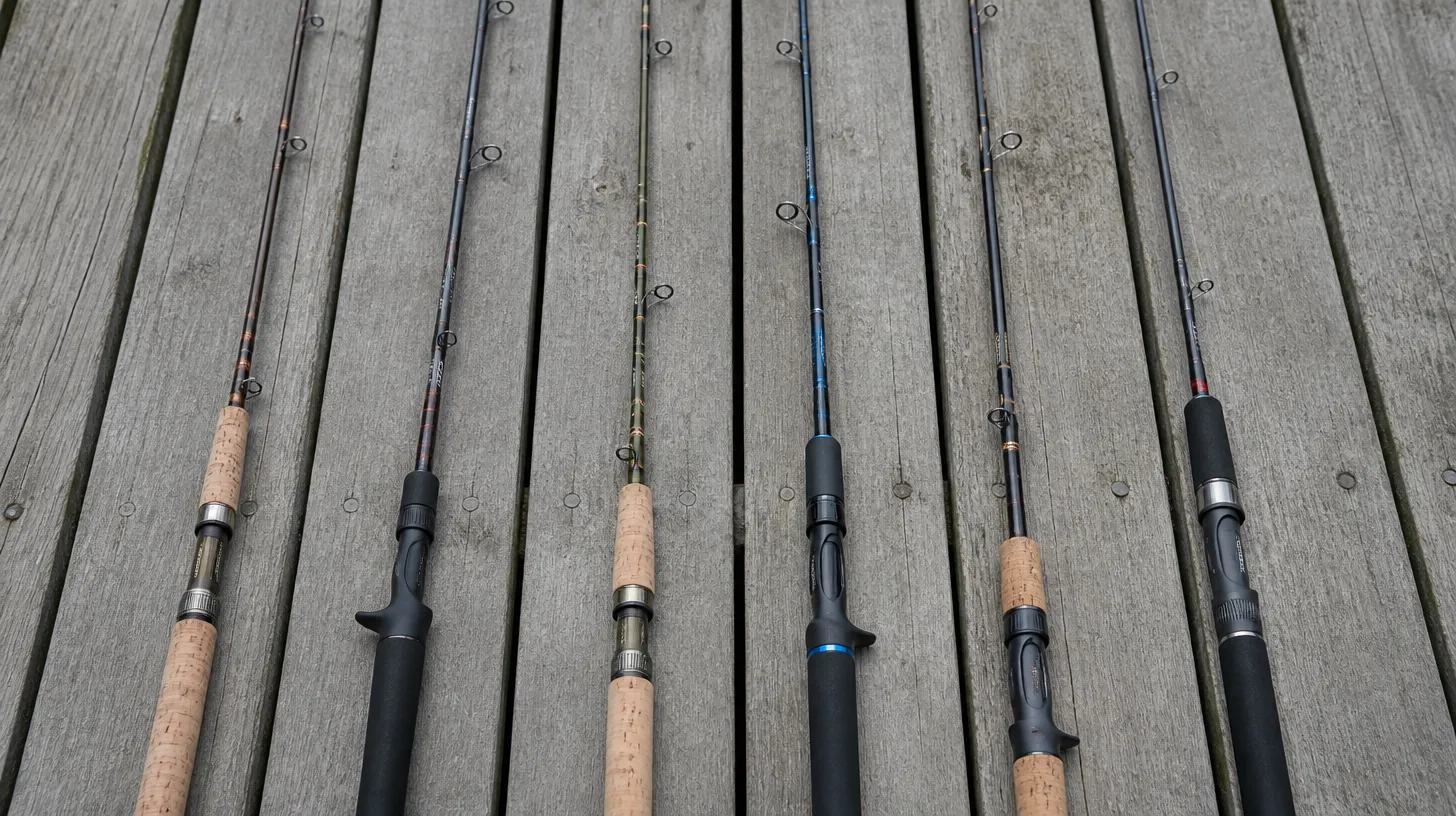
This is the comparison most people mean when they ask what length fishing rod to buy, and the honest version is undramatic. Going from 6 to 7 feet buys you some extra distance and a longer sweep on the hookset. It costs you accuracy in close, and it makes a seated or overgrown cast harder. A full foot is a real difference — unlike the 2-inch arguments you will read on forums — but it is a difference in emphasis, not in capability. Both rods catch the same fish.
7'0" to 7'6": distance, bigger baits, boat decks
Add length here and you are buying reach and lifting sweep. FishUSA puts flipping and pitching into heavy cover, Carolina rigs, deep crankbaits and large swimbaits in its long-rod range of 7'4" to 8'0", and slots crankbaits specifically at 7'0" to 7'6". These lengths suit a standing angler with deck space and open water ahead.
Two credible sources disagree about the default here, and the disagreement proves this page's thesis. Daiwa's Scandinavian rod-buying guidance calls 7 to 8 feet, or 210 to 240 cm, a very good all-round choice for most beginners, while FishUSA centers on 6'10" to 7'3". Daiwa is writing for anglers standing on European shorelines; FishUSA is writing for bass anglers, many of them in boats. Neither is wrong. They are answering from different banks. If bass is your target, the length question narrows fast, and we work through it alongside power and action in our picks for the best fishing rods for bass.
8 feet and up: surf, jetties and float fishing
Past 8 feet, length stops being a preference and becomes equipment for a specific place. On The Water's surf-rod guidance suggests beginning with a 10-foot moderate-action rod rated for 2- to 5-ounce lures, dropping to 9 feet for backwaters and sandy beaches that involve a lot of walking and casting, and bumping up to 11 feet for heavy structure or maximum distance.
Anglers who float-fish rivers often reach for similar length for a different payoff: holding line off conflicting currents so a float drifts naturally. The common thread with surf fishing is that both are about controlling line over distance, not about the size of the fish.
Where you stand beats what you are fishing for
This is the section most length guides skip, and it is the one that will actually save you money.
The cleanest evidence we found is in On The Water's surf-rod article, where four experienced surfcasters working the same Northeast coastline land on different lengths because of terrain. Steve Gallant prefers a 9-foot rod because much of his fishing happens near rocks and other obstacles behind him, keeping longer rods for when distance is critical. Frank Goncalves fishes 11 feet for most of his surfcasting and says he feels better in structure with his tip elevated. Toby Lapinski usually fishes an 11-foot Lamiglas GSB that he says can do everything he needs it to do. Pete Utschig simply carries three: a 9-footer for bays and rivers, a 10-foot jetty rod, and an 11-foot all-arounder rated 1 to 6 ounces.
Same coastline, same kind of fishing, a 2-foot spread in rod length — decided almost entirely by what is behind and around them. Apply the same logic to freshwater:
- Rod length for bank fishing is set by your backcast, not the water. Daiwa names the constraint directly, listing shore spots with trees or bushes behind you among the places a shorter rod is easier to handle. On a mowed reservoir bank, go 7'0" or longer. On a brushy creek bank where you are casting between branches, 6'0" to 6'6" will catch more fish than the rod that casts further.
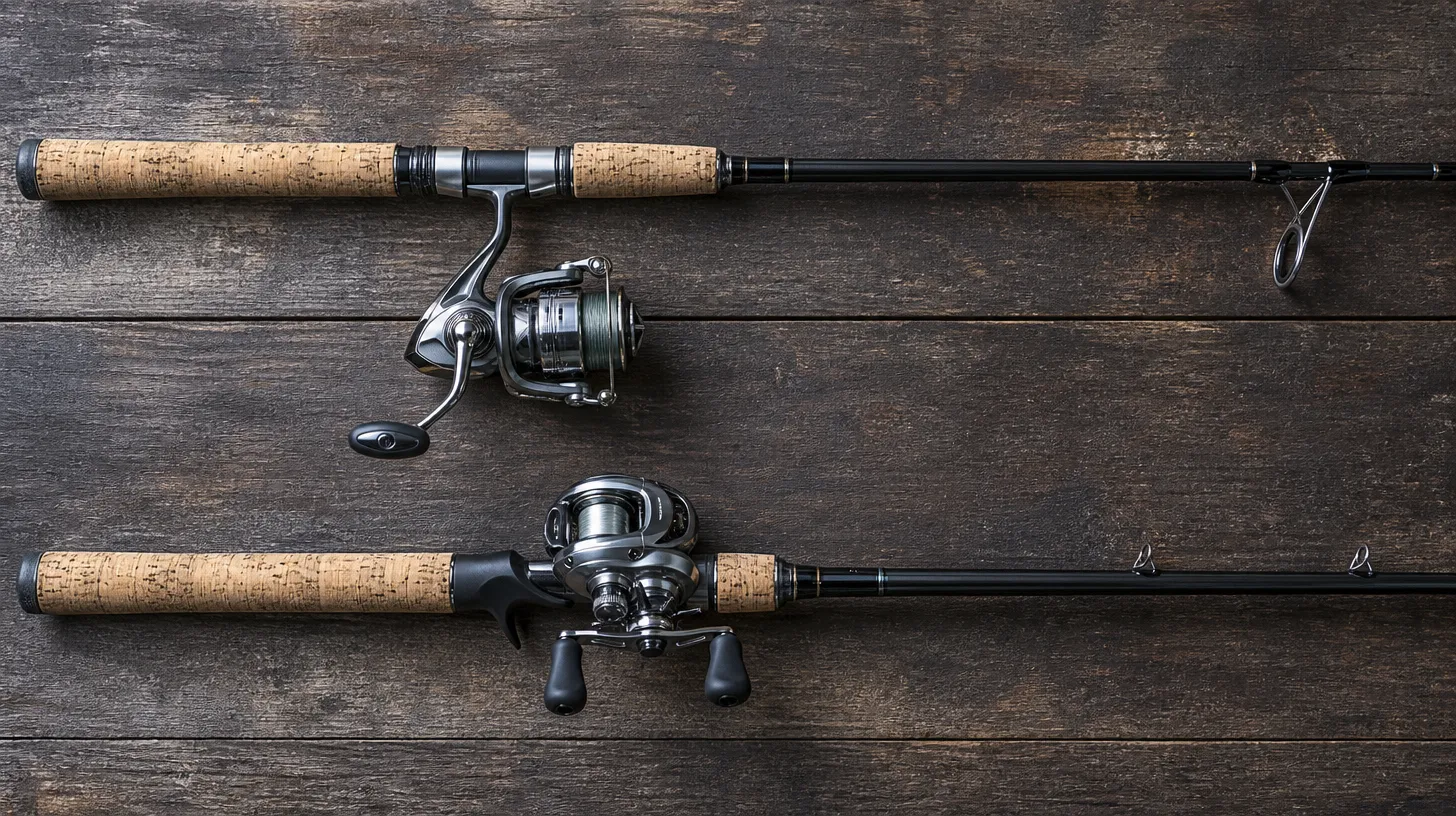
- From a kayak, seated, this one is genuinely contested. Daiwa lists kayaks alongside small boats as tight spaces that favor shorter rods, and most kayak guides land somewhere between 6 and 7 feet. But plenty of experienced kayak anglers run 7-footers and prefer them for steering a fish around the bow. A point raised repeatedly in kayak forums deserves more attention than it gets: the butt section behind the reel seat may matter more than the overall number, because a long rear grip catches on your shoulder or a PFD when you are seated. Where the reel seat sits and how the grip is shaped differs by rod type, which our comparison of casting rod vs spinning rod gets into.
- From a boat deck, standing, you have the most room to swing a rod and a higher release point than you get wading or from a low bank. This is where 7'0" to 7'6" earns its keep.
- From a pier, jetty or high bank, length keeps line clear of pilings, rocks and the lip below you. Utschig's 10-footer is specifically his jetty rod, and Goncalves's elevated-tip preference is the same instinct.
- Wading, you lose the height advantage: the water is at your thighs, so your butt section sits lower than on a bank. A rod at the long end of your range helps keep line off the surface; much past that gets awkward with a net in one hand.
Does your height matter? Less than you have been told
The internet will tell you that tall anglers need long rods. We would not spend a dollar on that theory. The difference in height between a 5'6" angler and a 6'4" one is 10 inches; the difference between a 6-foot rod and a 7-foot rod is 12, and the rod is the part you choose. On The Water's own conclusion, after collecting all those surfcasters' opinions, is that for most plugging situations rod length ends up being a matter of personal preference more than necessity.
What does track with your body is load, not stature. Lapinski notes he reaches for his 10-footer instead of his 11 when his shoulder injury flares up. A long rod is a long lever held at arm's length all day; if you fish eight-hour sessions, weight and balance will matter more than feet.
One-piece vs two-piece at the same length
A two-piece 7-footer packs down to a little over half its length, which is the difference between a rod that lives in your trunk and a rod that lives in your garage. That convenience is the entire argument for it.
The cost is a joint: one more thing to seat properly, check for grit and re-seat during the day, and the spot a rod is most likely to come apart mid-cast after a careless assembly. Claims that you can feel a ferrule as a dead spot in the action are common and plausible, but we have not seen a published measurement, so we will not pretend it is the deciding factor. Buy the two-piece if you travel or hike to water. Buy the one-piece if the rod only ever rides in a truck bed.
How length fits with power and action
Length is the one rod dimension the power and action rating does not cover. Power is how much force bends the blank; action is where along the blank it bends; length is how far from your hand the tip is. Pick length from where you stand, then power and action from what you are throwing — our guide to fishing rod action and power explained covers that second half in detail.
Two interactions are worth knowing. A long rod with a fast action concentrates the flex in the top third of a lot of blank, which is the usual explanation offered for why 7-foot-plus fast rods feel so sharp on a hookset. And a long rod rated for light line is a pairing worth checking rather than assuming, because a longer lever lets the fish pull harder against you. That is where the reel and line have to agree with the rod: our fishing line weight chart matches line to the rod's printed rating, our line capacity calculator tells you what the spool will actually hold, and the sizes in our best spinning reels roundup are the ones that balance a 7-foot rod without making it feel tip-heavy.
What we would buy
If you are buying one rod and want to stop reading: a 7-foot medium-power spinning rod, two-piece if it has to travel. It is the least wrong answer for a freshwater angler who fishes from banks and the occasional boat.
Then adjust once, and only for where you stand. Brushy bank or small creek: 6'6". Seated in a kayak: 6'6" to 7'0", and look at the rear grip length before the overall number. Boat deck and open water: 7'0" to 7'6". Surf: start at 10 feet, per On The Water's guidance, and carry the 9-footer when the walk is long. Everything else — species, lure weight, line class — belongs to power and action, not length.
When the number is settled, the specific rods we would hand someone at each length are in our complete guide to fishing rods, which is also where the trade-offs show up as actual price tags.
About The Author
Rob Thomas
Rob Thomas is a fisherman who loves catching tales from his fellow fishermen. He always enjoys a good story, especially when it comes from the sea.