Best Crankbaits for Bass: Squarebills to Deep Divers

This post may contain affiliate links. Read our policy.
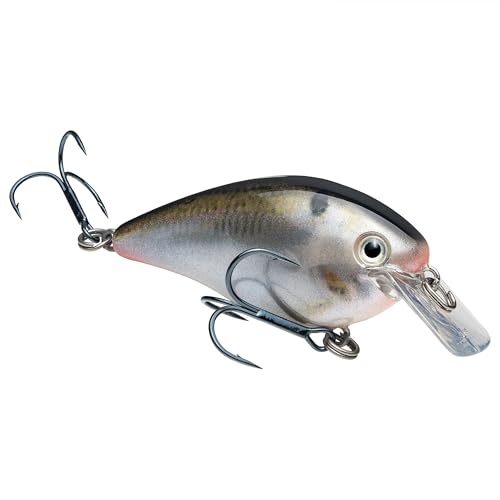
Strike King KVD 1.5 Squarebill
Built for shallow power fishing, it deflects off cover to entice strikes while still running true.
- Erratic, wandering action that still runs true
- Deflects off shallow cover to trigger reaction strikes
- Silent, rattle-free design for pressured fish
- 3-to-7-foot dive range cannot reach deeper structure
- No rattles means less sound to call fish in dirty water
If we could throw one crankbait for bass anywhere in the country, it would be the Strike King KVD 1.5 squarebill — a 3-to-7-foot diver with an erratic, hunting action that deflects off cover, runs true at any speed, and costs $7.53 as of July 2026. It is our overall pick, and it is not close.
Angler Reviews is reader-supported: as an Amazon Associate we may earn a commission from qualifying purchases, at no extra cost to you.
But "crankbait" is a wide word. It covers everything from a wake bait ticking along 10 inches under the surface to a deep diver grinding a 12-foot ledge, and the right one depends entirely on the water in front of you. So this guide covers the best crankbaits for bass across all five classes — squarebill, lipless, mid-depth, deep diver, and wake/extra-shallow — plus how to match dive depth to structure and the rod, reel, and line that make cranking work. It is the crankbait chapter of Angler Reviews' guide to the best bass lures, so start there if you want the whole toolbox before you go deep on one lure family.
How Crankbaits Trigger Reaction Strikes
A crankbait is not a convincer. It is a provoker. You are not trying to fool a bass into a careful, deliberate bite — you are trying to force a split-second reaction before the fish gets a good look.
The mechanism is deflection. According to Bassmaster's Kevin VanDam, the goal is to bounce the bait erratically off cover or bottom, because that sudden change in movement mimics a weakness in a bass's prey — and predators react fast to abrupt changes. Bassmaster's coverage of squarebill specialist Kevin Short puts it even more bluntly: the whole key to fishing a squarebill shallow is triggering a reaction bite, and about the only way to do that is to have the bait bouncing off something.
That one idea drives every recommendation in this guide:
- Contact is the trigger. Pick a crankbait that runs slightly deeper than the water you are fishing, so it stays in touch with bottom or cover on every cast.
- Deflection beats a straight swim. A crankbait swimming through open water is background noise. The same bait caroming off a stump is a fleeing meal.
- Speed changes count as deflection too. Stop-and-go retrieves, a burn-and-kill over grass, a rod-tip rip out of weeds — anything that breaks the rhythm can fire a following fish.
Keep "hit something" in mind, and the five classes below stop being a catalog and start being a depth-and-cover system.
Squarebill Crankbaits: The Shallow-Cover Workhorse
Every squarebill on the market traces back to one whittler. According to the Bass Fishing Archives, Fred Young hand-carved the original Big O from balsa at his home in East Tennessee in the 1960s, named it for his brother Odis — "a large, imposing man" — and struck a deal for Cotton Cordell to manufacture it in 1973 — and that one bait inspired the countless imitations that built the modern squarebill category.
Our pick from that long family tree is the Strike King KVD 1.5 Squarebill. It dives 3 to 7 feet and wanders with an erratic action while still running true, which is exactly the mix you want: a bait that hunts side to side but never rolls out and blows the cast. Per Strike King, it has no internal rattles — a silent approach we genuinely like on pressured lakes where every other angler is throwing sound. At $7.53 as of July 2026 (down from $9.99), buy three, because a squarebill that never touches wood is a squarebill fished wrong.
The squared bill is not cosmetic. As Bassmaster's Kevin Short explains, the squared edge of the bill makes the bait stand on its nose when it hits cover, keeping the hooks away from the wood so you can walk it down a log and bump every limb along the way. In practice, that means we fish squarebills in 1 to 6 feet around the nastiest shallow targets on the lake: stumps, riprap, dock pilings, laydown trees, and chunk-rock banks. Cast past the target, crank the bait down, and steer it into the collision.
Lipless Crankbaits: The Rat-L-Trap and the Speed Game
The lipless crankbait is the other half of shallow cranking — no bill, a tight shimmy, and sound you can feel through the rod. Bass Pro Shops' history of the bait credits Bill Lewis with building the first Rat-L-Traps — a shad-shaped body with a built-in rattle chamber — in a small Boyce, Louisiana shop in the late 1960s and early 1970s, then hitting the road to sell them out of the trunk of his car; per the Bass Fishing Archives, the name came from his rickety Ford station wagon.
Six decades later, the Bill Lewis Rat-L-Trap in 1/2-ounce Chrome/Blue Back is still the reference lipless bait — that exact pattern has 35-plus years of production behind it, and per Bill Lewis, the interior rattles produce a sound nearly identical to distressed baitfish. The 3-inch profile sinks, which is the real superpower: one $6.28 bait (as of July 2026) can be burned over 2-foot grass flats, yo-yoed on 10-foot points, or counted down anywhere in between.
Lipless cranks earn their keep two ways. First, grass: rip the bait free every time it ticks a blade, and the snap-free is the deflection moment that triggers the strike. Second, the fall feed — as MONSTERBASS notes, fall pushes the baitfish shallow with the bass right behind them, shad crossing shallow points and spreading out across vast flats, and a lipless bait is the fastest tool ever made for covering that water. That is exactly why lipless cranks and squarebills lead our rotation of bass lures for fall. Do not shelve it in December either: slow-rolling a lipless bait just off the bottom is a quiet staple among bass lures for winter, when almost nothing else moves fast enough to find fish but slow enough to get bit.
Mid-Depth Crankbaits: The 6-to-10-Foot Middle Ground
The middle of the water column is where crankbaits quietly do their best year-round work. Secondary points, channel swings, gravel transitions, and the deep ends of laydowns all live in that 6-to-10-foot band — the water bass stage in on the way shallow and slide back to when the bank goes dead.
This is also the depth where we tell new crankers to learn the craft, because the retrieve matters more than the cast: crank the bait down until you feel bottom, then slow up so it grinds and stumbles instead of plowing. Every rock it kisses is a potential strike.
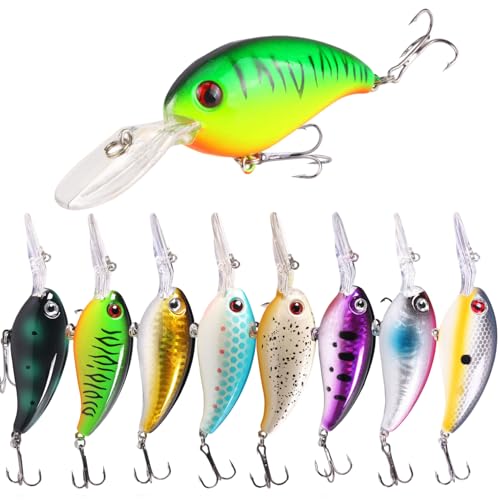
Because mid-depth cranking around rock and timber eats lures, it is the one class where a budget kit makes real sense. The Richary Crankbait Kit gives you eight diving crankbaits in assorted colors for clear, stained, and muddy water at $9.99 as of July 2026 — about $1.25 a bait. Per Richary, the extended lip dives to roughly 8 feet and deflects off rock and timber, and each high-impact ABS body carries a stainless steel rattle chamber and two high-carbon steel trebles. We treat kits like this as they deserve: learning tools and snag-water baits you can bang through standing timber without wincing, while your name-brand plugs stay tied on for the money spots. Losing a $1.25 crankbait to a stump teaches the same lesson as losing an $8 one — it just costs 84 percent less.
Deep Diving Crankbaits for Offshore Bass
When bass pull out to ledges, humps, and long points, deep diving crankbaits become the fastest way to find them — and our pick is a bait that has been out-fishing lures three times its price for decades. The Bandit Series 300 dives 8 to 12 feet when cast on 10-pound line, swims with a searching action, and its molded-in lip runs true right out of the package, no pliers-tuning required. Per Bandit, the butyrate body and lead weights produce a dull thud rather than a sharp rattle — a lower-key sound signature we like on fisheries that hear high-pitched rattles all summer. It is $7.99 as of July 2026, and the 2-inch Red Crawfish version also takes walleye and pike per Bandit, which tells you how universal the action is.
Note the fine print in that depth rating: "on 10-pound line." Every deep diver's reach depends on line diameter and cast length as much as bill size. Wired2Fish's crankbait guide notes that deep divers can be worked below 20 feet with a long cast on 8-pound line, so the same plug can run a very different depth on two different rods. We will put numbers to that in the gear section below.
Deep cranking is a summer headline pattern, but do not forget it early in the year — dragging a red-craw crankbait down 45-degree rock banks is one of the best-kept patterns among bass lures for spring, when pre-spawn fish stage deep before pushing up.
Wake and Extra-Shallow Crankbaits: The Top 10 Inches
At the opposite extreme is the water most crankbaits cannot survive: the first foot. That is the specialty of the Strike King KVD 2.25 Shallow, a 3/8-ounce squarebill that Kevin VanDam designed and tested to deflect off rocks in extremely shallow water. It runs only about 10 inches deep — built, in Strike King's words, for water other crankbaits can't touch — and it is armored for the job with a chip-resistant finish, 3D eyes, and size 3 black nickel trebles. It runs $9.99 as of July 2026.
Where an ultra-shallow runner earns a rod on our deck:
- Bank runners. Bass pinning bait against the water's edge in spring and fall, where a normal squarebill digs bottom instantly.
- Flooded cover. High water pushes bass into bushes and grass edges with inches of water over them.
- Over submerged grass. When weed tops sit a foot down, a 10-inch runner waking just above them draws fish up without fouling.
- Around riprap and dock pilings. Deflect it off the shallowest rock and wood — the Natural Bream finish matches the bluegill that live there.
Fish it on a slow, steady wind so it bulges the surface, and hang on — strikes in 10 inches of water are never subtle.
Matching Bass Crankbaits to Depth and Structure
Choosing among bass crankbaits is really one question: what do I need this bait to hit? Match the running depth to the structure so the lure stays in contact, and pick a class that runs slightly deeper than the target so it grinds rather than swims over the top.
- Wake / extra-shallow — about 10 inches. Strike King KVD 2.25 Shallow: bank edges, flooded bushes, grass tops.
- Squarebill — 3-7 feet. Strike King KVD 1.5: stumps, laydowns, riprap, docks.
- Lipless — sinks, so any depth. Bill Lewis Rat-L-Trap 1/2 oz: grass flats, fall creek arms, points.
- Mid-depth — roughly 8 feet, per Richary. Richary 8-pack kit: secondary points, channel swings, gravel.
- Deep diver — 8-12 feet on 10-lb line. Bandit Series 300: ledges, humps, long points, deep rock.
Two caveats on the numbers. First, rated depths are manufacturer figures that assume a long cast and the specified line — short pitches run shallower. Second, depth bands overlap on purpose: a squarebill and a lipless bait can fish the same flat, and the fish usually tell you whether they want deflection off wood or speed and rattle over grass. When in doubt, start where the classes overlap and let the strikes vote.
Crankbait Rods, Reels, and Line
Cranking gear has one job: keep treble-hooked fish pinned. Most of us grew up setting hooks with fast graphite rods, and that habit costs fish with crankbaits. As Mud Hole's rod-building team explains, a rod that is too stiff can pull treble hooks free and cost you fish, while the flex of a moderate-action glass rod absorbs shock — more forgiving both when the fish eats and during the fight. We like a 7-foot medium or medium-heavy glass or glass-composite rod for everything in this guide — soft enough to let the fish load up, long enough to launch the bait.
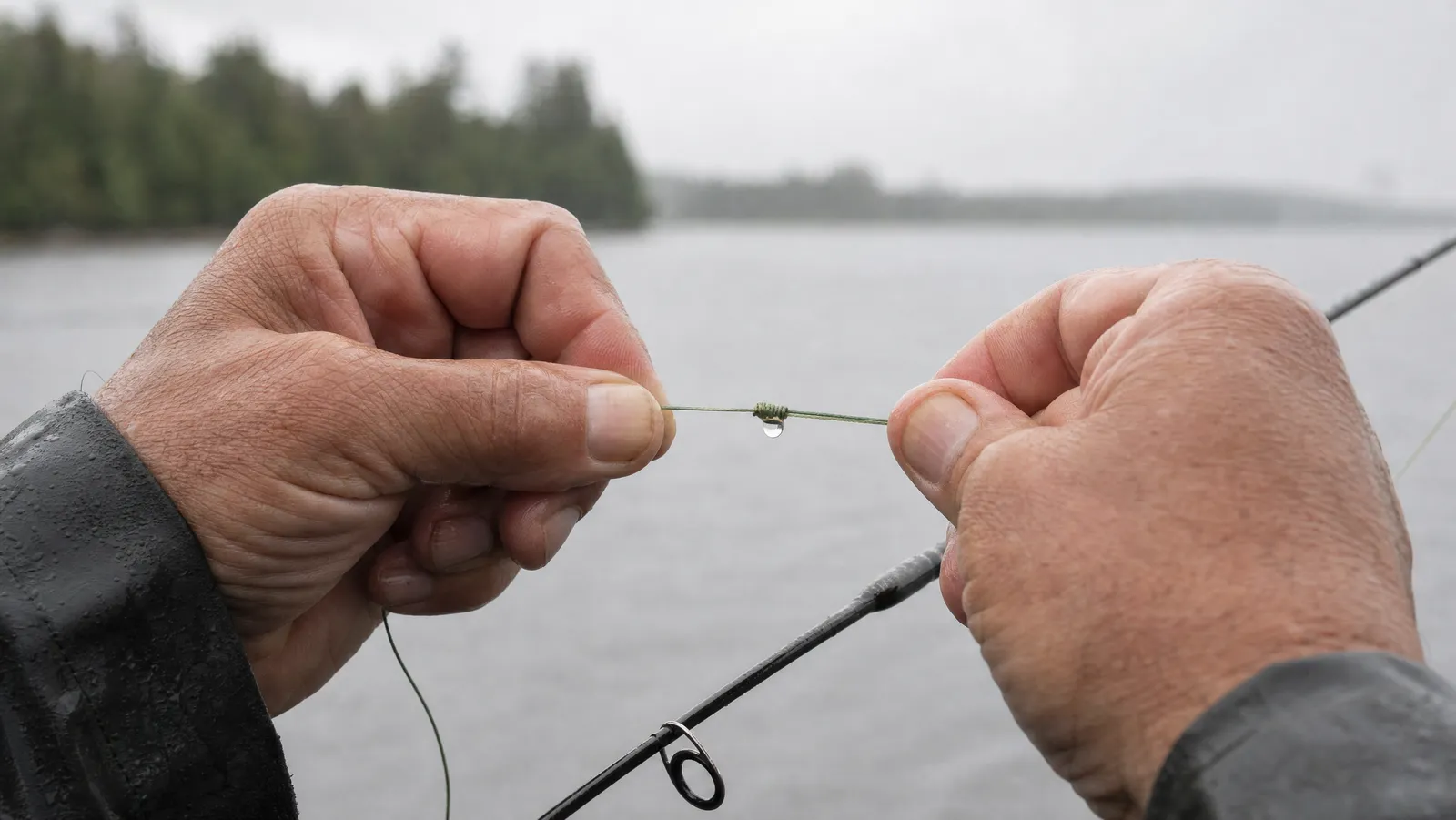
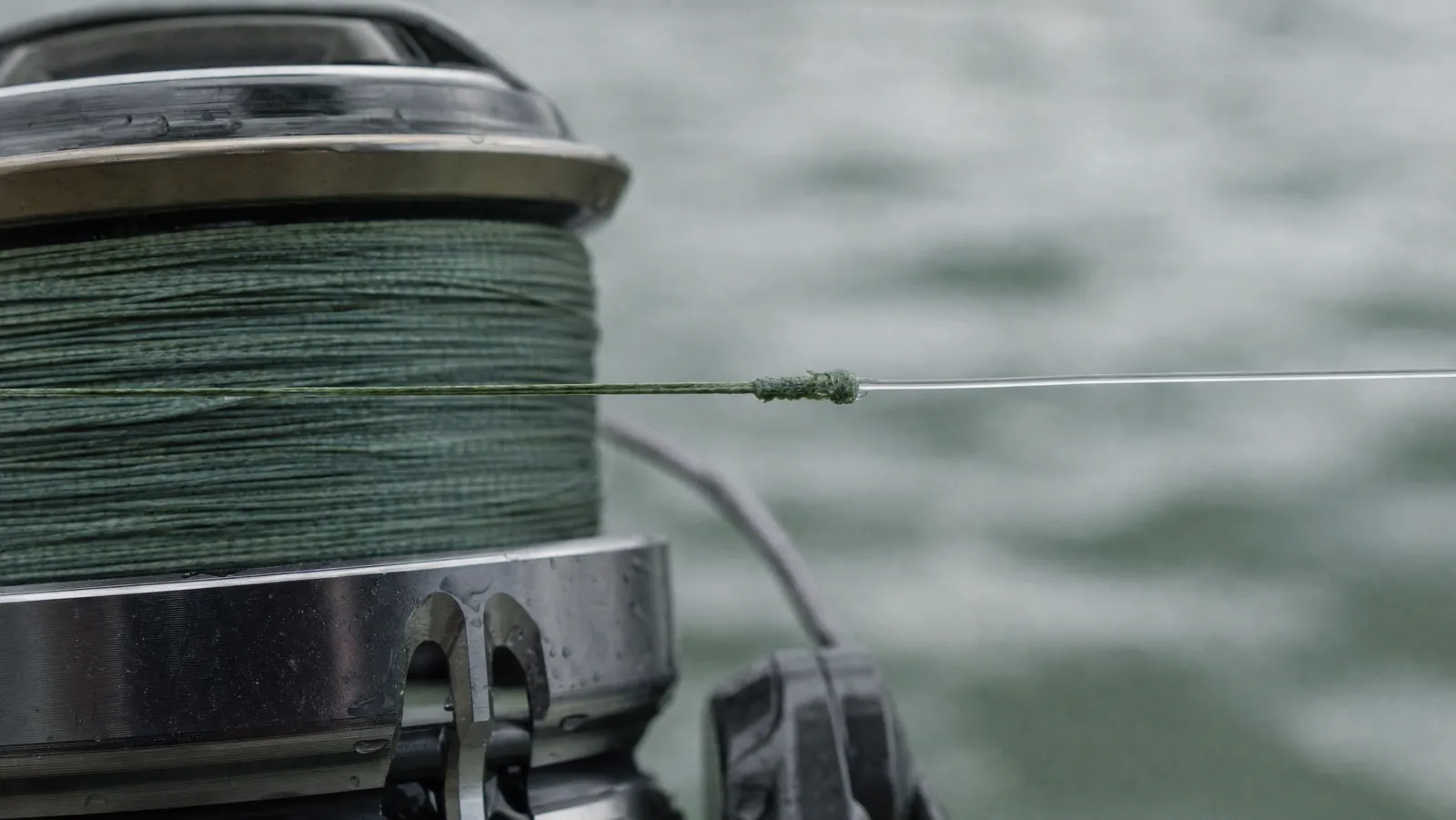
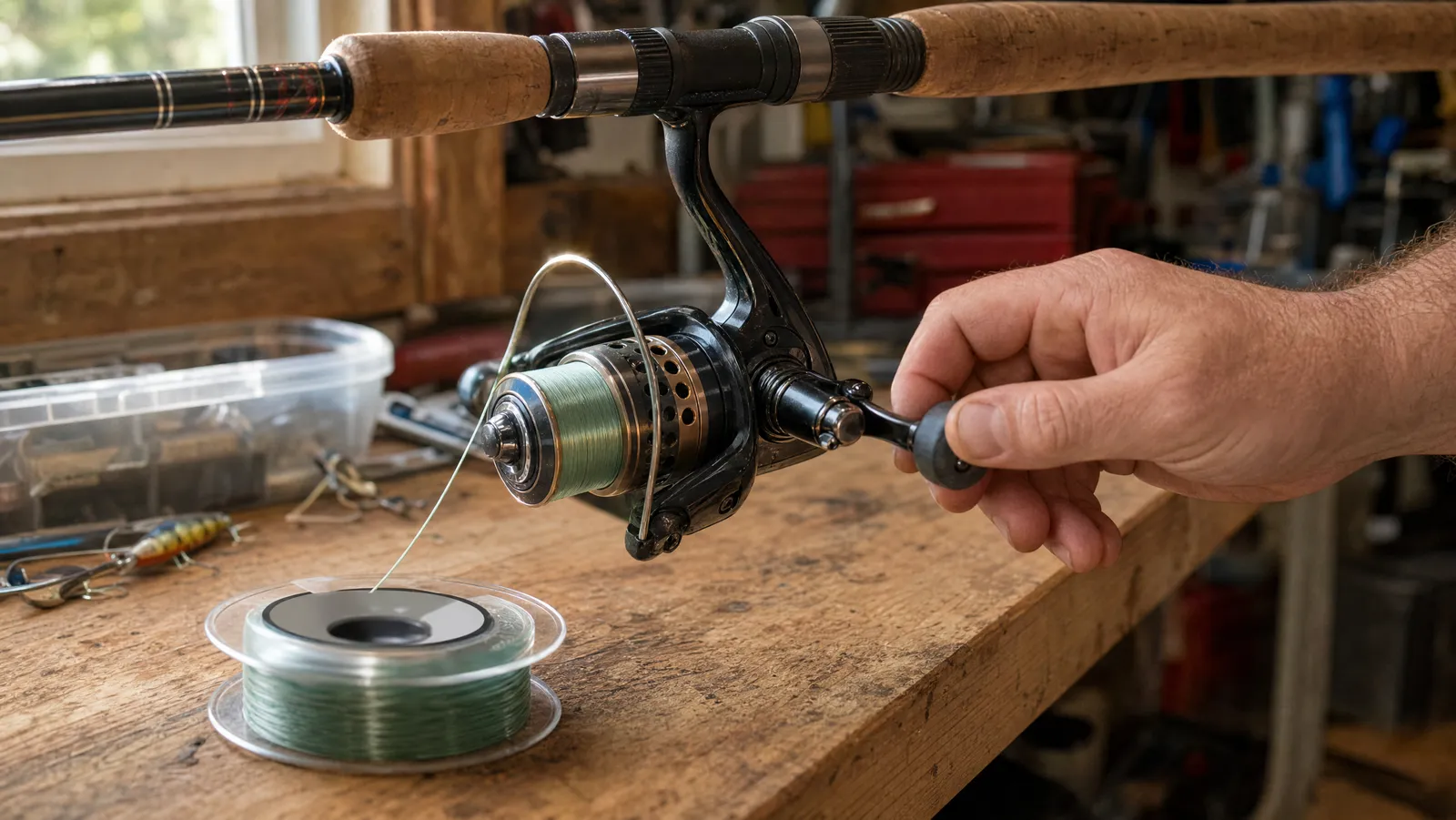
Line choice is where the depth math lives. Wired2Fish recommends 8-to-12-pound monofilament or fluorocarbon for most crankbait work, and the diameter difference is bigger than most anglers think: a frequently cited 2000 running-depth study by Steven Holt and Mark Romanack, reported by Bassmaster, found a crankbait dives about 20 percent deeper on 8-pound line than on 14-pound test. Our practical split: 12-pound fluorocarbon for squarebills and lipless baits around abrasive cover, 10-pound for the middle depths, and 8-to-10-pound when we need every inch out of the Bandit 300. On the reel, we simply avoid burning the bait faster than it can hunt — if the rod tip stops throbbing, you have out-cranked the action.
The Bottom Line on the Best Crankbaits for Bass
The best crankbaits for bass are not one lure — they are a five-slot depth system. The Strike King KVD 1.5 squarebill is the pick if you buy only one, the Rat-L-Trap owns grass and the fall migration, the Bandit 300 handles the 8-to-12-foot stuff, the KVD 2.25 Shallow covers the top 10 inches, and a budget 8-pack fills the middle while you learn to grind bottom without fear. As of July 2026, all five picks together cost about $42 — less than a single premium glide bait — and they will cover every depth a cast can reach.
The craft is simple to say and takes a season to learn: match the dive depth to the structure, make the bait hit something, and let the deflection do the selling. Crankbaits are one branch of a bigger decision tree, though — see how they stack up against our five deadly largemouth lures, and for the full framework on picking the right bass lure by season and situation, the pillar guide ties it all together. Then go find a stump and hit it.
The Picks, Tested
Strike King KVD 1.5 Squarebill
The KVD 1.5 squarebill wanders with an erratic action while still running true, diving 3 to 7 feet and deflecting off cover to entice strikes.
- Erratic, wandering action that still runs true
- Deflects off shallow cover to trigger reaction strikes
- Silent, rattle-free design for pressured fish
- 3-to-7-foot dive range cannot reach deeper structure
- No rattles means less sound to call fish in dirty water

Bill Lewis Rat-L-Trap (1/2 oz)
A 3-inch, 1/2-ounce shad profile whose interior rattles produce a sound nearly identical to distressed baitfish, per Bill Lewis. It sinks, so it can be fished fast or slow, shallow to deep, and the Chrome/Blue Back pattern has 35-plus years of production behind it.
- Interior rattles mimic distressed baitfish, per Bill Lewis
- Sinks, so one bait covers any depth, fast or slow
- Tight wiggle and shad-profile flash in the classic Chrome/Blue Back
- Sinking design will hang up if fished too slowly over cover
- Only the 1/2-ounce size in this listing

Bandit Series 300
The Bandit Series 300 dives 8 to 12 feet when cast on 10-pound line, with a searching swimming action and a molded-in lip that runs true right out of the package. Per Bandit, the butyrate body and lead weights create a dull thud sound.
- Dives 8-12 feet on 10-pound line with a searching action
- Molded-in lip runs true out of the package, no tuning needed
- Butyrate body and lead weights make a dull thud, per Bandit
- Needs 10-pound line and a long cast to hit its full rated depth
- Compact 2-inch body may run small when bass want a big profile

Strike King KVD 2.25 Shallow
Designed and tested by Kevin VanDam to deflect off rocks in extremely shallow water, this 3/8-ounce squarebill runs only about 10 inches deep. It wears a chip-resistant Natural Bream finish with 3D eyes and size 3 black nickel treble hooks.
- Runs only about 10 inches deep — water other crankbaits can't touch
- Chip-resistant finish for banging stumps, rocks and dock pilings
- Size 3 black nickel trebles on a 3/8-ounce body
- Roughly 10 inches of running depth limits it to bank-shallow work
- Single Natural Bream pattern in this listing
Richary Crankbait Kit (8-pack)
An 8-pack of diving crankbaits in assorted colors for clear, stained and muddy water. Per Richary, the extended lip dives to roughly 8 feet, and each high-impact ABS body carries a stainless steel rattle chamber and two high-carbon steel treble hooks.
- Eight baits in assorted colors for clear, stained and muddy water
- Built-in stainless steel rattle chamber for low-frequency vibration
- Two high-carbon steel treble hooks on each ABS body
- Roughly 8-foot dive depth is Richary's own rating
- Assorted colors mean you don't choose exact patterns
Compare The Field
| Compare | Our Pick Strike King KVD 1.5 Squarebill | Lipless Classic Bill Lewis Rat-L-Trap (1/2 oz) | Deep Diver Bandit Series 300 |
|---|---|---|---|
| Overall | — | — | — |
| Price | $7.53 Check price → | $6.28 Check price → | $7.99 Check price → |
About The Author
Rob Thomas
Rob Thomas is a fisherman who loves catching tales from his fellow fishermen. He always enjoys a good story, especially when it comes from the sea.