Bass Lures for Winter: Slow Down and Catch Cold-Water Bass

This post may contain affiliate links. Read our policy.
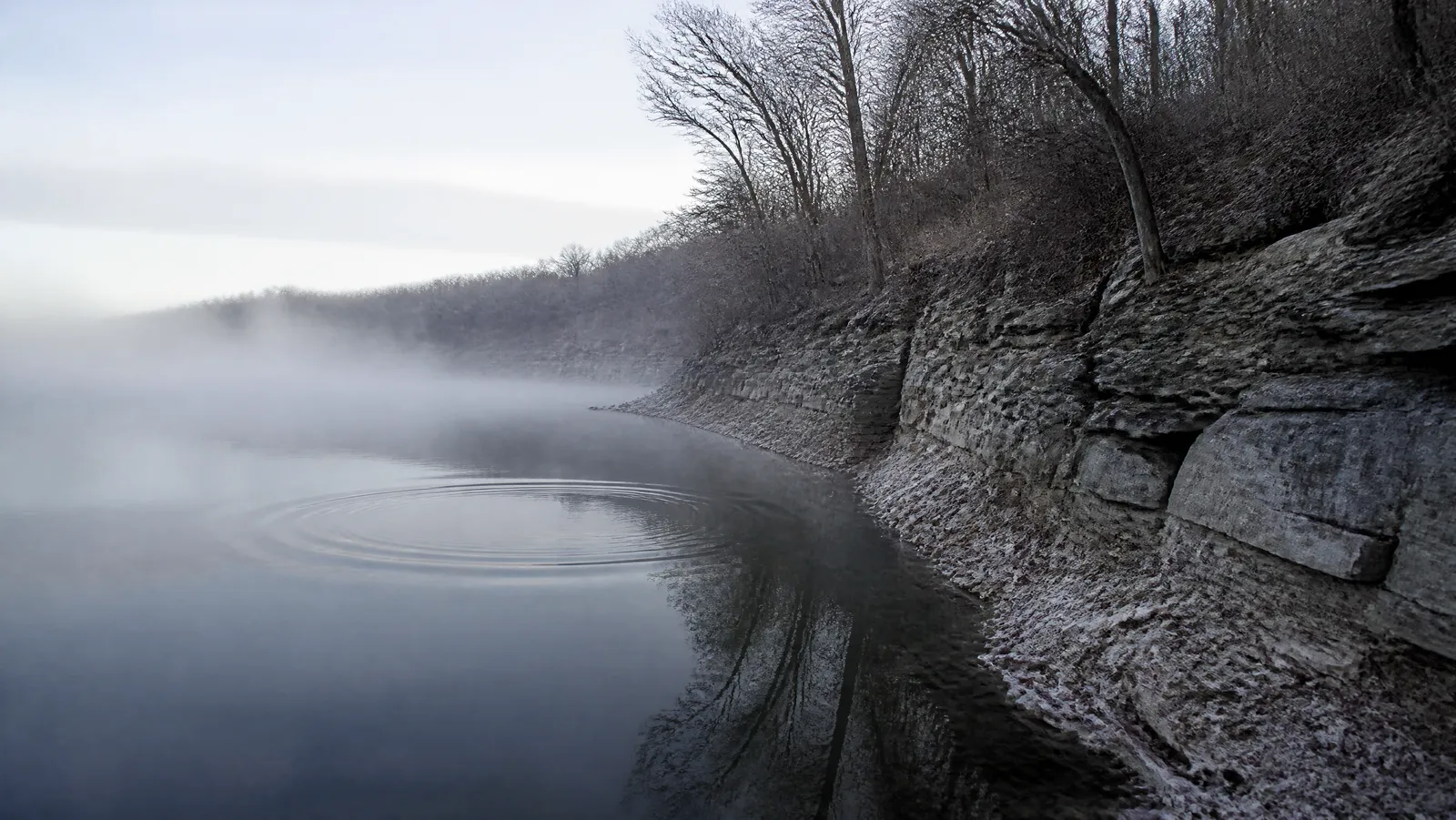
Winter does not ask for better lures. It asks for slower ones. Once water temperatures fall below roughly 50 degrees a bass will not chase, so the bass lures for winter that still produce share two traits: they are compact, and they can be fished at a crawl or dead in the water. That short list is finesse and hair jigs, blade baits, jigging spoons, suspending jerkbaits, and small soft plastics on light heads.
This is a technique guide, not a shopping list. Most of it goes to the two things that decide a cold-water day: where the fish are sitting, and how slowly you will work a bait once you find them. For the wider map of every lure family across all four seasons, our Angler Reviews bass lure guide is the hub; this page is the deep version of its winter chapter.
What Happens to a Bass Below 50 Degrees
A bass is ectothermic: its body temperature is the water's temperature, and its metabolic rate rides along with it. According to Wired2Fish, when water temperatures fall below about 50 degrees a bass's metabolism slows to a crawl, and the fish start to feed with purpose, conserving energy and eating only when the opportunity is easy and efficient.
Read that second half carefully, because it is the whole sport in January. A winter bass is not asleep and not on a hunger strike. It is running a cost-benefit calculation on every meal. A shad blowing past at speed costs more calories than it returns. A dying baitfish hanging motionless two feet away is free food.
Everything below follows from that: your lure has to look cheap.
Location Does Most of the Work
In summer you can fix a mediocre spot with a good retrieve. Winter does not work that way. Wired2Fish notes that in winter bass group tighter than at any other time of year, holding on deep structure — main-lake points, deep holes, bluff walls, and deep rock transitions — where they can shift up and down the water column without moving far.
That last clause is the tell. Winter bass want vertical relief, not horizontal travel: a fish on a bluff end can rise fifteen feet to feed and drop back to thirty without swimming a hundred yards. A fish on a flat cannot. So the winter map is short:
- Steep bluff walls and their ends, especially where a channel runs tight against the rock.
- Channel swings — the outside bends where the old creek bed brushes a point or bank.
- Points that drop into deep water, particularly a point split by two creek channels.
- Deep rock transitions: chunk rock to pea gravel, riprap ends, rubble piles, boulders.
Depth is lake-specific. On The Water's cold-water breakdown puts smallmouth in 25 to 50 feet once lakes drop below the 50-degree mark, while largemouth in shallower systems may winter in only 8 to 15 feet. Find the deepest water in the area, fish the first hard structure next to it, and once you find a school, stay. The late-fall shad chase in our guide to bass lures for fall is the on-ramp here: follow the bait out of the creeks in November and it walks you to the winter holes.
How Slow Is Slow? Actual Winter Cadences
Every winter article says slow down. Almost none say how much. Here is what slow means in inches and seconds:
- Dragging a jig: move it a few inches with the rod, not the reel, then stop and count to five. Wired2Fish's hair-jig guidance is to drag the rod off to the side while making sure the bait never lifts off the bottom.
- Blade bait or spoon lift: Wired2Fish advises never bringing the bait more than six to eight inches off the bottom on each pull; On The Water puts it at within six inches.
- Pause between lifts: on Bassmaster, blade-bait specialist Jim Horn describes lifting roughly 4 to 6 inches and pausing three or four seconds.
- Jerkbait pause: Wired2Fish's winter guidance calls for 10, 20, even 30 seconds. Count them out loud — nobody pauses as long as they think they do.
- The rule of thumb: fish at what feels unreasonably slow, then halve it.
Finesse and Hair Jigs: Drag, Do Not Hop
A hair jig is the purest expression of winter bass fishing: no rattle, no blade, no plastic, just a compact head and a skirt that breathes in the smallest current. Wired2Fish's cold-water hair-jig piece describes the bite turning on once water temperature dipped below 45 degrees.
Material matters more than color. Per that guide, bucktail and bear hair are much stiffer and create little movement, marabou is extremely porous, and synthetic and fox hair sit in between with what the author calls ideal properties. Hooks stay small — never exceed 1/0, it advises.
How to fish it: cast, let it hit bottom, then move it by sweeping the rod to the side rather than lifting. Wired2Fish is explicit that the bait should not come off the bottom at all. When the jig climbs a rock and falls off the back, stop and wait — a huge share of winter bites happen there.
A finesse or football jig does the same job with more bulk and a weed guard; Wired2Fish's winter setup is a 3/8- or 1/2-ounce head with a compact trailer around 2.75 inches. If your winter lake is a clear rock lake, our guide to smallmouth bass lures covers the rest of that box.
Blade Baits and Jigging Spoons: Vertical Work on Graphed Fish
These are the answer when you have marked fish that will not come up for anything horizontal. Both are heavy metal that falls fast and returns to bottom instantly, so you can hold a bait in a two-foot strike zone for an entire drift.
Blade baits vibrate on the rise and flutter on the drop, and the productive stroke is tiny. Jim Horn told Bassmaster he lifts only enough to feel the vibration — about 4 to 6 inches — then pauses three or four seconds, fishing them at ice-out in 33-degree water as deep as 35 to 50 feet. Detroit guide Gerry Gostenik told the same publication the peak blade bite comes around 40 degrees on the Great Lakes.
Jigging spoons trade vibration for flash and a wounded-baitfish flutter. Lurenet's winter spoon guide describes Ohio veteran Frank Scalish starting each stroke with a 3-foot upward snap of the rod, then following the spoon down with the rod tip on a controlled slack line — enough slack to let it flutter, not so much that a bite goes unnoticed. Arkansas angler Dustin Elder, in the same piece, hunts baitfish 20 to 30 feet deep off channel swings or points.
What everyone gets wrong: almost every bite comes on the fall, and it does not feel like one. The lure stops falling, the line jumps sideways, or the bait feels heavier than it did a second ago.
Suspending Jerkbaits: The Pause Is the Presentation
The jerkbait is the one winter bait that draws fish rather than sneaking past them. Wired2Fish's jerkbait coverage says that in the mid 40s and below it is one of the most productive options in the boat.
The retrieve is two or three short, soft snaps followed by a pause that feels far too long — Wired2Fish's winter guidance is 10, 20, even 30 seconds. During that pause the bait has to hang. One that floats up leaves the strike zone; one that sinks pulls away from the fish.
Tuning gets you there. In a Bassmaster piece on tweaking suspending jerkbaits, Michael Iaconelli biases baits on purpose: to make one hang nose-down, he replaces the front treble with one a size bigger and adds a Suspend Strip or a small piece of lead golf tape between that hook and the bill. The result falls roughly an inch every two seconds, mimicking a shad dying in a cold front. He fishes it on 6- or 8-pound fluorocarbon, which sinks; for a slowly rising bait he switches to 6- to 12-pound monofilament, which floats.
Cadence is a variable, not a rule. Iaconelli told Wired2Fish he changes it every 15 to 20 casts, and that the colder the water, the longer he pauses and the softer he twitches. Start with two twitches and a 15-count, then let the fish edit it.
Small Soft Plastics on Light Heads
When fish are pressured or the jerkbait bite dies, the answer is usually the smallest bait you own crawled along the bottom. Three rigs cover it:
- The Ned rig. A short chunk of buoyant plastic on a 1/16- to 1/4-ounce mushroom head. It stands up at rest, which is the look you want when a bait will sit still for thirty seconds.
- The shaky head. A finesse worm on a light stand-up jighead, dragged and shaken in place along deep points and channel edges.
- The drop shot. The only rig here that holds a bait at a fixed height off bottom with no input from you — deadly on suspended fish and on schools you can see.
The unifying rule comes from Wired2Fish: with small winter plastics, bottom contact is critical, because bringing the bait off the bottom in any way inhibits bites. Move them with the rod, in inches. For the full menu of bodies and how each is rigged, see our roundup of best soft plastic bass lures.
Slow-Rolled Lipless Cranks and Underspins for the Warm-Up
A few days each winter break the pattern: sun, no wind, and an afternoon when a shallow rock bank gains a degree or two. That is the window for a moving bait. A lipless crankbait slow-rolled just fast enough to feel the vibration, ticked off rock and ripped free of grass, finds fish that have slid up to feed. An underspin with a small swimbait body does the same at a crawl over deep water. Both are exceptions, not programs — if two casts produce nothing, go back to the drag.
Once those warm-ups start stacking and the water holds in the mid-to-high 40s, the fish shift from wintering to staging, and the prespawn playbook in our bass lures for spring guide takes over.
Weather Windows: When to Actually Go
- Fish the afternoon. Sun has to work on the water for hours before it changes anything. In our experience the last three hours of daylight beat the first three — the opposite of summer.
- Favor stable stretches. Wired2Fish's winter guidance is that stable conditions outproduce drastic swings. Three flat, boring days beats a warm day sandwiched between fronts.
- Post-front is the hard day. Bluebird skies behind a front push fish tighter and deeper. That is jerkbait-pause and spoon-drop water.
- Skip fresh muddy runoff. Cold, dirty water dumping into a creek arm after a winter rain is the one combination we drive past.
Gear and Detection: The Bite Feels Like Nothing
There is no thump in winter. The bite is a tick, a mushy heaviness, a line swimming off to the left, or a jig that never reaches bottom. Your tackle exists to make that detectable.
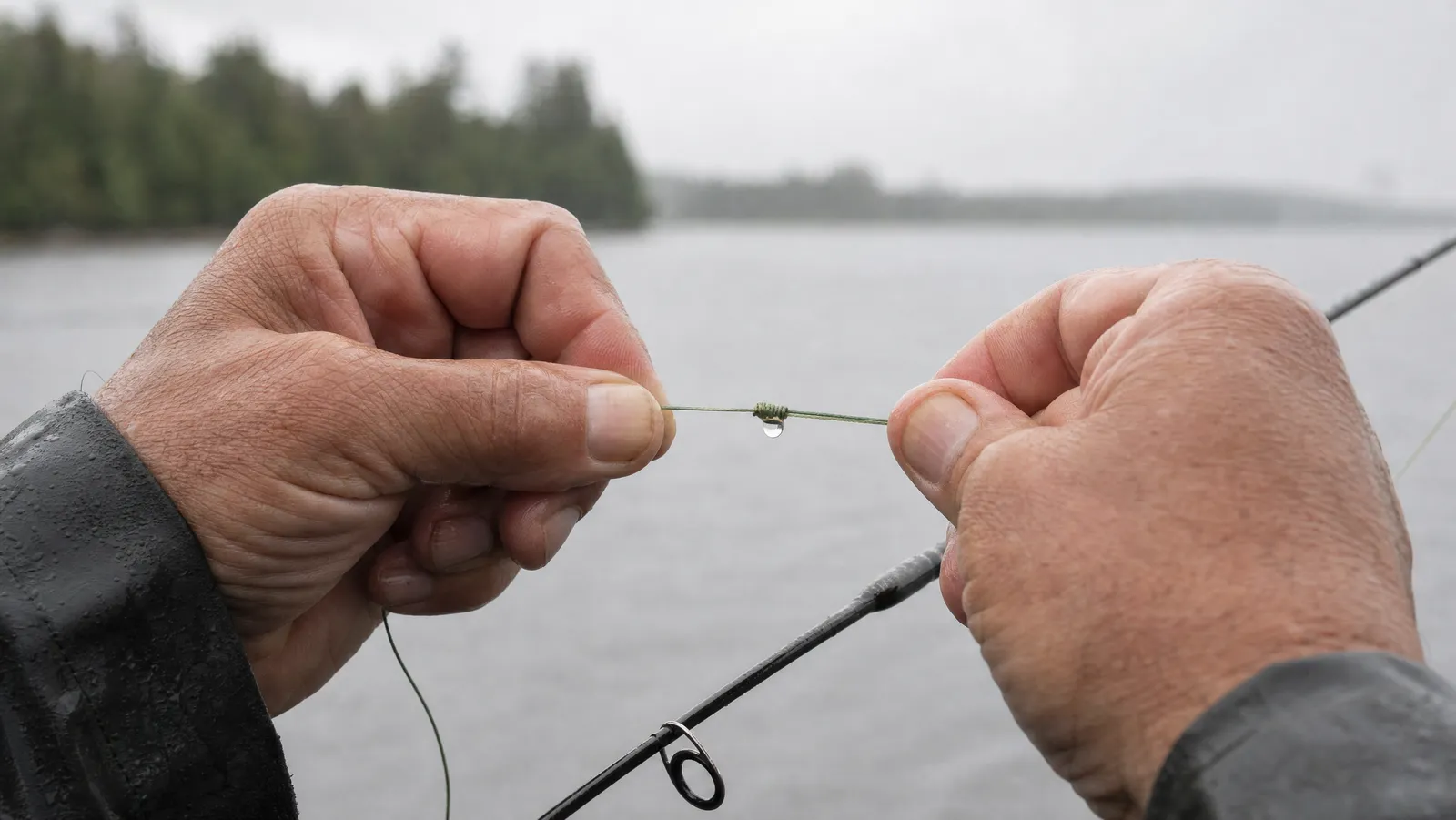
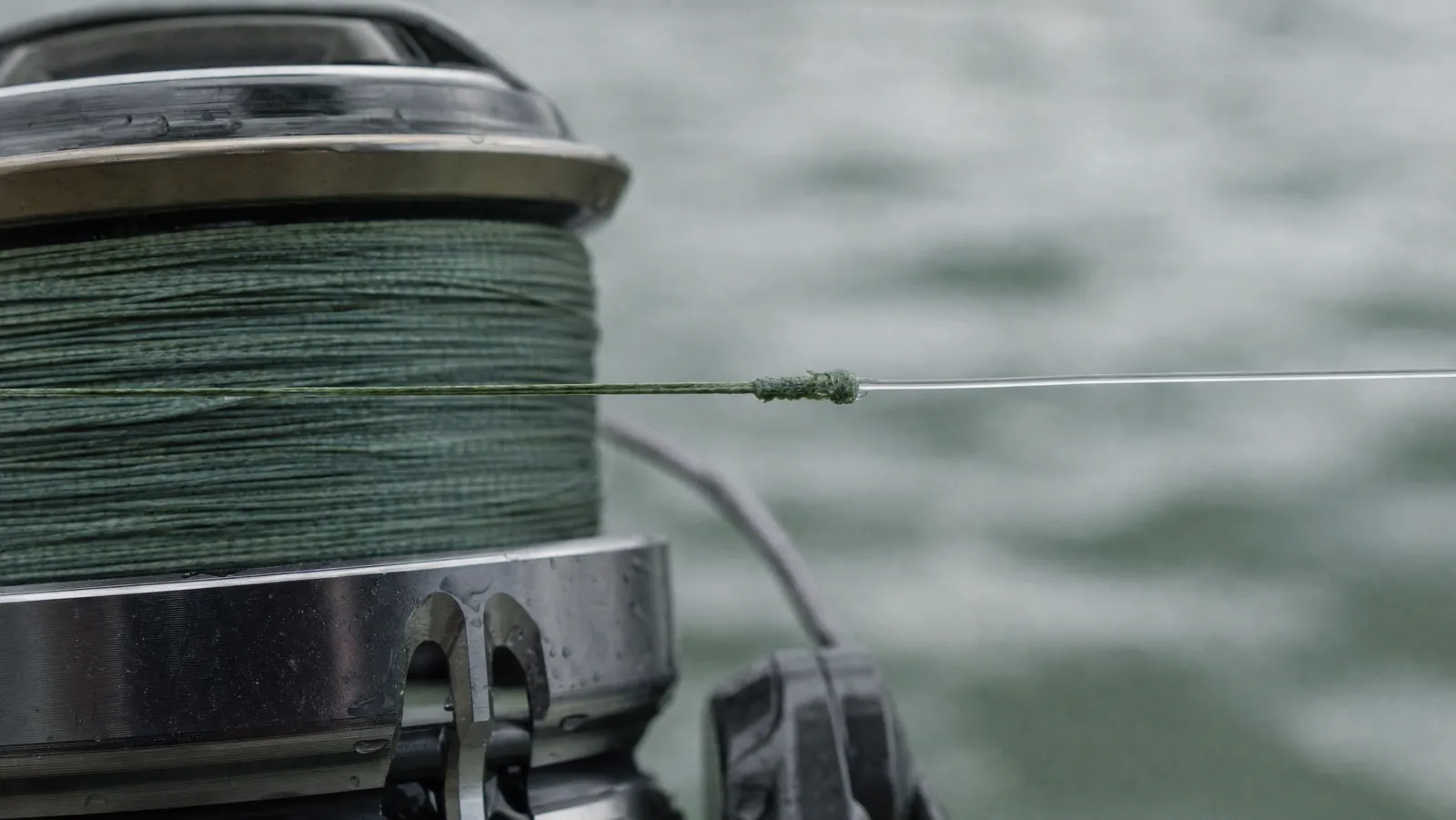
- Line: fluorocarbon, sized to the bait. Wired2Fish's hair-jig setup runs straight 6-pound; the spoon and blade anglers in the Lurenet piece run 15- to 20-pound for heavier metal over rock.
- Rod: a long, sensitive spinning rod for hair jigs and small plastics, paired in that Wired2Fish setup with a 2500 or 3000 size reel.
- Gloves: the most overlooked winter gear there is. You cannot feel a mushy tick through cold, stiff fingers.
- Set on anything different. A wasted hookset costs nothing; a missed bite on a five-bite day costs the trip.
Cold-Water Safety: Dress for the Water, Not the Air
Winter puts you on the water when falling in is a genuine emergency, not an inconvenience. According to the BoatUS Foundation, cold water immersion happens in stages, and the first arrives fast: cold shock, in which falling into cold water provokes an immediate gasp reflex, lasts roughly 3 to 5 minutes. Swimming failure follows within 3 to 30 minutes as your hands and arms stop working, and hypothermia sets in after about 30 minutes. Your ability to save yourself disappears long before hypothermia does.
The rest of the BoatUS guidance is worth following to the letter. Dress for the water temperature, not the air temperature. Make the first layer synthetic, and avoid cotton, which holds cool water against your skin. Wear a properly fitted life jacket — BoatUS notes some models carry extra insulation and double as a warm layer. It also offers a simple trigger: if air and water temperatures added together are less than 100 degrees Fahrenheit, treat the day as cold-water boating.
Add the obvious: tell someone your ramp and return time, run the kill-switch lanyard, and keep dry clothes in a dry bag. This is general safety guidance, not medical advice — check your state's boating regulations, and talk to a doctor if you have any doubt about your health and cold exposure.
Common Winter Mistakes
- Fishing too fast. By a mile the most common error. If you are not bored, you are fishing too fast.
- Fishing shallow out of habit. The bank you cranked in October is empty. Start deep and let the fish move you shallow.
- Downsizing the line but not the bait. A 5-inch stick worm on a light head is still a big winter meal.
- Leaving fish you can see. If you are marking them, they are catchable. Change the pause length before you change the spot.
The Bottom Line
Winter rewards patience over tackle. Find steep structure next to deep water, put a compact bait on the bottom or hang it in front of a fish you can see on the graph, then do far less with it than instinct tells you to. Hair and finesse jigs dragged inch by inch, blade baits and spoons lifted six inches and dropped, a jerkbait left dead for a 20-count, and a Ned rig crawled over rock cover nearly every cold-water situation.
The payoff is that the fish you catch tend to be the biggest of the year, and the ramp is usually yours alone. When you are ready to see how the rest of the calendar fits together, our full guide to choosing bass lures by season lays out the whole year in one place.
About The Author
Rob Thomas
Rob Thomas is a fisherman who loves catching tales from his fellow fishermen. He always enjoys a good story, especially when it comes from the sea.