Smallmouth Bass Lures: What Actually Works for Bronzebacks

This post may contain affiliate links. Read our policy.
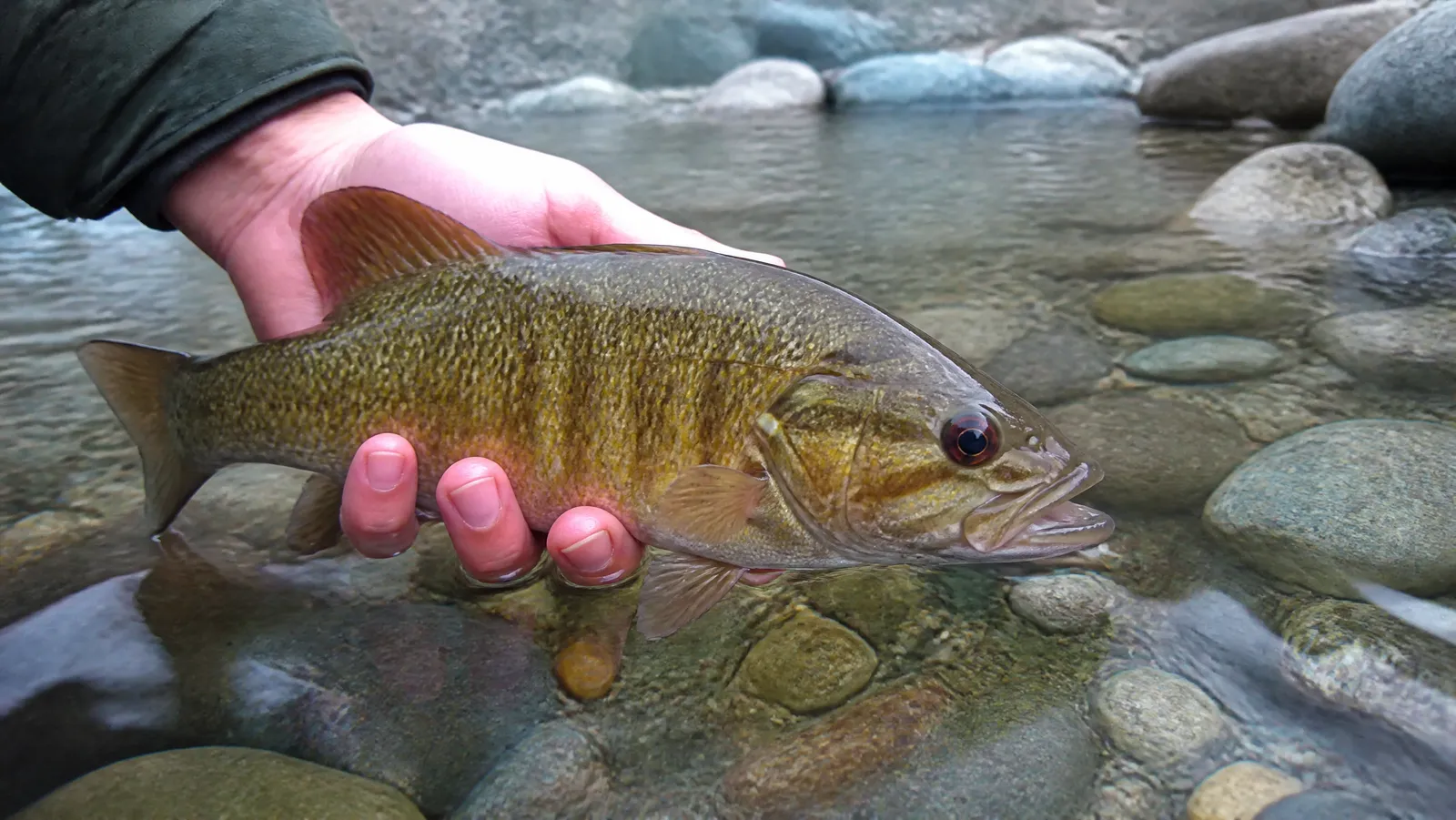
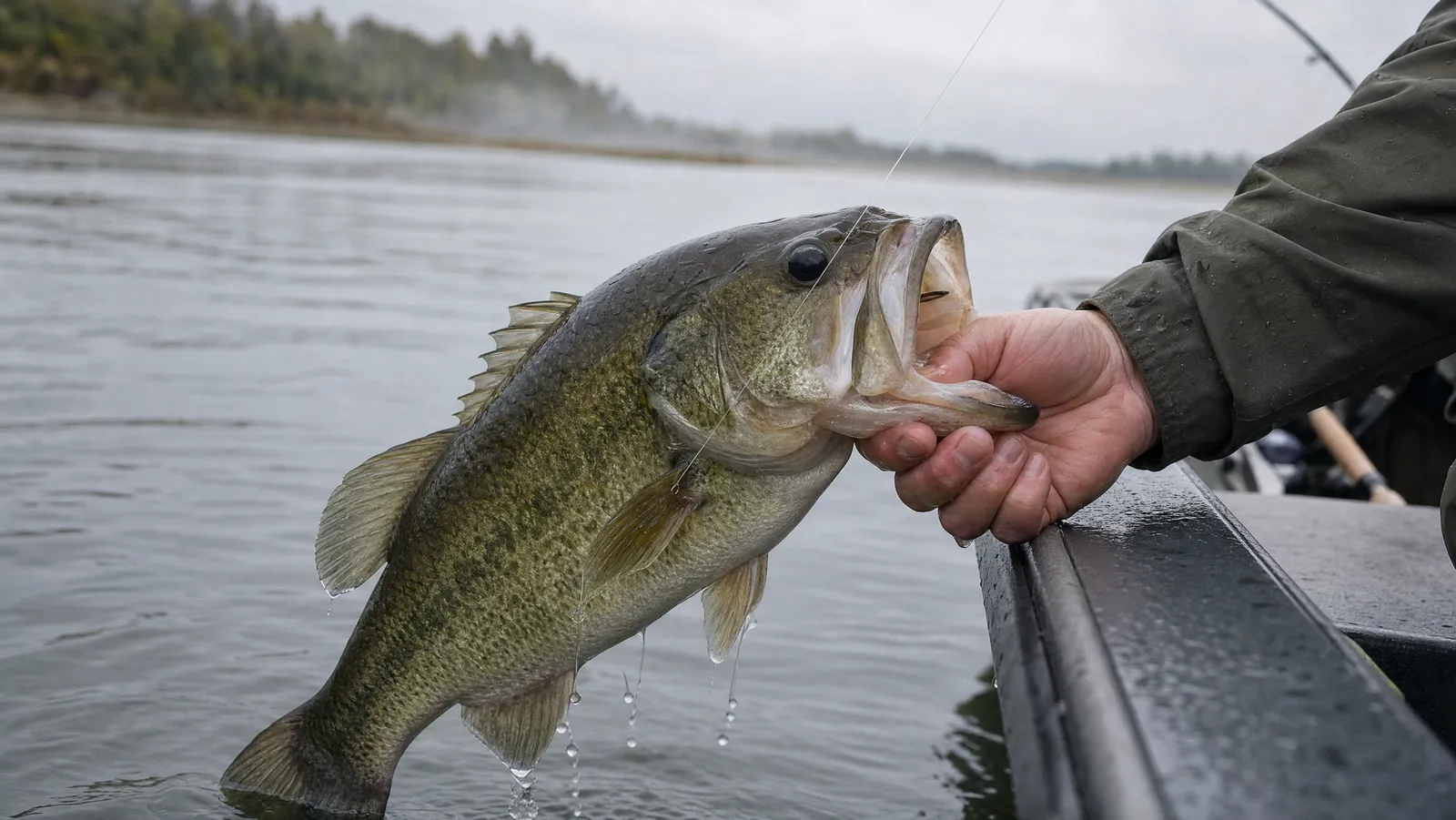
Smallmouth bass eat a short list of lure families almost everywhere they swim: tubes, Ned rigs and finesse plastics, drop shots, jerkbaits, small swimbaits and underspins, topwater walkers, and hair jigs. One principle ties all of them together — smaller, more natural, and fished on rock and current instead of grass. Get that right and the brand on the package stops mattering much.
That principle is where largemouth anglers go wrong. A box built for green fish is full of bulky profiles, loud colors, and weedless rigs meant to crash through vegetation. Bring it to a boulder-strewn river or a clear northern lake and you get followers instead of eaters. Smallmouth bass lures run on different rules because the fish lives in a different world.
This is the deep version of one section from our roundup of the best bass lures. No shopping list — just the categories that produce bronzebacks, the sizes and colors that matter, and how to fish each one on rock and current.
Why Lures for Smallmouth Bass Look Different
Start with habitat. According to the Wisconsin DNR, the smallmouth bass is "usually associated with a rocky stream or lake environment where its favorite food, the crayfish, is abundant," and the same agency describes the species as common in large, clearwater lakes. Rock and clarity — neither one favors a big, opaque, noisy bait.
Temperature narrows it further. Bassmaster's look at smallmouth and temperature puts their preferred range at 65 to 75 degrees, noting that when the water sits in that window the fish are more likely to be active and feeding. The same piece makes a point worth stealing: check temperature throughout the water column, not just at the surface, because smallmouth slide up and down to find the band they like. A fish glued to a 22-foot boulder field in August is not being stubborn — it is being comfortable.
Then there is the fight. A smallmouth in current uses the flow as a third gear, which shapes your tackle more than your lure.
What Bronzebacks Eat, and What That Means for Size and Color
Diet is the shortcut to lure selection. Iowa DNR food-habit work on smallmouth found forage fish in 40 percent of stomach samples, crayfish in 30 percent, and insects in 20 percent — a fish that eats three different things in three different places in the water column.
Forage can flip fast, too. Ohio State's Fish Tales project reports that in Lake Erie the smallmouth diet was just over 50 percent crayfish before the round goby invasion, and afterward round goby made up just under 75 percent of the diet. The practical read: on northern water, the money silhouette is a small, bottom-hugging, brownish thing that scoots and dies, which fits a crayfish and a goby equally well.
The sizing and color rule follows from that menu, not from fashion:
- Downsize. Bass Pro Shops' 1Source guide to tube fishing for smallies calls a 3- to 4-inch tube the right size for the job, and recommends going smaller yet when fish are finicky or a cold front has moved through.
- Go natural. The same guide names brown, smoke, white, and green as the mainstay colors, saving brighter hues for when water conditions call for them.
- Assume they can see it. In clear water, an unnatural profile gets inspected instead of eaten.
Tubes: The Original Smallmouth Fishing Lure
If you buy one bait, buy tubes. A hollow body with a tentacled skirt over an internal jighead does two things nothing else does as well: it sits like a crayfish, and it spirals on the fall.
Why the spiral matters. A tube rigged with the jighead inside the body falls off-axis, gliding and circling instead of dropping straight — the profile of something wounded and losing its balance. It also hangs in the strike zone longer than a compact jig, which is why so many tube bites come on the drop.
Match the head to the depth. The 1Source guide breaks the three standard weights down cleanly: 1/8 ounce in 0 to 10 feet, 1/4 ounce in 10 to 20 feet, and 3/8 ounce past 20 feet. Heavier kills the glide; lighter never reaches bottom in wind or current.
In our experience the drag beats the hop. The same guide covers both — the standard hop-and-reel, and an alternative that has you cast out, let the tube reach bottom, then drag or pull the bait in 6-inch to one-foot intervals, reeling up slack after each pull. That drag is the one that mimics a crawfish crawling along the rock. Keep the rod low and sweep it slowly. Most bites feel like the bottom got heavier — set on anything that is not rock.
Ned Rigs and Finesse Plastics for Tough Days
The Ned rig — a stubby chunk of buoyant plastic on a small mushroom-head jig — is the highest-percentage bait in smallmouth fishing when the bite goes cold. Its origin story explains why.
According to In-Fisherman's history of Midwest finesse fishing, the rig traces to October 12, 2006, when Ned Kehde and Dick Bessey fished a northeastern Kansas reservoir for four hours and caught 109 largemouth bass, two wipers, one walleye, and one channel catfish on a 2 1/2-inch Strike King Zero cut from a five-inch stickbait and rigged on a 1/16-ounce Gopher Mushroom Head Jig. In-Fisherman adds that Kehde credits Chuck Woods of Kansas City with the precursor to the bait during the late 1950s and early 1960s, and traces the light-tackle thread back to Bill and Virgil Ward, who in 1959 fished a marabou jig for smallmouth "on a spinning rod with four-pound-test line."
The technique is close to doing nothing: cast, let it settle, then swim-glide-shake it back with the rod tip low, letting the bait stand nose-down between moves. It shines in cold fronts and heavily fished water. Since tubes, Ned rigs, and drop shot baits all come out of the same aisle, a working knowledge of soft plastic bass lures does more for your smallmouth fishing than any hard bait purchase.
Drop Shot: For Suspended and Pressured Fish
The drop shot solves a problem the other bottom baits cannot: fish that are not on the bottom. Smallmouth routinely hang a few feet above a rock pile or ride open water over deep structure. A weight on the tag end with a bait tied 12 to 30 inches up the line puts a nose-hooked minnow imitation at eye level and keeps it there.
Three details separate people who catch on a drop shot from people who own one:
- Leader length equals height off bottom. Short for fish pinned to the rock, long when they ride high. Set it from what you mark, not from habit.
- Shake the line, not the bait. Keep the weight planted and quiver the rod tip so the bait wiggles in place. Dragging it turns a drop shot into a bad Carolina rig.
- Watch the line. Many bites never reach your hand — the line jumps, slackens, or swims sideways. Sweep to set; you are on light line and a small hook.
Jerkbaits: Cold, Clear Water Specialists
Nothing calls a smallmouth up out of 15 feet of cold water like a suspending jerkbait. It stalls at depth in front of a fish that does not want to move, and the strike comes as a reflex.
Cadence is the whole game, and the contrarian version is worth hearing. Bassmaster's deep jerkbait piece with Kevin VanDam says to reach for one when the water drops into the 40s, with visibility of 3 to 4 feet or better. On pause length VanDam is blunt: "A lot of anglers will let their jerkbait sit for five seconds or longer. Not me. One second between twitch/pulls is plenty." He does let it sit longer on high-percentage spots like laydowns and bluff tips, and always makes multiple casts to the same place. He also tones the retrieve down in cold water — a solid pull a couple of times and a brief pause, instead of the fast, erratic snapping he uses in warmer months.
In our experience the fish set the cadence anyway. Start with two pulls and a one-second pause, then stretch the pause until something eats.
Small Swimbaits, Underspins, and Cranks off the Rock
Smallmouth are roamers, and the fastest way to find a school is to cover water with something they can chase down.
- Paddle-tail swimbaits, 3 to 4 inches, on a plain jighead. Cast, count down, reel steady. This is the bait for wind-blown points and anywhere bass are pushing baitfish.
- Underspins. Same swimbait, with a small willow blade under the head. The flash converts followers on bright days and in stained water, and it lets you slow-roll near bottom without losing the thump.
- Crankbaits that hit rock. A small squarebill grinding a shallow boulder field, or a mid-depth crank deflecting off a gravel transition, is a legitimate smallmouth pattern — the deflection is the trigger, not the wiggle. Our guide to the best crankbaits for bass walks through diving depths and bill shapes.
Topwater Walkers, Poppers, and Cold-Water Hair Jigs
Topwater is the reason a lot of us fish for smallmouth at all. Calm, low-light mornings over shallow rock — and any time you see fish herding bait on the surface — call for a walking bait in a steady left-right rhythm. Poppers earn their keep on a single target like a boulder or a shoal edge, where you can spit and pause in one place. When a smallmouth blows up and misses, keep the bait moving; a stalled walker gets refused.
Hair jigs and blade baits handle the other end of the calendar. A small marabou or bucktail jig breathes at rest in a way plastics cannot match — exactly what a lethargic fish in 40-degree water wants. Cast it, let it settle, and move it only enough to keep the hair pulsing. A blade bait attacks the same conditions from the opposite side: drop to bottom, snap it 6 to 12 inches, and let it fall on semi-slack line. Nearly every blade bait bite comes on that fall.
Fishing Current: Seams, Eddies, and Current Breaks
River smallmouth are lazy in the smartest possible way — they sit in slack water and let the current deliver food. According to Outdoor Life's guide to catching smallmouth in rivers, eddies are prime: they form when an obstruction in the main current lets water backfill behind the obstacle, so that section actually moves upstream. The same piece points anglers at current breaks, channel swings, ledges, and rapids — anywhere the flow is slowed down.
Presentation is simpler than people make it. Outdoor Life's advice is to cast upstream and work the bait back naturally with the current. A bait moving downstream at current speed looks like food; a bait dragged upstream looks like a lure.
The Iowa DNR describes the same physics from the fish's side: smallmouth build their 14- to 25-inch nests in quiet water near shore, downstream from a boulder or other structure that deflects and slows the current. Find the object, then fish the softened water behind and beside it.
Reading Lake Rock: Points, Boulder Fields, and Transitions
On lakes and reservoirs, the equivalent of a current seam is a change in bottom composition. Three places produce over and over:
- Points and their extended tips, especially points falling into deep water, and doubly so on the wind-blown side.
- Boulder fields and rubble flats. A single big rock on an even bottom holds one fish; a field holds groups. Slow down and drag.
- Transitions. Where gravel turns to sand, or chunk rock to clay, is a highway. Fish it parallel so the bait stays on the seam.
The mistake is fishing the shoreline instead of the structure — in clear water, the rock they are using can sit 100 yards off the bank.
Gear Notes: Why Light Line Matters
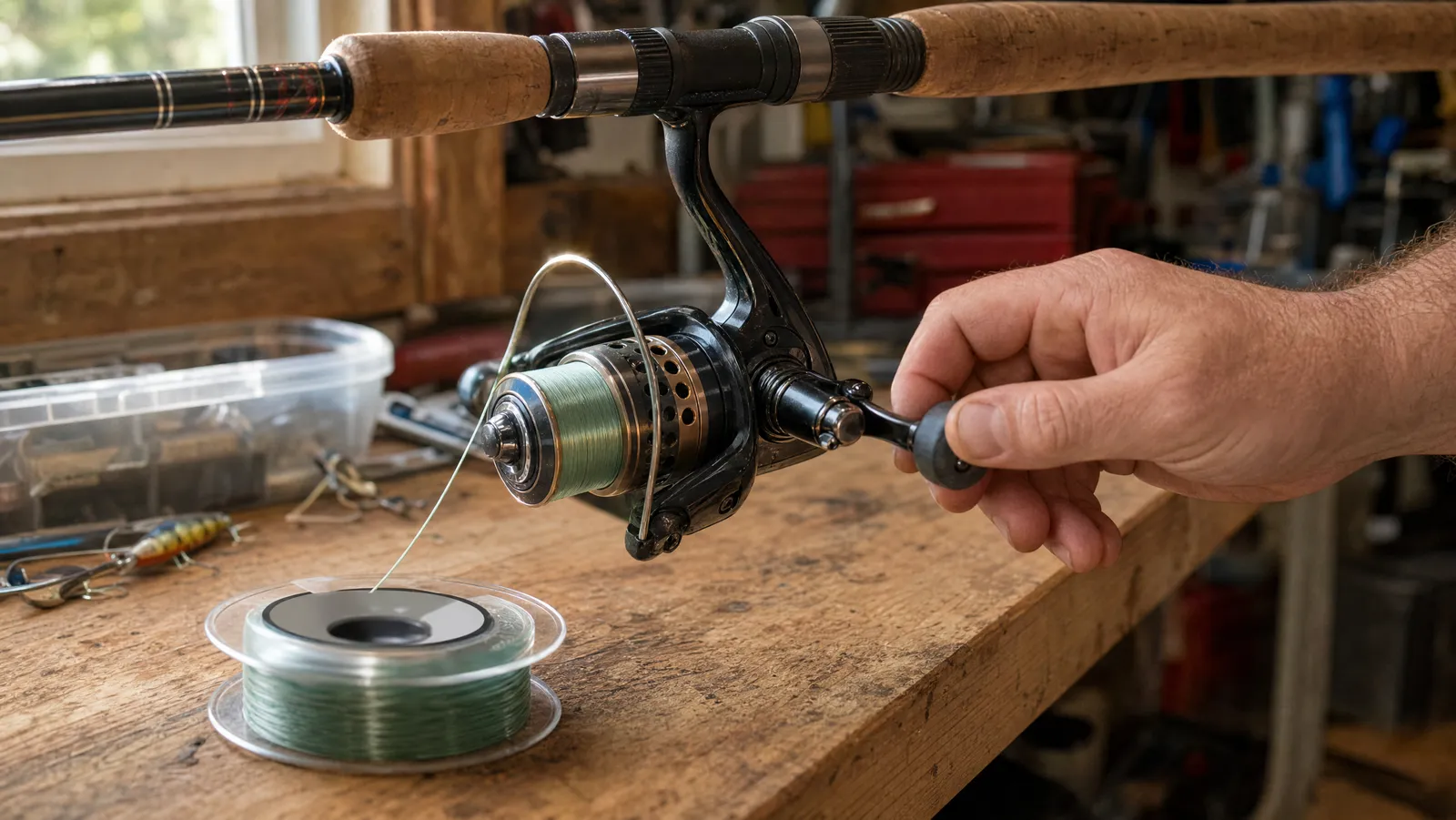
Almost all of this is spinning tackle. A 6-foot-10 to 7-foot medium-power spinning rod with a fast tip covers tubes, Ned rigs, drop shots, and small swimbaits.
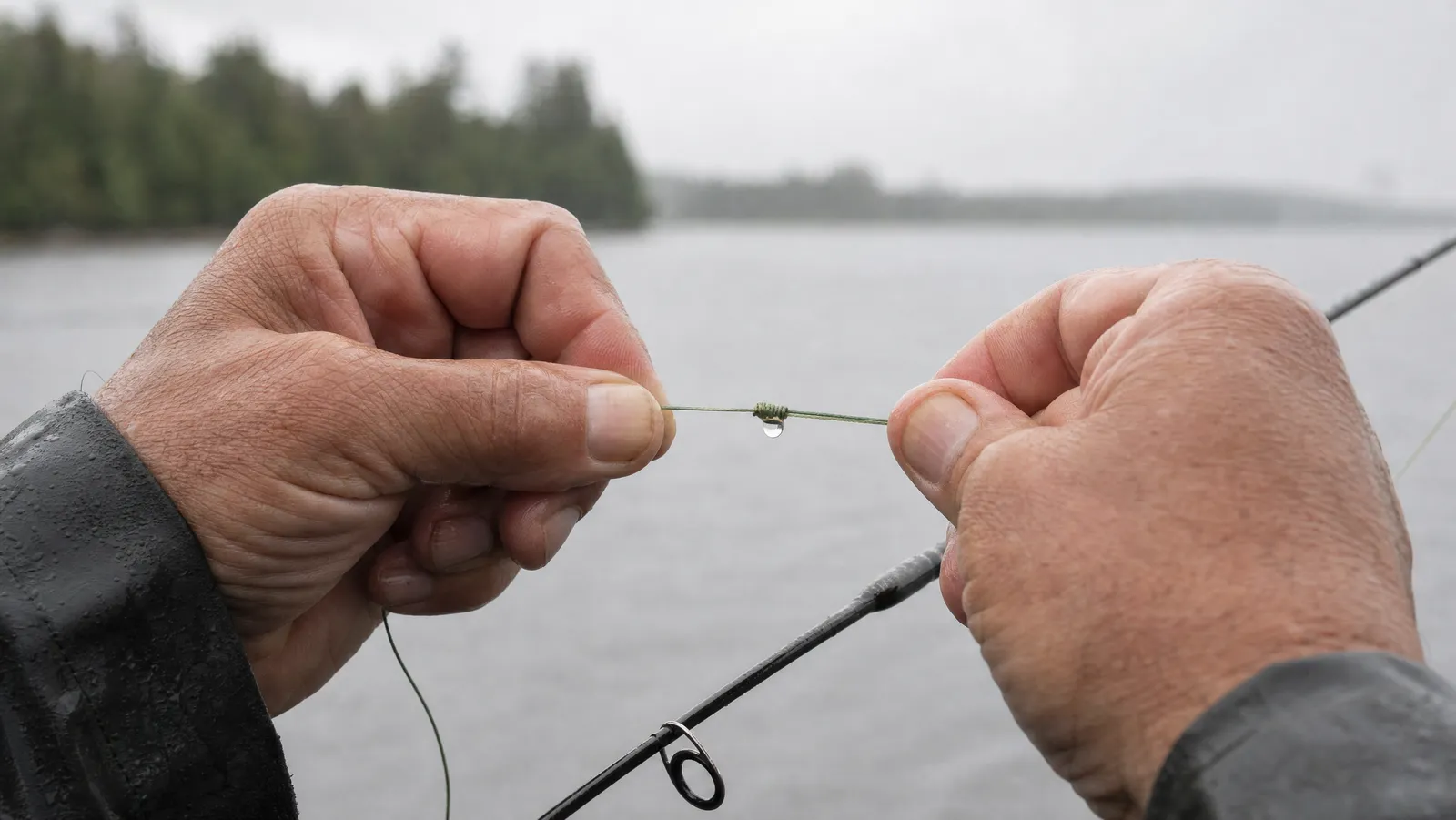
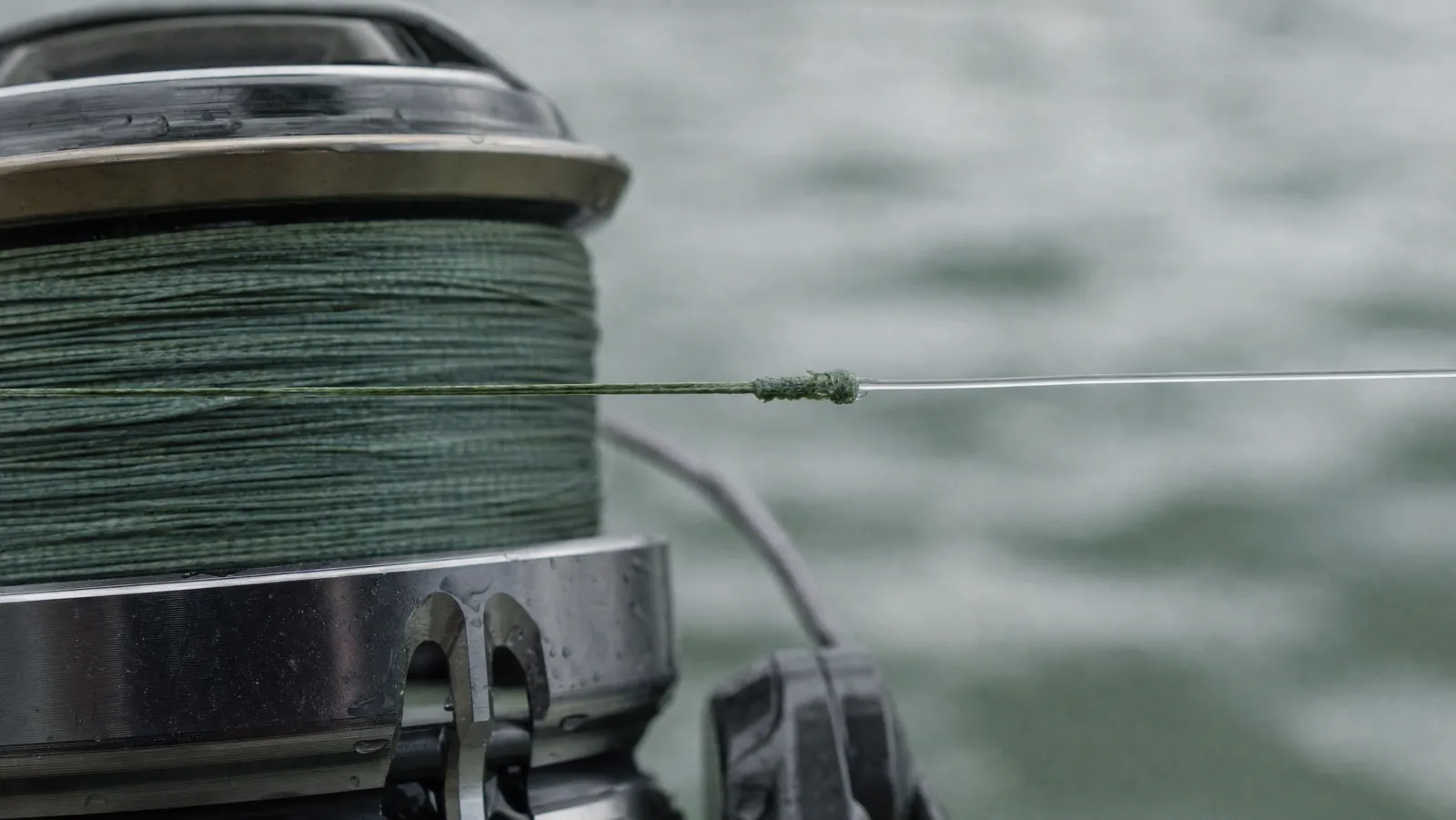
For line, our smallmouth reels carry either straight 6- to 10-pound fluorocarbon or 10- to 15-pound braid with a 6- to 10-pound fluorocarbon leader. Clear water and light bites reward a low-visibility connection and a bait that falls freely. Heavy line kills the glide on a tube and the stand-up posture on a Ned rig long before it ever spooks a fish.
Hard baits are the exception: jerkbaits, crankbaits, and topwater walkers fish better on a baitcaster with a moderate-action rod that keeps treble hooks pinned. Our primer on how rod power and action actually work sorts out which rod does which job.
Season by Season: Quick Hits
- Early spring. Hair jigs, blade baits, and suspending jerkbaits on the deep edges of spawning flats. Slow to the point of boredom.
- Prespawn. Fish stage on rock next to shallow spawning areas — tubes, Ned rigs, and jerkbaits shine. Our guide to bass lures for spring covers the whole progression.
- Summer. Deeper rock, drop shots, heavier tube heads, topwater at first light. Wind is your friend on main-lake points.
- Fall. Baitfish become the meal: swimbaits, underspins, and jerkbaits around schools.
- Winter, where seasons allow it. Vertical presentations, minimal movement, long soaks. Confirm current open seasons and regulations with your state agency first.
Five Mistakes That Cost Bronzebacks
- Fishing too big. The most common error by far. If you are not getting bit, cut two inches off the bait before you change colors.
- Fishing too fast. Tubes and Ned rigs get dragged, not hopped — most anglers move a bottom bait faster than a crayfish can walk.
- Ignoring current. In a river the seam is the spot. Casting at the bank and reeling straight back fishes the wrong 90 percent of the water.
- Line too heavy. Twelve-pound fluorocarbon on a 1/16-ounce Ned rig turns a finesse bait into driftwood.
- Leaving fish to find fish. Smallmouth group up. Catch one on a rock pile and work it from three angles before you move.
The Bottom Line
Smallmouth fishing rewards restraint. Small natural baits, light line, slow drags on rock, and the patience to let a jerkbait sit still beat a boat full of tackle most days. Start with tubes and Ned rigs, add a jerkbait for cold clear water and a swimbait for covering it, then let the fish set the pace.
When you are ready to fill in the rest of the box — heavy cover rigs, moving baits, and the largemouth patterns these finesse tools do not cover — our guide to bass lures for every situation is the place to go next.
About The Author
Rob Thomas
Rob Thomas is a fisherman who loves catching tales from his fellow fishermen. He always enjoys a good story, especially when it comes from the sea.