The Fishing Line Knots Worth Learning (and the Ones to Forget)

This post may contain affiliate links. Read our policy.
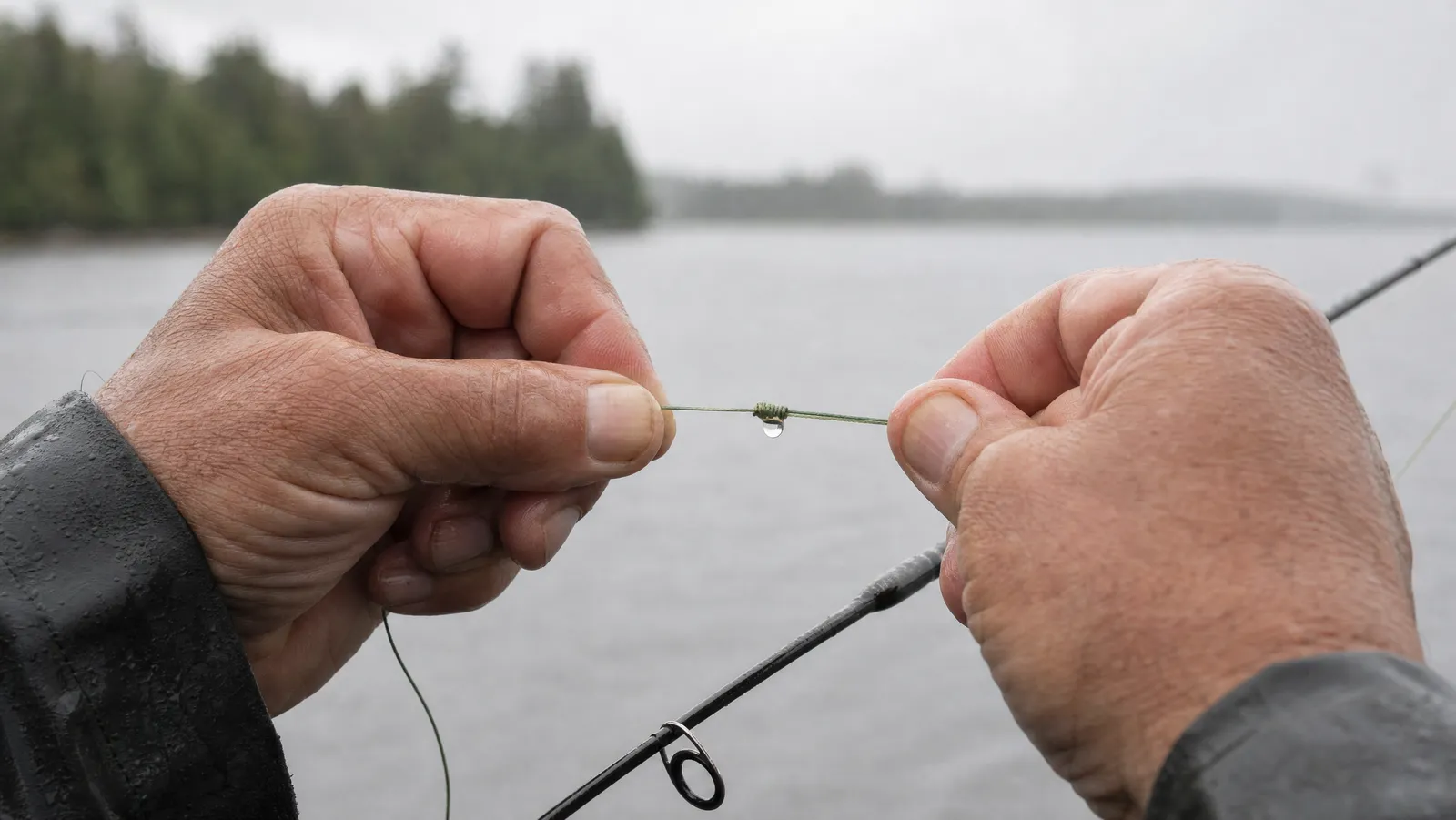
The Fishing Line Knots Worth Learning (and the Ones to Forget)
Six knots cover almost everything you will ever tie, and the number that decides which six is knot strength expressed as a percentage of the line's unknotted breaking strain. Every knot is a weak point. The good ones cost you a few percent. The bad ones quietly turn twenty-pound line into thirteen-pound line, and you find out at the boat.
Most anglers know five knots badly. Three tied perfectly will out-fish all five. What follows is organised by job, because that is how you actually reach for a knot: line to hook or lure, braid to leader, line to reel, and a loop knot for presentation. Plus the honest part — which knots to stop tying, and why the improved clinch you learned as a kid is now costing you fish.
None of this rescues the wrong line. If you have not settled that yet, start with picking the right line in the first place, because knot behaviour changes completely between nylon and a woven polyethylene.
Knot Strength Is the Whole Argument
Knot strength is reported as a percentage of what the unknotted line holds. A 100 percent knot does not exist in the field; what you are shopping for is a knot that fails after the line does, or close enough that the difference never decides a fight.
The figures published in the knots.fish strength roundup are the clearest baseline we have found, and they are worth reading slowly. On monofilament, knots.fish puts the Palomar and the Trilene at 95 to 100 percent, an improved clinch with six wraps at 90 to 95 percent, the uni knot at 88 to 95 percent, a five-wrap basic clinch at 75 to 85 percent, and a four-wrap basic clinch at 65 to 80 percent.
Sit with that last one. At 65 percent, twenty-pound line is a thirteen-pound connection. The gap between the best knot on that list and the worst is not a rounding error — it is roughly a third of your line.
Independent testing lands nearby. In Tom Rowland's head-to-head, the Palomar held 91.36 percent of the line's strength against the improved clinch's 85.15 percent — both below the monofilament ranges above, though Rowland does not publish the line type or wrap count, so treat it as indicative rather than like-for-like. That is the real lesson hiding in the data: your tying is a bigger variable than your knot choice. A well-tied improved clinch beats a badly tied Palomar every single time.
Line to Hook or Lure: The Palomar Is the Default
The Palomar is the knot to learn first and the knot you will tie most. knots.fish rates it at 95 to 100 percent on monofilament, 90 to 98 percent on fluorocarbon when properly wet and cinched, and 95 to 100 percent on braid — the only common terminal knot on that list that does not lose anything when you move from nylon to braid.
The reason is structural rather than magical. You pass a doubled loop through the hook eye, tie an overhand in the doubled line, then pass the loop over the hook. The load rides on two strands instead of one and grips at more contact points, which is exactly what a slick line needs.
It has two genuine limitations:
- You have to pass a loop over the lure. That rules it out on big-bodied plugs, rigged swimbaits, and anything already attached to something bulky. On a treble-hooked plug you can usually manage it, but it is fiddly with cold hands.
- Doubled line through a small eye is a squeeze. Heavy fluorocarbon through a small drop-shot hook eye is the case where the Palomar gets awkward and people start improvising, which is where knots go wrong.
When the Palomar will not physically work, the improved clinch is the fallback on mono and fluorocarbon — with six wraps, not four, and not five. On braid the fallback is different, and that is the next section.
Tie a Palomar unless you physically cannot. That single habit closes most of the gap between an average angler and a careful one.
Why Your Clinch Knot Slips on Braid
This is the failure that makes new braid users blame the line. FishingKnots.com is blunt about the mechanism: braid's smooth surface defeats most traditional knots, and the improved clinch, the Trilene and the original uni all rely on friction wraps that grip textured monofilament and slide straight out of slick braid. The site names it as the number one cause of braid slippage.
The numbers follow the physics. knots.fish rates an improved clinch at 90 to 95 percent on monofilament and only 70 to 80 percent on braid. Same knot, same hands, and roughly a fifth of your line strength gone because the substrate changed. The double uni holds better on braid at 85 to 90 percent, and the FG sits at 95 to 100 percent.
Once you understand why braid's woven, near-frictionless surface behaves this way, the fixes stop sounding like superstition:
- Tie a Palomar. It grips on geometry, not on friction, which is why it is the one knot that does not care what the line is made of.
- Or add wraps. FishingKnots.com specifies nine or more wraps if you insist on an improved clinch in braid, and a minimum of seven wraps on a San Diego Jam.
- Or tie a knot designed for braid. The San Diego Jam and the Berkley braid knot both exist because the clinch does not work here.
A knot that slips rather than breaks is the cruellest kind of failure, because it usually holds during the cast, holds during the retrieve, and lets go under the one load that mattered.
Braid to Leader: FG, Double Uni, and the Honest Version of the Learning Curve
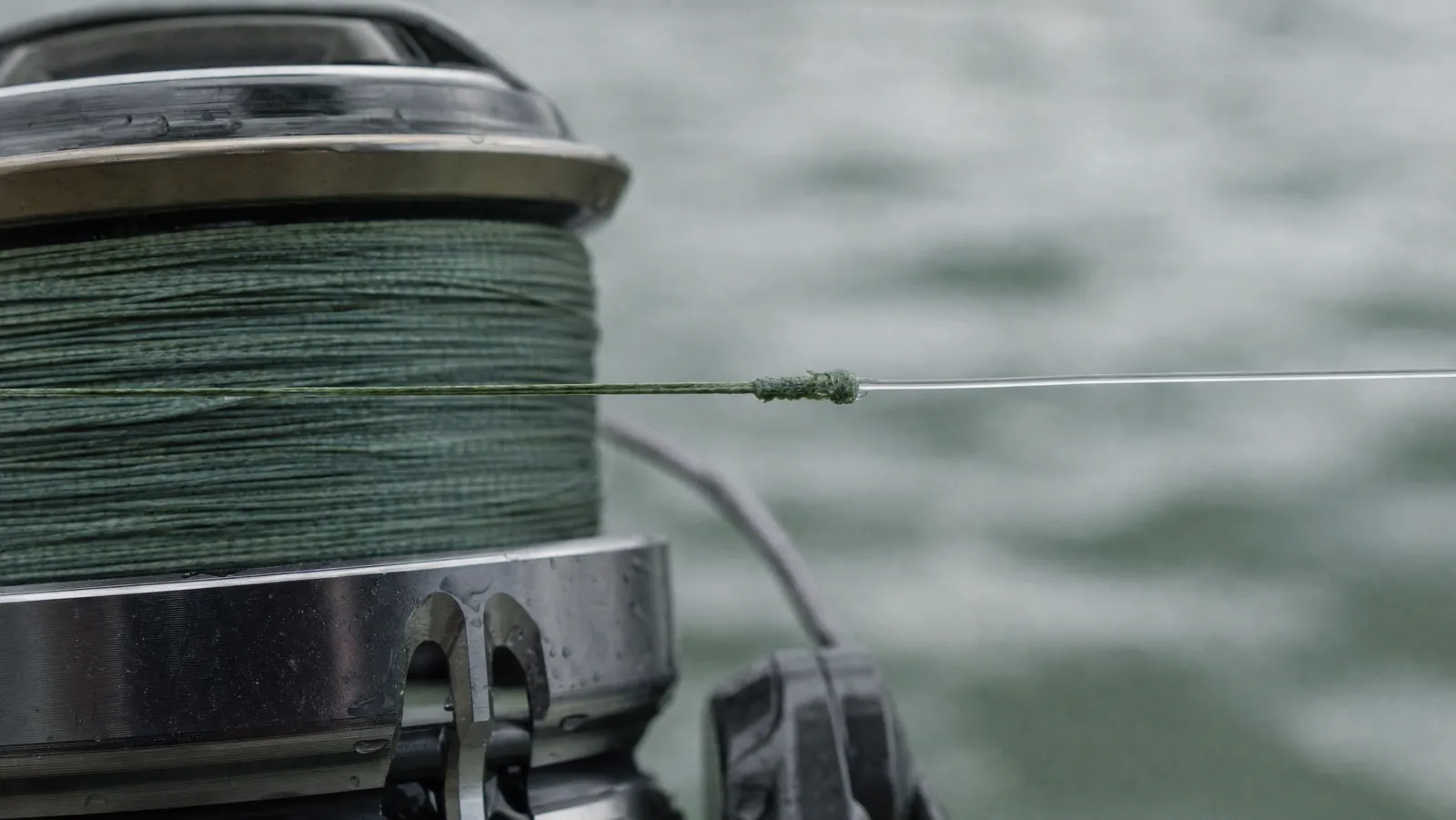
If you fish braid with a fluorocarbon leader — and in clear water you should — this is the connection that decides your day. It also has to pass through the guides on every cast, which means strength is not the only criterion.
The FG knot is the strongest and it is not close. knots.fish puts it at 95 to 100 percent on braid. Salt Strong's bracket testing, run with 10-pound PowerPro braid joined to 30-pound Ande fluorocarbon, had the FG beat the Alberto in all five trials, and Salt Strong describes the FG as well over 30 percent stronger than the Alberto for that pairing. In the same test series the Alberto gave way at an average of about 11.4 pounds across its five pulls against the FG, and in the earlier Albright-versus-Alberto round the Albright failed at an average of about 9.3 pounds.
It is also barely a knot. The FG is a series of alternating wraps of braid around the leader, locked with half hitches, and it tightens into a needle-thin cylinder that shoots through the guides. That slim profile is half the reason to bother.
The double uni is the one you can tie in the dark. knots.fish rates it at 85 to 90 percent on braid, which is plenty for almost all freshwater fishing, and it takes a fraction of the practice. Its cost is bulk: two knots butted together make a lump that clicks through the guides and occasionally catches at the tip on a long cast.
The Alberto is the awkward middle. It is faster than an FG and slimmer than a double uni, but Salt Strong's numbers put it well behind the FG on the same line pairing. We would not spend learning time there unless you already tie it well.
Our honest recommendation: learn the double uni this week, fish it with confidence, and learn the FG over a winter when a failed attempt costs you nothing. Do not try to learn an FG on the water in wind with a fish showing.
Whatever you tie, it is only as good as the fluorocarbon leader on the other end of it — a stiff, dense leader material is built to survive a knot in a way main line is not. Our tippet and leader selector will get you to a sensible leader test before you start weaving.
Line to Reel: The Arbor Knot, and Why It Is Not Enough for Braid
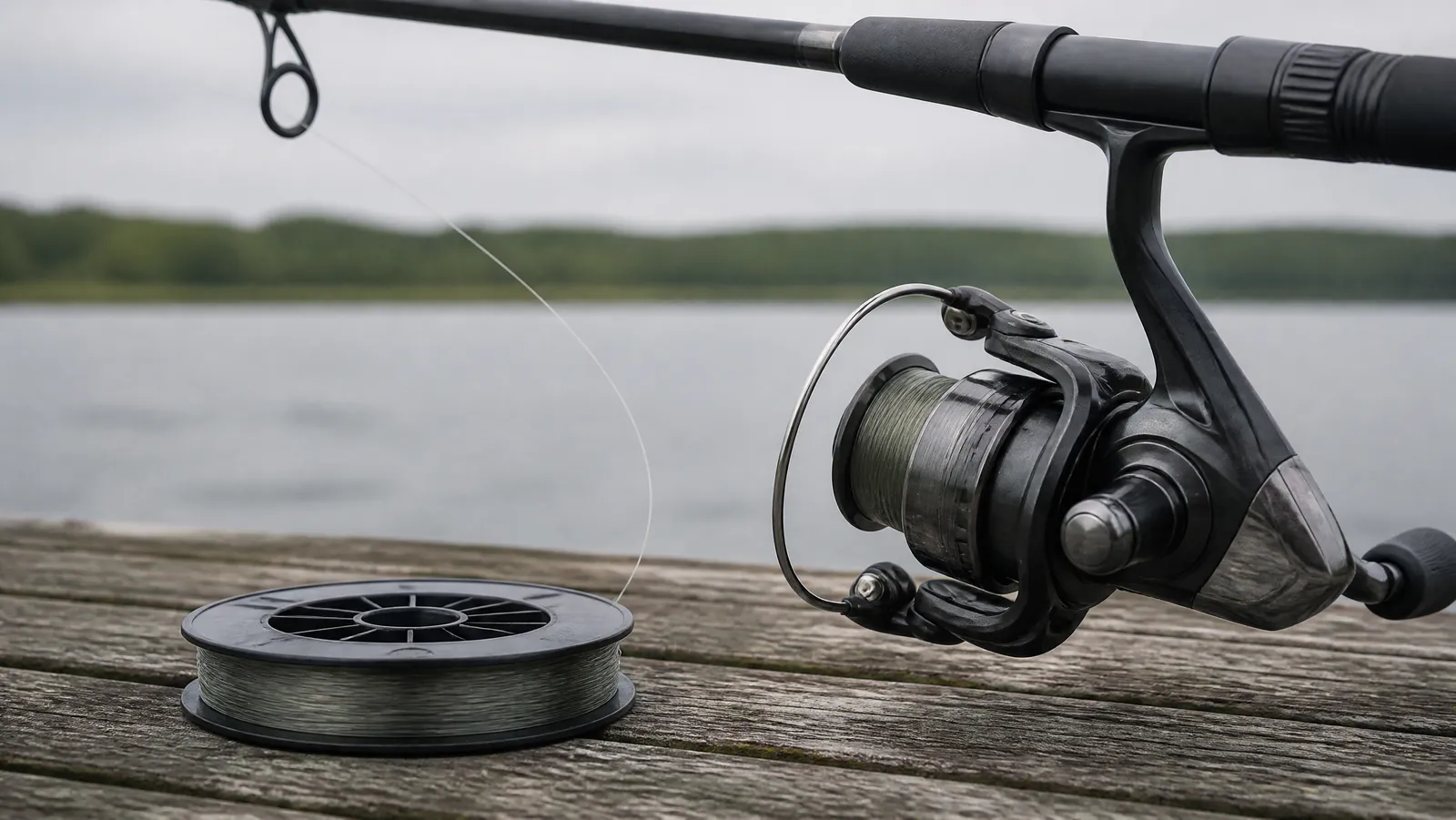
The arbor knot attaches line to the spool, and it is the one knot on this list with no meaningful strength rating. knots.fish lists its strength as not applicable, which tells you exactly what it is for: it exists to stop the spool from spinning free, not to fight fish. If a fish ever loads your arbor knot, you have bigger problems than the knot.
It is a slip knot: an overhand around the standing line, a stopper overhand in the tag, then pull the loop tight around the arbor. Two minutes to learn, and the first knot in every reel you ever fill.
The complication is braid, and knots.fish states the problem plainly: braid is slippery and will spin on a bare spool under heavy drag. The whole spool of line rotates while your handle turns and nothing happens. The site gives the two accepted fixes: wrap a single layer of electrical tape around the spool first, or tie on 20 yards of monofilament backing before you join the braid.
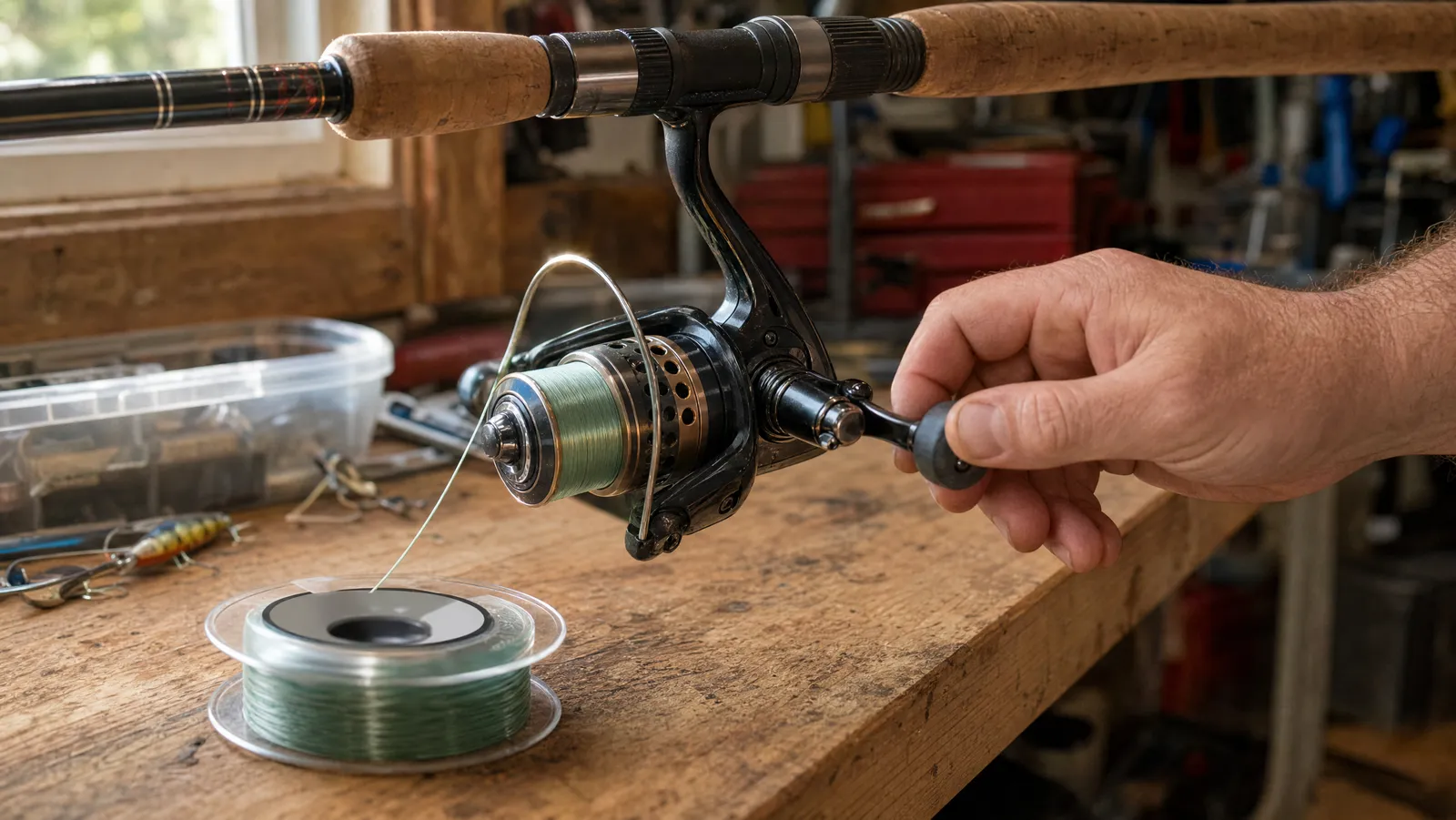
Tape is faster; mono backing is cheaper, since you are not paying braid prices for line that never leaves the reel. Either way, check what your reel actually holds with our line capacity calculator before you buy, and follow the full process in our guide to spooling a spinning reel from scratch.
The arbor knot is not a strength knot. It is an anti-slip knot, and on braid it needs help.
Loop Knots: The Presentation Knot Most Anglers Skip
A knot cinched tight against a hook eye pins the lure. On a jerkbait, a suspending minnow or a lightly weighted jighead, that pinning flattens the action you paid for. A loop knot leaves the lure free to swing, and the difference is visible in clear water at the side of the boat.
The non-slip loop knot, better known as the Kreh loop after Lefty Kreh, is the one to learn. Salt Strong ran a loop knot contest using 10-pound PowerPro braid and 30-pound Ande fluorocarbon, testing the Kreh loop against the Perfection loop, the Rapala loop and the Canoe Man loop, and named the Kreh the winner — not purely on strength, but because, in their words, it is easier to tie than the Rapala and its tag end points directly down, making it tough for those pesky weeds to ruin a presentation.
Two things worth knowing before you tie one everywhere:
- A loop knot is a leader knot, not a main-line knot. Tie it in fluorocarbon or mono at the business end. The Palomar still does the work everywhere else.
- It is the wrong choice with a hook you want locked. Anything you are setting hard into bone — a worm hook, a heavy jig — is better on a snug connection.
Most Knot Failure Is a Burn Failure, Not a Design Failure
Here is the part nobody puts in a knot tutorial video, and it matters more than which of these six you pick.
A knot tightens by dragging line across line. That drag generates heat and scores the surface, and the damage happens in the last half-second of cinching, in the exact spot that will carry the load. This is why lubrication is not a folk ritual. knots.fish is categorical about it: always wet fluorocarbon knots completely before cinching, no exceptions — and states that tightening dry reduces fluorocarbon knot strength by 15 to 25 percent compared with wetting.
Read that against the strength table for a second. A Palomar rated at 90 to 98 percent on fluorocarbon, cinched dry, can land beneath a well-tied basic clinch. The technique is worth more than the knot.
What that means in practice:
- Wet it properly. Water or saliva, and enough of it to coat the whole knot, not a token lick.
- Cinch slowly and steadily. One smooth pull, not a jerk. Speed is what makes heat.
- Seat it hard before you fish it. Pull the finished knot firmly against the hook or against a gloved hand until it is fully compressed. A knot that seats under load for the first time when a fish hits is a knot that slips.
- Look at it. Overlapping or crossed wraps are a failure in waiting. Cut it off and retie — you lose eight inches of line and thirty seconds.
- Leave a short tag end. Trimming flush with a blade risks nicking the knot itself, and braid in particular can creep under load.
One more habit that costs nothing: retie after a fish, after a snag, and after any contact with rock, dock or zebra mussels. And set your drag deliberately against the line's real strength rather than by feel — a knot at 90 percent on twenty-pound line is an eighteen-pound system, and our drag setting calculator will give you the number.
The Knots to Stop Tying
Four honest cuts, each for a reason that shows up in published testing rather than in opinion.
- The basic clinch with four or five wraps. knots.fish puts the four-wrap version at 65 to 80 percent and the five-wrap version at 75 to 85 percent on monofilament. There is no situation where the extra wraps are too much trouble. If you are going to tie a clinch, tie an improved clinch with six.
- Any clinch, Trilene or original uni on braid. FishingKnots.com names these three specifically as friction knots that slide out of slick braid, and knots.fish has the improved clinch dropping to 70 to 80 percent there. The Palomar is the same effort for a better result.
- The Albright for braid to leader. In Salt Strong's testing with 10-pound PowerPro and 30-pound Ande fluorocarbon, the Albright failed at an average of about 9.3 pounds, against roughly 12.4 pounds for the Alberto in that same head-to-head round. A connection averaging below the rated strength of the braid it joins is not a connection worth keeping.
- Whatever you invented on the water at dusk. If you cannot name the knot, you cannot trust it.
A Drill That Actually Teaches Them
Knots are motor memory, not knowledge. Reading this article does not put a single knot in your hands. Here is the drill we would hand a new angler.
Evening one, on the couch. Take a spool of cheap mono and a box of old hooks and tie twenty Palomars. Not five — twenty. Somewhere around the twelfth your hands stop consulting your brain, and that is the entire point of the exercise. Repeat on a separate evening for whichever leader knot you chose.
Evening two, destruction testing. Tie ten knots on a two-foot length of line, then pull each one to failure against a fixed point. Watch where it parts. If it breaks at the knot, your tying is the weak link. If it breaks away from the knot, the knot was stronger than the line and you have done your job. A cheap luggage scale turns this from a feeling into a number.
Every trip after that, one knot. Tie your leader knot once before you launch, dry-run, no pressure. Five weeks of that and the FG stops being intimidating.
Do the wet-and-slow cinch every single time during practice, including on the couch where it feels pointless. You are training the habit, not the knot.
The Short Version
Six knots, by job. Palomar for line to hook or lure unless the lure will not pass through the loop. Improved clinch with six wraps as the mono fallback. San Diego Jam if you want a braid-specific terminal knot. FG for braid to leader once you have practised it, double uni until then. Arbor knot to start a spool, over tape or mono backing if you are filling with braid. Non-slip loop knot at the leader end for anything whose action you care about.
The percentages behind those choices are worth memorising: Palomar 95 to 100 percent on braid and mono, improved clinch collapsing to 70 to 80 percent on braid, FG at 95 to 100 percent, double uni at 85 to 90 percent, and a lazy four-wrap clinch at 65 to 80 percent, all per knots.fish.
But the biggest single gain available to most anglers is not on that list. It is wetting the knot and cinching it slowly, because tightening fluorocarbon dry costs 15 to 25 percent on its own. Most lost fish are burn failures wearing a knot's name.
And if the connection keeps failing after all this, the line itself may be the problem rather than your hands — our guide to the best fishing line covers which material forgives a knot and which one punishes it.
About The Author
Rob Thomas
Rob Thomas is a fisherman who loves catching tales from his fellow fishermen. He always enjoys a good story, especially when it comes from the sea.