Fishing Line Leaders: When You Need One, and How Long It Should Be

This post may contain affiliate links. Read our policy.
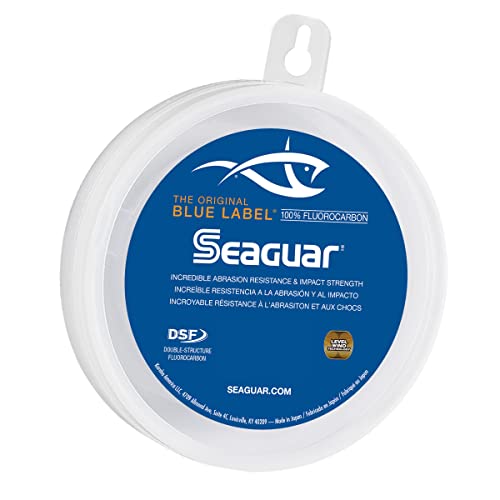
Seaguar Blue Label Fluorocarbon Leader, 25 lb, 50 yd
Fifty yards of 25-pound Blue Label is the leader spool that covers the most water for the least money.
- Fifty yards is double the length of most leader spools at a similar price
- Seaguar names braid-to-leader connections as the job it is built for
- 25 lb is the most broadly useful single test for freshwater and light inshore work
- Heavier than clear-water finesse presentations want
- One test only, so genuinely light or genuinely heavy jobs need a second spool
Fishing Line Leaders: When You Need One, and How Long It Should Be
A leader does three separate jobs — hiding your line, surviving abrasion, and absorbing shock — and no single material does all three well. Choose the material for the job you actually have, then let your rod and guides decide how long it can be. Almost every leader argument collapses once you separate those two questions.
Angler Reviews is reader-supported. We may earn a commission on purchases made through links on this page, at no extra cost to you.
Plenty of anglers tie a leader because the person in the next boat ties one. Sometimes that is right. Sometimes it is an extra knot in the worst possible place. If your main line is still undecided, start with how braid, fluorocarbon and mono actually differ and come back — the leader question only has an answer once the main line has one.
The Three Jobs, and Why They Pull Against Each Other
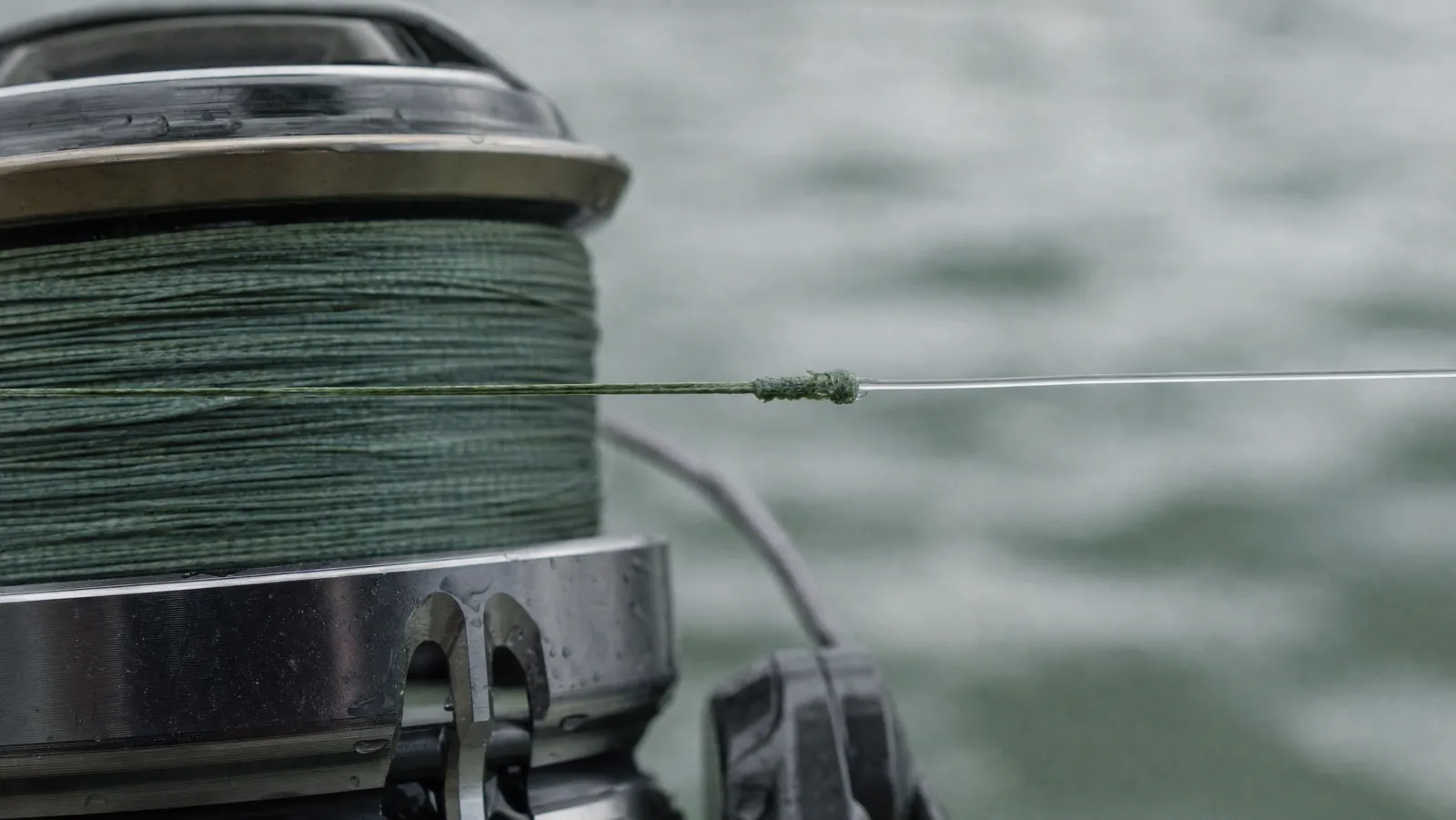
Job one is invisibility. This is the job fluorocarbon is famous for, and the mechanism is optical rather than magical. AFTCO explains that fluorocarbon's "light refraction index is nearly the same as water's," which is why the company describes it as "nearly invisible as a leader." Nearly. Nothing you tie on is actually invisible, but fluorocarbon bends light closer to the way water does than nylon or opaque braid manage.
Job two is abrasion resistance. This is the job most anglers assume fluorocarbon also wins, and the published evidence is messier than the marketing. One Outdoors states that fluorocarbon is "15-20% more abrasion resistant than mono of the same diameter." Pete Barrett ran the comparison on a workbench for On The Water and got the opposite answer. His method was blunt — line samples tied to 16-ounce sinkers, dragged back and forth across 80-grit sandpaper in repeated six-inch pulls until they failed. Ande 20-pound fluorocarbon broke at an average of 74 pulls against 82 pulls for the mono. Cortland 20-pound fluorocarbon broke at 61 pulls against 71 for the mono. When Barrett matched diameters instead of pound tests, running 25-pound Cortland fluorocarbon at 0.018 inch against Ande 20-pound mono at the same diameter, he measured 83 pulls and 82 pulls. A tie.
Barrett is candid that this was "a very casual, unscientific test," and we would not rebuild a rig around one bench. But it is the most specific published data we could find, and it points somewhere useful. Diameter appears to do more of the abrasion work than material does. If rock is eating your leaders, go heavier. Do not just go fluorocarbon and assume you solved it.
Job three is shock absorption, and here nylon wins outright. One Outdoors puts monofilament at 25 to 35 percent stretch, fluorocarbon at 10 to 15 percent, and braid at 1 to 3 percent. On a braid main line the leader is the only elastic component left in the system, and a fluorocarbon leader gives you somewhere between a third and a half of the give a mono leader would.
Job one and job three want different materials. That is the whole leader problem in one sentence, and no spool on the shelf resolves it for you.
When You Genuinely Need a Leader
Three situations where we would always tie one.
- Braid main line in water you can see into. Braid is opaque at every price point, and it floats besides — Sunline lists braid at a specific gravity of 0.97 against water at 1, so it lies on the surface in a visible line pointing straight at your lure. This is the most common honest reason to add a leader, and if you want the full picture of what you are compensating for, our guide to fishing braid covers it.
- Anything with teeth. Pike, musky, bluefish, Spanish mackerel. Teeth do not care about knot strength or pound test in any nylon, and a bite-off is not a skill problem.
- Cover that grinds. Rock, zebra mussels, dock pilings, oyster bars. Here the leader is a sacrificial wear section, and the payoff is that you replace three feet instead of respooling.
And three where it is cargo cult.
- Mono or fluorocarbon main line in stained water. You already have a line that is less visible than braid and already stretches. A leader of the same material adds a knot and nothing else.
- Muddy water and matted grass, with braid. Mike Iaconelli, writing for Bassmaster, says he "almost always" switches to "a super short 8- to 12-inch leader" in heavily stained to muddy water. At that length the leader has stopped being a stealth device and become a short shock absorber. In genuine slop, plenty of good anglers tie straight braid to the hook and give up nothing.
- Because a video told you to. Every leader knot is a failure point you introduced on purpose.
Name the job out loud before you tie. If you cannot name it, do not tie it.
Fluorocarbon vs Mono vs Wire, by Job
Fluorocarbon is the default, for two reasons rather than one. The optical reason is above. The second is density. Sunline lists fluorocarbon at a specific gravity of 1.78, nylon at 1.11 to 1.14, and water at 1. A fluorocarbon leader sinks hard, and it drags the last few feet of floating braid down with it. On a jerkbait or a drop shot that is the difference between a straight line to the lure and a belly of slack on the surface. It is also why fluorocarbon is the leader material every stealth-first angler reaches for first.
Mono is the correct leader far more often than its reputation suggests. Anywhere the fish are not line-shy and the hooks are trebles, that 25 to 35 percent stretch is doing real work fluorocarbon cannot do at any price. Topwater plugs, crankbaits, and any fish you finish at close range on a short line. A treble tears its own hole, and a rig with no give anywhere in it keeps pulling on that hole until the hook falls out. Mono leader is also the cheapest material on the shelf, which means you retie without flinching.
Wire is narrow and non-negotiable. If teeth are the failure mode, no pound test of nylon or fluorocarbon fixes it — you are only choosing how many lures you are willing to donate. Wire and titanium bite guards exist for exactly that job, and the cost is that they are visible and that single-strand wire kinks after a fight. Our position is to use the shortest bite guard that keeps your lure on the line, and go back to fluorocarbon the moment the target species changes.
How Long? Your Rod Guides Set the Ceiling
This is the number most anglers get wrong, because they optimise for stealth and forget the rod is in the way.
Here is the constraint nobody mentions: the leader knot either passes through your guides on every cast, or it stays outside them, and the in-between is where lures get snapped off. The rigging guide at knots.fish states the spinning-reel rule plainly — "the knot should NOT pass through the first guide." A connection sitting in the guides at the moment of the cast costs distance, makes noise, and occasionally grabs hard enough to break something. On a seven-foot spinning rod, that means a leader roughly the length of the rod or longer puts the knot on the spool where it belongs, and a leader well under that keeps it outside the tip. A leader that lands between those two states is the one that slaps a guide.
That constraint is why so much published guidance clusters where it does. Iaconelli calls 2 to 4 feet "a great, middle-of-the-road leader length," drops to 12- to 18-inch leaders in heavy cover, runs long leaders in 4- to 8-pound fluorocarbon for finesse presentations in clear open water, and stretches to "a 10-foot leader so the fish have no idea that braided line is anywhere near my lure" in water clear enough to see bottom at ten feet.
The knots.fish guide scales the same idea to visibility rather than technique: a 12-inch minimum where you can see less than 18 inches down, 18 to 24 inches where visibility runs from 18 inches to three feet, 24 to 36 inches from three to six feet of visibility, and 36 to 60 inches beyond that. For baitcasting it puts 12 to 24 inches as standard, going to 36 inches in clear water.
Read across all of that and two leader lengths emerge, each for a different reason.
- Under two feet is a shock-absorber and bite-guard leader. It hangs outside the rod tip, casts as if it were not there, and is the right answer in stained water and heavy cover.
- Six feet and up is a stealth leader. It puts the knot on the spool, demands a slim connection, and only earns its keep in genuinely clear water.
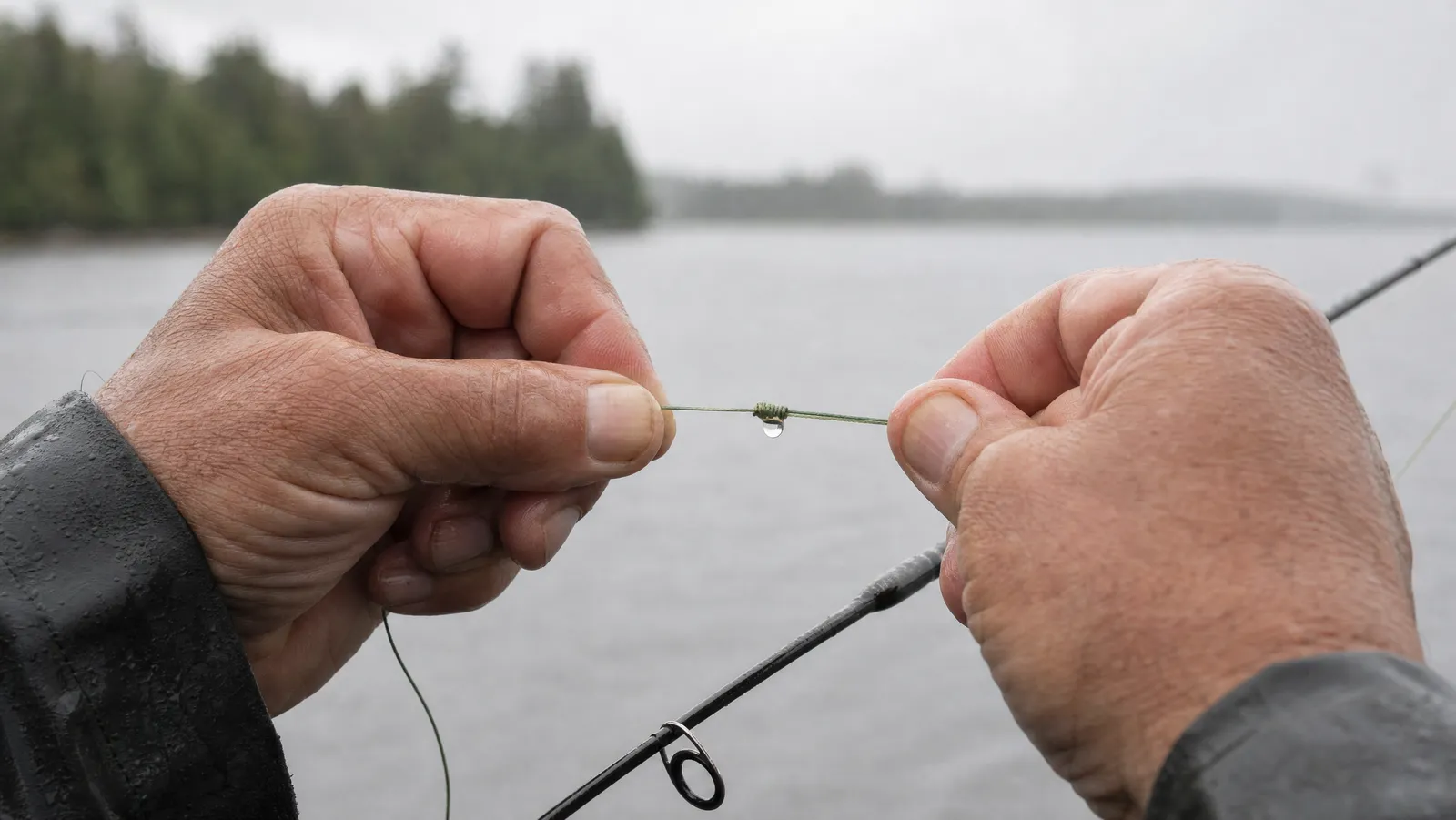
If you are running the long version, the knot stops being a detail. The knot guide at knots.fish rates the FG knot at roughly 98 percent of line strength and notes that its weave "creates a connection slimmer than the leader itself, so it passes through guides without catching" — which is precisely the property that matters when it is travelling through the guides several hundred times a day. Our guide to the knots that hold in braid covers tying it without swearing. A long leader is a knot decision before it is a stealth decision.
Leader Pound Test: Lighter Is a Choice, Not a Compromise
There is no ratio rule here, and anyone who hands you one is guessing. AFTCO's own guidance is refreshingly non-committal: "Leader strength is generally based on the main line's pound test rating. The leader can be heavier or lighter than the main line but keeping the diameters relatively close is best." Diameter, not pound test — the same lesson Barrett's sandpaper produced from the other direction.
So decide by what you want to break.
Lighter than the main line is a deliberate break-away. In stump fields, riprap and standing timber, you will snag. A leader rated below your main line means the leader parts at the lure, you lose a hook and a foot of fluorocarbon, and you keep the rest of the rig plus the two hundred yards of braid behind it. Retie, cast again, move on. The alternative is pointing the rod at the snag and pulling until something expensive gives.
Heavier than the main line is the toothy and abrasive choice. Pike, musky, snook around pilings, anything where the failure is a cut rather than a straight pull. Here you want the leader to be the strongest thing in the system, and Barrett's diameter finding says the way to buy abrasion resistance is to buy thickness.
Matched diameter is the finesse answer, and it will look wrong on the label. Braid is dramatically thinner per pound test than fluorocarbon — Tackle Village's line diameter chart puts 20-pound braid at about 0.010 inch against about 0.016 inch for 20-pound fluorocarbon. So matching diameters between a braid main line and a fluorocarbon leader usually means a leader with a lower number printed on it. That is normal. It is not a downgrade.
Whichever way you go, the drag is the component that has to respect the weakest link in the chain, which is almost always the leader or the knot in it. Set it against that number rather than against the main line, and check it with our drag setting calculator. Leader choices also swing hard by technique — our guide to line and leader choice by bass technique breaks that down presentation by presentation.
Fly Anglers: Leader and Tippet Are Not the Same Thing
The vocabulary trips up anglers crossing over from spinning gear, and Orvis draws the line cleanly. A leader is "the tapered section that attaches to the fly line and helps with turnover and presentation." Tippet is "the replaceable end section made from clear, thin material." Tapered versus uniform diameter is the entire distinction — the taper is what makes a fly turn over at the end of the cast instead of landing in a heap.
Orvis's standard starting point for trout is a 9-foot tapered leader, and in the X system a higher number means a thinner tippet, so 6X is finer than 4X. The maintenance rule is the part worth stealing even if you never own a fly rod: every fly change costs you an inch or two of material, and Orvis advises you "add tippet as your leader shortens, so you keep the same overall length and presentation." That is what tippet is for — so you are not throwing away an expensive tapered leader because fly changes ate eight inches of it.
Our tippet and leader selector will size it for the fly and the fish you are actually chasing.
If you fish conventional gear, your leader is what a fly angler calls tippet. You simply do not have the tapered section in front of it.
Which Spool We Would Actually Buy
Most anglers need one spool, not four. If that is you, buy the Seaguar Blue Label leader in 25-pound, about $13 as of September 2026 for 50 yards. Seaguar names braid-to-leader connections as a primary use for Blue Label and says the double-structure construction cinches easily, which is the property that decides whether your connection knot seats properly or slips. Fifty yards is a season of leaders for most people. The honest limitation is that 25-pound is heavier than clear-water finesse work wants.
If you fish clear, pressured water and the fish are refusing, the Seaguar Gold Label in 15-pound is the upgrade that targets that specific failure, about $19 as of September 2026 for 25 yards. Seaguar co-extrudes a strong sensitive core with a soft supple exterior, states the result is incredibly thin and virtually invisible underwater, and claims the lowest line memory of its fluorocarbon leaders. Those are manufacturer claims, not measurements we made — but low memory is the one you can verify yourself in about four seconds by pulling a foot off the spool and watching whether it lies straight.
For rock, pilings and bigger fish, the Blue Label in 30-pound is the same double-structure material at about $13 as of September 2026, and Seaguar markets it for trolling, casting plugs and deep jigging. You get 25 yards rather than 50, and at 30-pound it is stiff enough to flatten the action of small lures, so keep it for the jobs that need it.
And if your problem is trebles rather than visibility, stop buying fluorocarbon for it. The Ande mono leader wrist spool in 30-pound clear, about $12 as of September 2026, is the cheapest way to put stretch back into a braid rig. Clear nylon is more visible underwater than fluorocarbon, which is the trade you are accepting on purpose.
The Short Version
A leader hides your line, resists abrasion, or absorbs shock. Pick one, because the material that does the first does the third badly.
Tie one when you are fishing braid in water you can see into, when the fish have teeth, or when the cover grinds. Skip it when your main line is already clear and stretchy. Keep it under two feet when the job is shock absorption or bite protection, and take it past six feet only when the water is genuinely clear and your connection knot is slim enough to live in the guides. Go lighter than your main line where you snag, heavier where you get cut, and match diameters rather than pound tests when in doubt.
When you want the head-to-head on the lines themselves, Angler Reviews' fishing line hub lays out braid, fluorocarbon and mono against each other in full.
The Picks, Tested
Seaguar Blue Label Fluorocarbon Leader, 25 lb, 50 yd
Fifty yards of 25-pound Blue Label is the leader spool that covers the most water for the least money. Seaguar names braid-to-leader connections as a primary use and says the double-structure build cinches easily, which is exactly the property you want when you are tying a connection knot in the wind.
- Fifty yards is double the length of most leader spools at a similar price
- Seaguar names braid-to-leader connections as the job it is built for
- 25 lb is the most broadly useful single test for freshwater and light inshore work
- Heavier than clear-water finesse presentations want
- One test only, so genuinely light or genuinely heavy jobs need a second spool

Seaguar Gold Label Fluorocarbon Leader, 15 lb, 25 yd
Gold Label is Seaguar's answer to the one job a leader is most often asked to do. The company co-extrudes a strong sensitive core with a soft supple exterior, states the result is incredibly thin and virtually invisible underwater, and claims the lowest line memory of its fluorocarbon leaders.
- Seaguar claims the lowest memory of its fluorocarbon leaders, so it lies straighter off the spool
- 15 lb is the right weight for clear water and spinning gear
- Fast sinking, which pulls the last few feet of floating braid down with it
- Most expensive leader material here per yard
- 25 yards at this test disappears quickly if you retie often

Seaguar Blue Label Fluorocarbon Leader, 30 lb, 25 yd
The same double-structure fluorocarbon as the 25-pound Blue Label, in the test you want when abrasion or teeth are the failure mode rather than visibility. Seaguar markets this one for trolling, casting plugs and deep jigging.
- Same construction and same price as the 25 lb Blue Label
- 30 lb is the sensible step up for rock, pilings and bigger fish
- Seaguar names trolling, casting plugs and deep jigging as its targets
- 25 yards rather than the 50 you get on the 25 lb spool
- Stiff enough at this test to dull the action of small lures
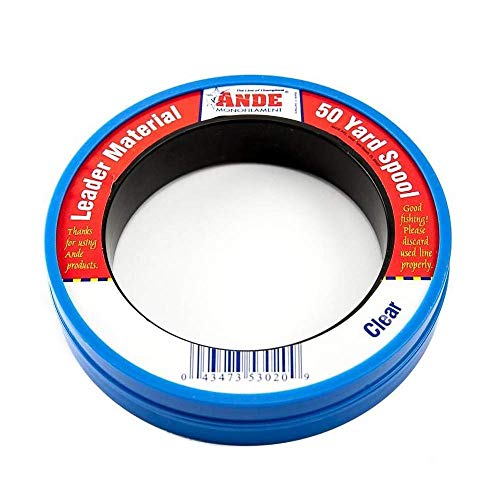
Ande Mono Leader Wrist Spool, 30 lb Clear
The cheapest way to put stretch back into a braid rig. Thirty-pound clear monofilament on a wrist spool you can wear while you rig, which is a small convenience right up until you are re-tying on a rolling deck.
- Nylon stretch is the shock absorber a braid main line does not have
- Wrist-spool format keeps it in reach while you rig
- Cheapest leader material here
- Clear nylon is more visible underwater than fluorocarbon
- Offered here in 30 lb only, so there is no finesse option in this format
Compare The Field
| Compare | Best Overall Leader Material Seaguar Blue Label Fluorocarbon Leader, 25 lb, 50 yd | Best for Clear Water and Finicky Fish Seaguar Gold Label Fluorocarbon Leader, 15 lb, 25 yd | Best Heavy Leader Seaguar Blue Label Fluorocarbon Leader, 30 lb, 25 yd |
|---|---|---|---|
| Overall | — | — | — |
| Price | $12.99 Check price → | $18.56 Check price → | $12.99 Check price → |
About The Author
Rob Thomas
Rob Thomas is a fisherman who loves catching tales from his fellow fishermen. He always enjoys a good story, especially when it comes from the sea.