How to Fix a Broken Fishing Rod

This post may contain affiliate links. Read our policy.
How to Fix a Broken Fishing Rod
A snapped tip-top or a pulled guide is a 20-minute job at the kitchen table with a repair kit that costs under $20. A break in the middle of the blank, or a crushed ferrule, is not worth repairing on a rod under about $150. And a blank that let go on a normal cast is a warranty claim before it is a repair job - check that first, because a home repair can end the claim.
So how to fix a broken fishing rod is a sequence, not a technique: triage the break, check the warranty, then reach for heat and glue. Get the order wrong and you glue a rod the manufacturer would have replaced. If the rod is finished, our fishing rod buying guide covers the replacement - and repairability is worth buying on purpose, which is why we point beginners at tough composite blanks in our first-rod picks.
First, work out which break you have
Five different failures get called "a broken rod." Sort yours before you buy anything.
- The tip-top guide itself is broken, bent or cracked. The blank is fine. Easiest fix on the list, and in our experience the most common. Mud Hole Custom Tackle is blunt about not fishing it as-is: never continue fishing with an impaired insert ring, because it will shred your fishing line.
- The tip section snapped above the first guide. Fixable, but the rod's ratings change with it.
- A guide is cracked, or its foot has pulled out of the wrap. Fixable with thread and epoxy. Mud Hole notes you can fish a rod with a guide missing, but says it certainly isn't recommended, since line can snag between the remaining guides.
- A ferrule on a multi-piece rod is loose, or the female end is split. Loose is a maintenance job. Split is usually terminal.
- A break mid-blank, or a crack running lengthwise along it. Technically repairable, almost never worth it.
Material informs the diagnosis. Graphite tends to fail suddenly under point impact where glass bends and comes back, the argument in our piece on graphite versus fiberglass. A graphite rod that snapped mid-blank with no obvious impact fits the pattern that makes a defect claim plausible.
Repair it or claim it?
Check the warranty before you open the glue. Most rod warranties cover manufacturing defects rather than the thing you did to the rod, and the published terms are more specific than anglers assume.
According to Fenwick's warranty page, its open water and fly rods cover defects in materials and workmanship under normal use for the lifetime of the original owner, while Fenwick ice rods carry a 1-year warranty period from the date of purchase. Its exclusions name the realistic ways a rod dies: damage caused by misuse, abuse, or neglect including dropping, crushing, or high-sticking, plus normal wear and tear, loss or theft, and accidental breakage. Warranty replacements carry a $20 service fee.
One more Fenwick exclusion decides whether you pick up a razor blade at all: modifications or repairs made by unauthorized persons. A tidy home re-wrap can close a door that was still open.
St. Croix runs a different model. Its service and warranty page describes the Excellerator Program for rods within their original warranty periods and states that a $60 warranty processing fee applies, which St. Croix says covers shipping, handling, materials and overhead. The same page says claims are not processed if the rod has guide, reel seat, or cork damage, and that upgrades cost $30 plus the difference in price between your current rod and the upgraded model. Past the term, St. Croix points you at an out-of-warranty form rather than publishing a price.
So a warranty is not free - on St. Croix's own numbers you pay $60 and wait, which is sane on a broken blank and absurd on a $4 guide. And the hardware most likely to break is the hardware most often excluded: guides, reel seats and cork are the DIY column.
Terms vary more than brand loyalty suggests. Per the listings we priced for our rod guide, St. Croix publishes a 5-year warranty on the Bass X, the rod-only Ugly Stik GX2 listing states 7 years while the GX2 combo listing states 10, and Zebco lists a 1-year warranty against defects in workmanship and materials on the Z-Cast. The premium brand's published term is shorter than the mainstream brand's, which tells you about a company's risk calculation rather than rod quality - a point we push harder in are expensive fishing rods worth it.
There is a middle path. Fenwick says a rod broken by accident rather than by a defect is eligible for a one-time, courtesy replacement rod, at a service charge of $50 USD for open water and fly rods and $25 USD for ice rods. That is not a warranty claim. It is a discounted rod, once.
Replacing a tip-top
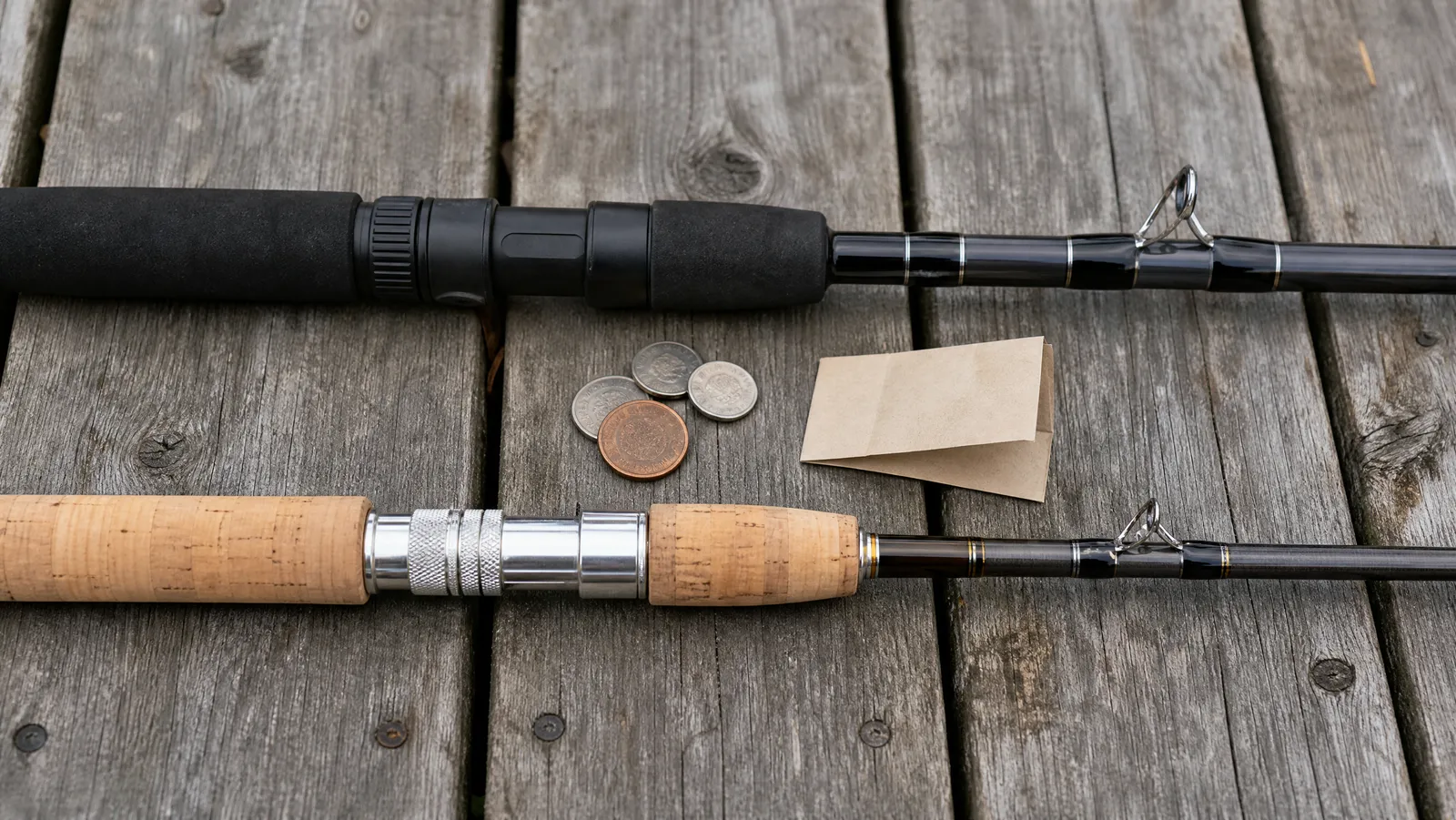
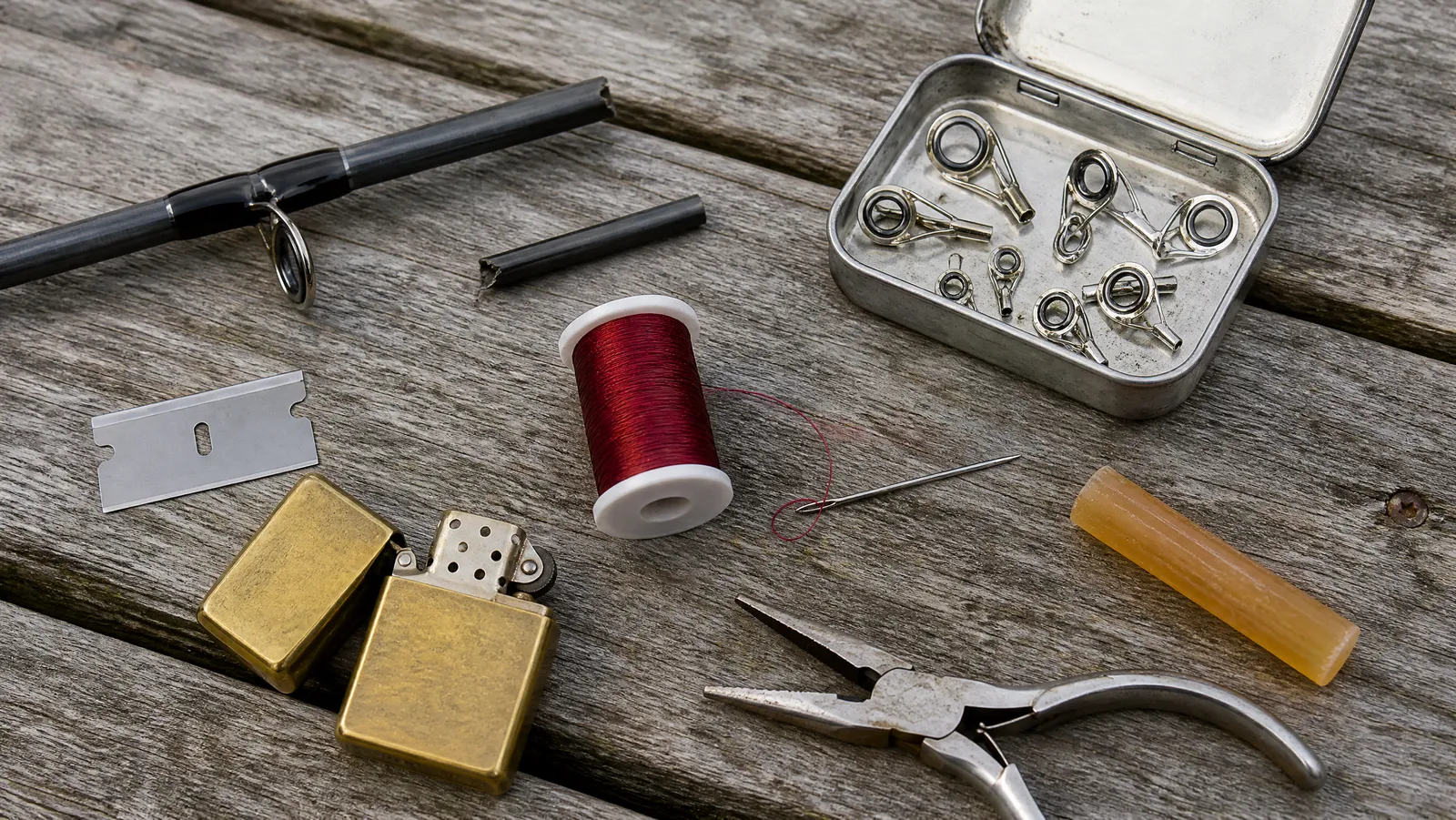
This is the repair worth learning. Tackle Warehouse's rod-tip walkthrough puts the job at just a few minutes, with a short parts list: a replacement tip, pliers or forceps, hot melt glue, a lighter or heat gun, and an alcohol pad.
- Remove the old tip-top with heat, not force. Tackle Warehouse says to heat the guide's tube for several seconds so the glue softens, then pull the guide free with pliers, and warns against direct flame and overheating the blank. The heat is for the metal tube, not the graphite inside it. Wipe the exposed blank clean with alcohol.
- Size the new tip-top to the blank. This is where people guess and lose. Mud Hole's sizing page explains the two numbers printed on a tip-top: the first is the outside diameter of the ring in millimetres, the second is the inside diameter of the tube, measured in 1/64ths of an inch. Mud Hole says tube sizes generally run from 3.5 to 12 and should match the tip size the blank manufacturer specifies. Tackle Warehouse suggests calipers on your rod's tip matched to the tube bore on the product page, and notes that kits often include three tops in different sizes so you can test-fit.
- Glue it. The Fisherman's emergency repair walkthrough describes melting the tip of a rod tip glue stick with a lighter and rubbing the melted glue onto the blank, then warming the new tip's tube and sliding it on while rotating it so the glue spreads. Tackle Warehouse prefers hot melt over super glue for a specific reason: the tip can be replaced again later.
- Align it before it cools. The Fisherman's instruction is to line the tip top ring up with the other guides and hold the tip top in place until the glue sets and all parts cool. This is the step people skip and regret.
We will not quote a softening temperature for rod tip glue: no supplier we found publishes one, and every instruction we read is written in seconds of flame rather than degrees.
When the tip section snaps below the tip-top
If the break is an inch or four down the blank, you can file the stub smooth, fit a tip-top sized to the new, thicker diameter, and fish that afternoon. What you cannot do is get the rod you bought back.
Cut length off the thin end of a tapered tube and you remove its most flexible part. The rod gets shorter, stiffer and faster through the tip. A 7 foot medium that loses four inches is not a 7 foot medium any more, and nothing on the butt label updates to say so. Treat the printed line and lure ratings as approximate from that day on; if the rod loads differently than you expect, our explainer on rod action and power covers what changed, and the casting trade-offs of a shorter blank are in our length guide.
Our view: a tip repair demotes a rod. It becomes the dock rod, the kid's rod, the one in the truck.
Re-wrapping a guide
A pulled or cracked guide is the other repair that pays. Mud Hole's walkthrough for removing and replacing casting rod guides is the clearest sequence we found, and its warnings matter more than its steps.
- Size the replacement by the old guide's insert ring outside diameter in millimetres, or the guide frame's inside diameter if the ring is the broken part.
- Soften the finish with a small flame - lighter, candle or alcohol burner - whisked quickly back and forth over the epoxy on the guide foot.
- Cut the finish with a razor blade directly over the guide foot. Mud Hole says cutting directly over the foot helps avoid tarnishing the rod blank itself, warns never to use the razor like a saw because the back and forth motion frays thread, and says to pull the freed guide straight up and away from the blank rather than at an angle.
- Mark the position with a china marker before anything moves, then file the new guide foot to a point. Mud Hole's test is exact: if the foot scratches your fingernail, it will scratch your rod blank.
- Keep the original spacing and check alignment. Tape the guide on the mark, hold the rod at eye level, and confirm the centres of each guide line up before you wrap a single turn.
- Wrap and finish. Mud Hole starts about 1/4 inch from the guide, puts roughly eight wraps on a single-foot guide, finishes with a loop about 1/8 inch from the end plus eight to ten more wraps, then burnishes the thread tight and coats it in two-part epoxy, rotating the rod in a dryer to cure.
Cure time catches impatient anglers. The Fisherman recommends at least 48 hours before a rod is fished with slow-cure rod epoxy, suggests a week or more if possible, and says to set the rod spinning for at least eight hours.
Then the arithmetic nobody prints. One guide and a few feet of thread is pocket change, as the kit prices below show. A full re-guide is a full set of guides, thread, finish and an evening of rotating epoxy. On a rod that cost $40, that is the moment to stop. On a $300 rod it is maintenance.
Ferrules, reel seats and handles
Not every rod that feels broken is broken. A loose ferrule or a shifting reel seat produces exactly the clicking, unloading sensation people describe as a cracked blank.
Start with the joint. Florida Sportsman warns that ferrule slippage can be just an annoyance, or it can cause a costly mishap, says it typically happens in the upper part of the rod, and notes a loose section can crack the hollow female end while you cast. The fix is almost nothing: use a Q-tip to clean out the hollow female ferrule and a soft cloth to wipe the male end, then wax the male ends with candle or ferrule wax - paraffin or beeswax work as well. Its two warnings are worth memorising: never jam the parts with force, and do not grasp the rod guides when freeing a stuck joint, because snake guides do bend. A crack running out of the ferrule into the blank is not something we would trust repaired.
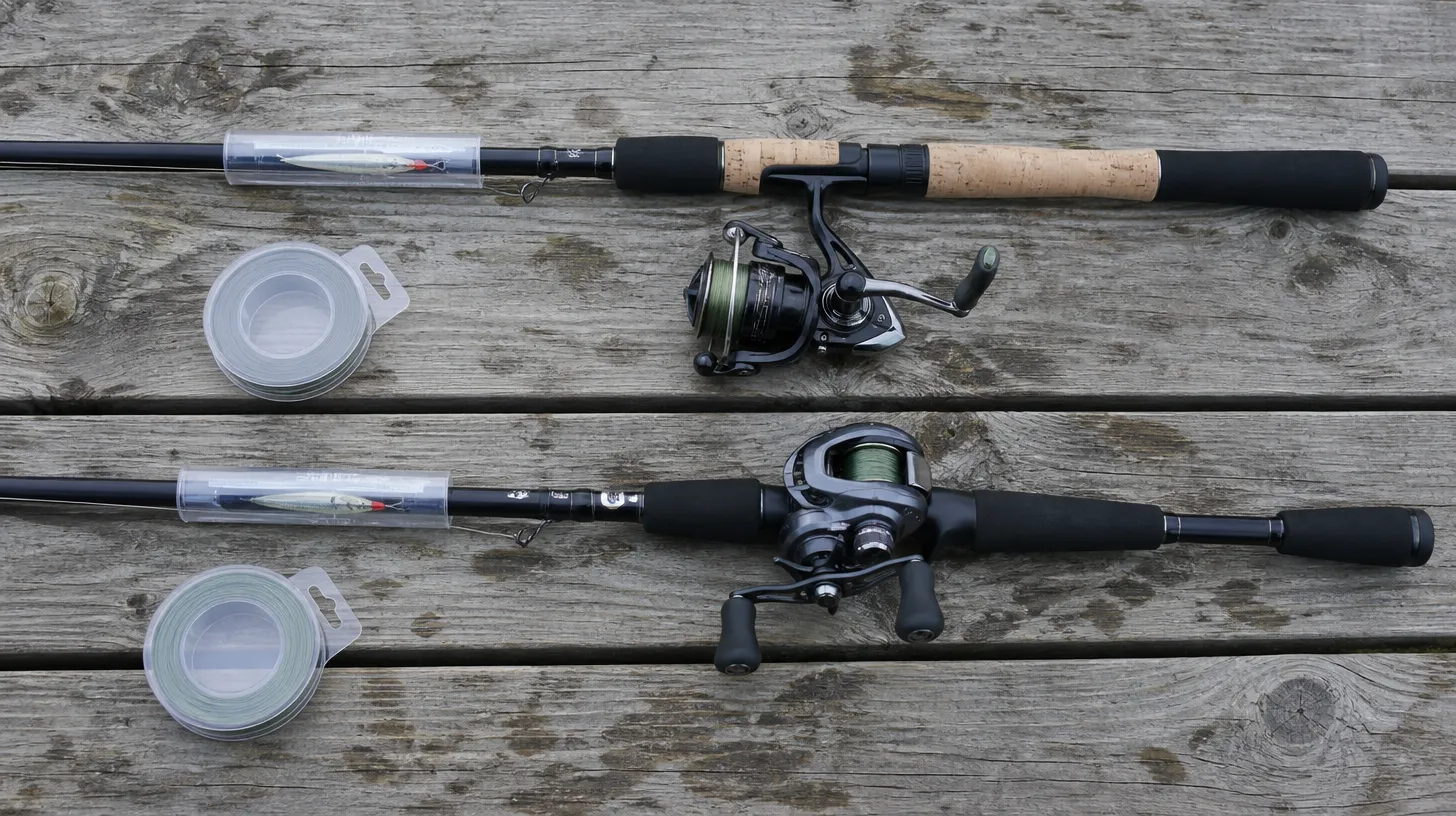
A loose reel seat is the other impostor. Rock the reel and feel for movement: one that shifts under load makes every hookset feel soft, and no tip work cures it. If the pairing felt wrong from the first cast, read our guide to matching a rod and reel instead.
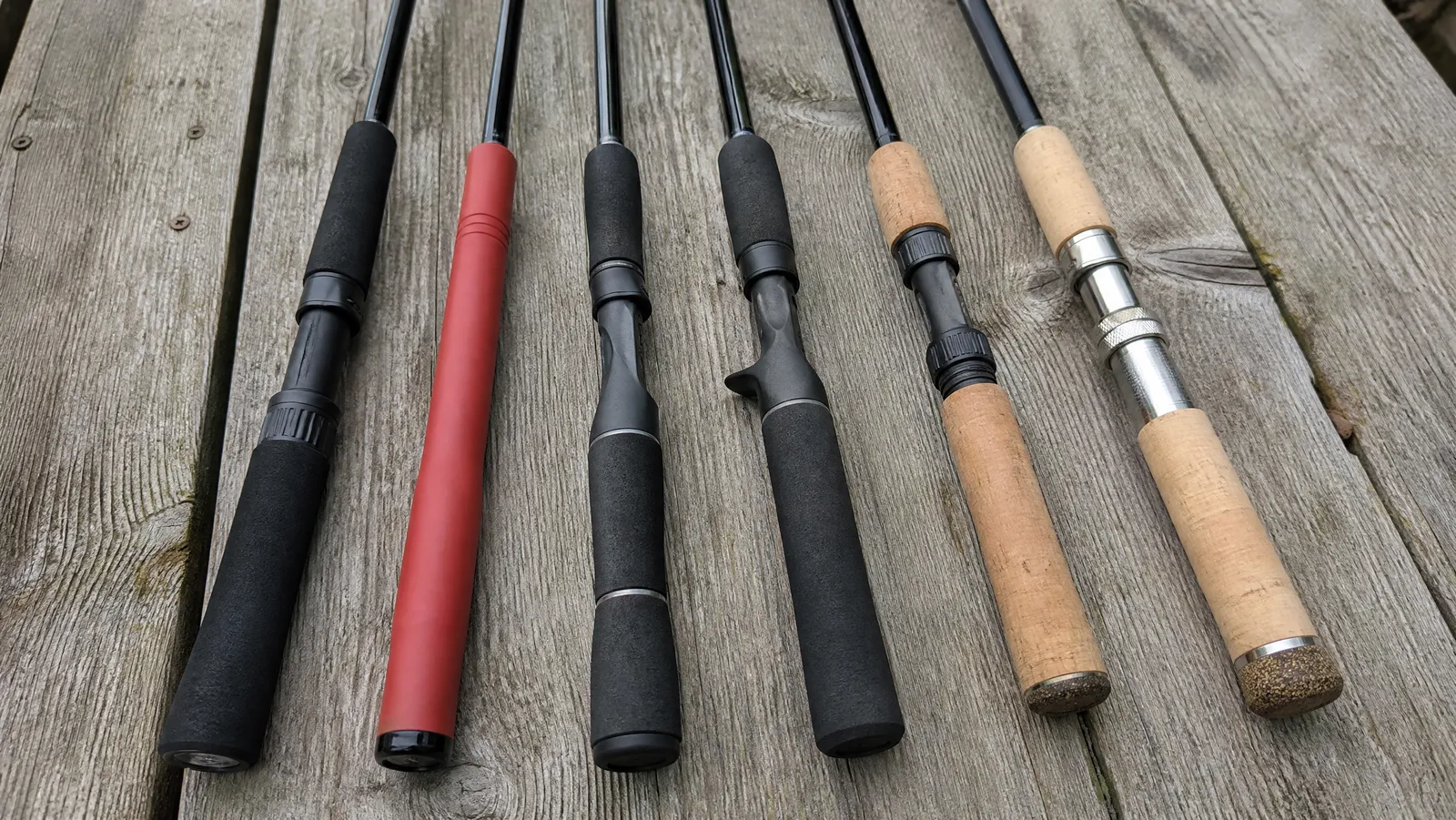
Handles are forgiving. For cork, Camping World's walkthrough says to sand the handle smooth, drill a hole in each section, and rejoin the pieces with a dowel and hot glue. Cork and reel seat damage is also what St. Croix's claim conditions will not cover, so handle work is DIY by default.
What a rod repair kit should contain
You do not need a rod-building bench. You need a small box that lives in the tackle bag:
- Assorted tip-tops in the tube sizes your rods actually use, which is why calipers matter
- Rod tip glue sticks - hot melt, not super glue, so the tip can be replaced again later
- Pliers or hemostats for pulling a heated tip-top
- Rod winding thread and two-part finishing epoxy
- A razor blade and emery cloth
- Alcohol wipes
Price the category rather than a model. Tackle Warehouse lists a Fuji Tip Top Rod Repair Kit at $15.99, a Fuji Micro Guide Repair Kit at $5.49, Fuji hot melt glue at $3.49 and 6 inch hemostats at $10.99 as of November 2026, so a home kit lands in the $10 to $30 band. The Fisherman notes complete kits may be purchased from suppliers such as Mud Hole Custom Tackle, and that Fuji sells both a tip repair kit and an emergency repair kit.
The breaks that are not worth repairing
Here we part company with most of the internet, which is cheerfully optimistic about saving any rod.
A mid-blank break can be sleeved. Camping World's method uses a section of an old rod as an internal insert, and states the goal is to have at least six inches of the insert on both sides of the break, with a crushed or shattered break requiring a much longer insert. That works mechanically, and it also runs a foot of stiff, non-tapered tube through the part of the rod that is supposed to bend. The rod will cast. It will not load the way it did.
Our rules, bluntly:
- A lengthwise split or crack in the blank: done. The tube's hoop strength is gone and glue will not restore it.
- Delamination, or a soft, crunchy spot you can feel through the blank: done.
- Any break on a rod that cost under about $60: replace it. The Zebco Z-Cast sits at about $15.99 as of October 2026 per the listing we priced, and nothing you buy for the repair is worth more than that rod.
- A mid-blank break on a rod under about $150: replace it, or sleeve it and demote it to a loaner.
- A graphite blank that failed on a normal cast inside its warranty term: do not touch it. That is a claim, and a home repair can void it.
The one exception is sentiment, and we will not argue with it. If it was your father's rod, sleeve the blank and fish it anyway.
Preventing the next one
Almost every rod we have seen written off died out of the water: car doors, hatch lids, and the back of a truck with the tip under a tackle bag. Fenwick's exclusion list reads like a crash report - dropping, crushing, high-sticking - and none of those happen with a fish on.
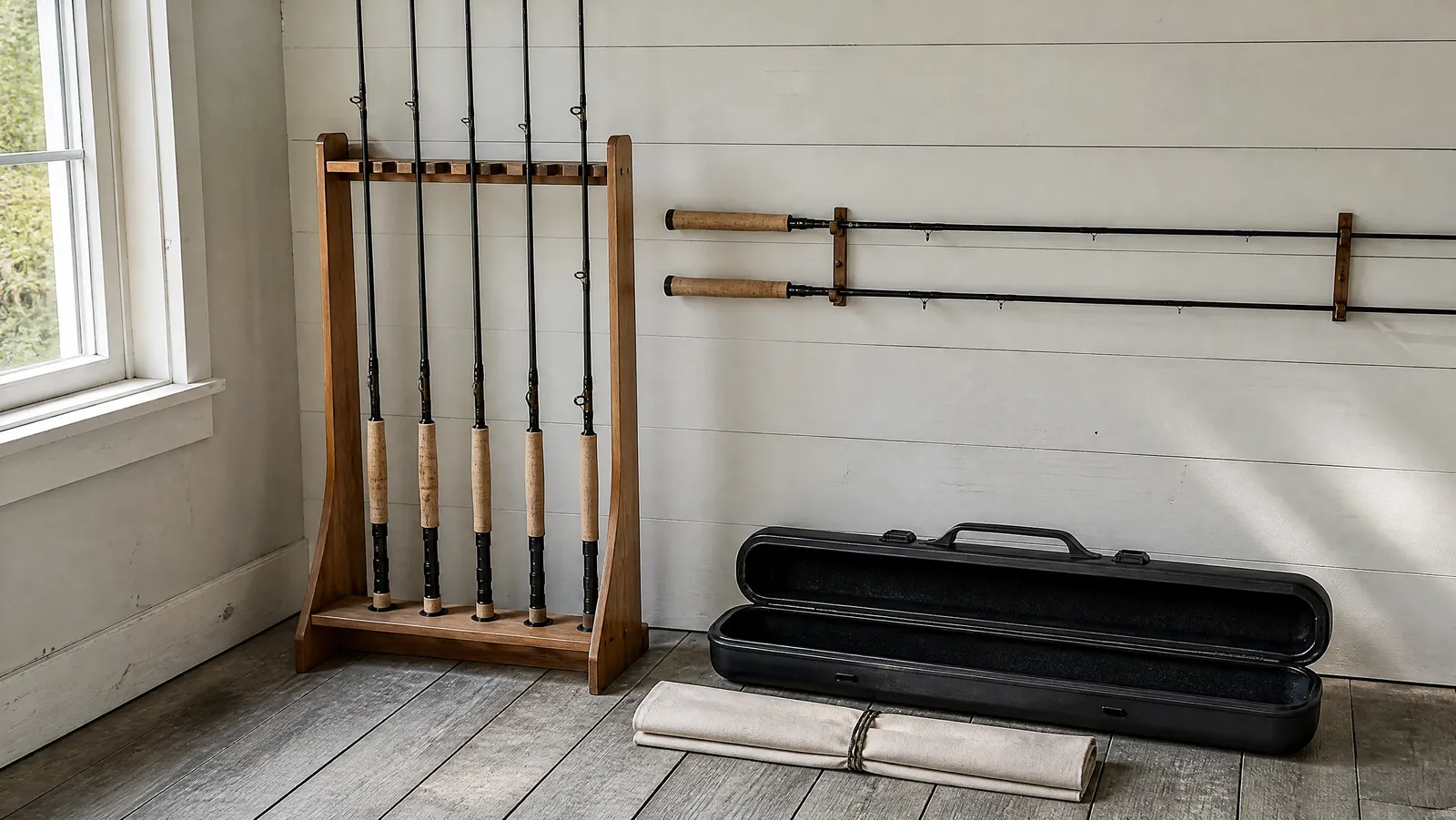
So the list is short. Carry rods in a sleeve or tube rather than loose in a truck bed, which is the whole argument of our guide to storing and transporting rods. Break down multi-piece rods and wax the male ferrules before they go away. Stop levering the rod overhead to free snags. Rinse and wipe hardware after saltwater, the same habit we recommend for cleaning a spinning reel. And register a new rod inside the window, since Fenwick requires registration within 30 days of purchase for its warranty to be valid.
Keep a $15 tip kit in the bag and you will fix the two most common breaks in the parking lot instead of driving home. For everything a repair cannot save, and for which blank is worth owning in the first place, start with our complete fishing rod guide.
About The Author
Rob Thomas
Rob Thomas is a fisherman who loves catching tales from his fellow fishermen. He always enjoys a good story, especially when it comes from the sea.